
The Storm — History & Facts
When did color learn to lie? In The Storm, the vibrant hues dance across the canvas, blurring the line between reality and fantasy, inviting viewers to question the essence of nature itself. Look to the left, where tumultuous clouds swirl in deep shades of indigo and grey, their raw energy almost palpable. Focus on the contrasting bursts of golden sunlight breaking through, illuminating the landscape below in an ethereal glow. This juxtaposition of light and shadow captures the chaotic beauty of the storm, while the brushwork — both fluid and abrupt — conveys a sense of movement, as if the viewer is swept into the tempest alongside the elements. The emotional tensions within the piece lie in its duality.
The serene landscape, punctuated by a violent sky, evokes a simultaneous feeling of awe and dread. Subtle details, such as the distant figures seeking shelter, underscore humanity’s vulnerability against nature's might and the overarching theme of resilience. It’s as if Michel is challenging us to confront our insignificance in the grand tapestry of existence, where even beauty is entwined with chaos. Created between 1814 and 1830, this work reflects Georges Michel's transition into Romanticism, a movement that celebrated the sublime in nature.
At this time, Europe was engulfed in the aftermath of the Napoleonic Wars, and artists sought to express profound emotional experiences. Michel’s exploration of dramatic landscapes was a response to the changing world, as he transferred both his internal struggle and cultural zeitgeist onto the canvas, encapsulating a moment of both tension and transcendence.
More Artworks by Georges Michel
Browse all →
The Approaching Storm
Georges Michel

Landschap met zandweg
Georges Michel

Landschaft bei Paris
Georges Michel
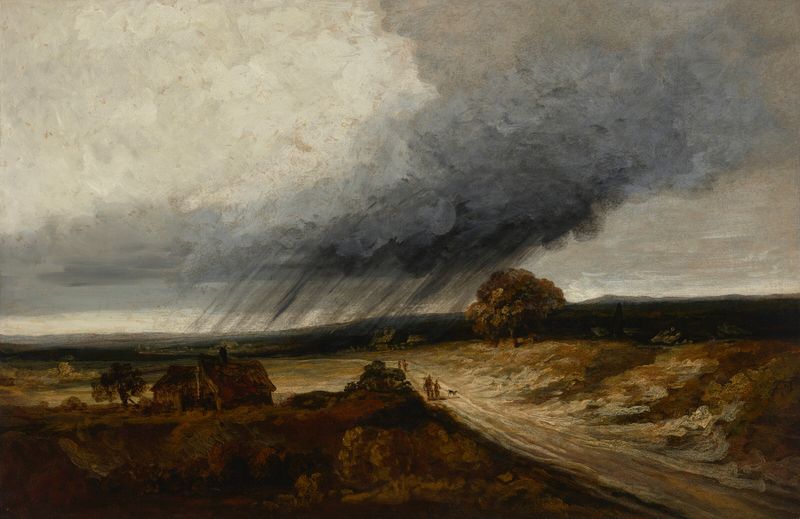
The Approaching Storm
Georges Michel

Landschap met overtrekkende bui
Georges Michel
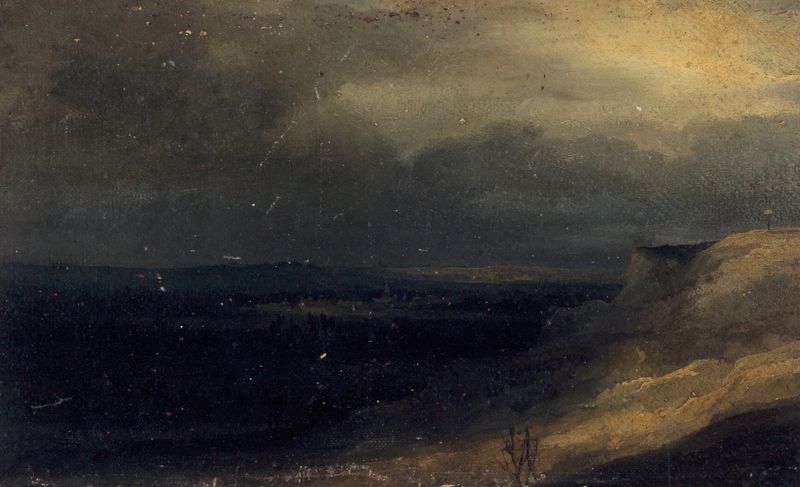
Vue présumée de Montmartre.
Georges Michel

Landschap met figuren en vee
Georges Michel

Approaching Storm
Georges Michel
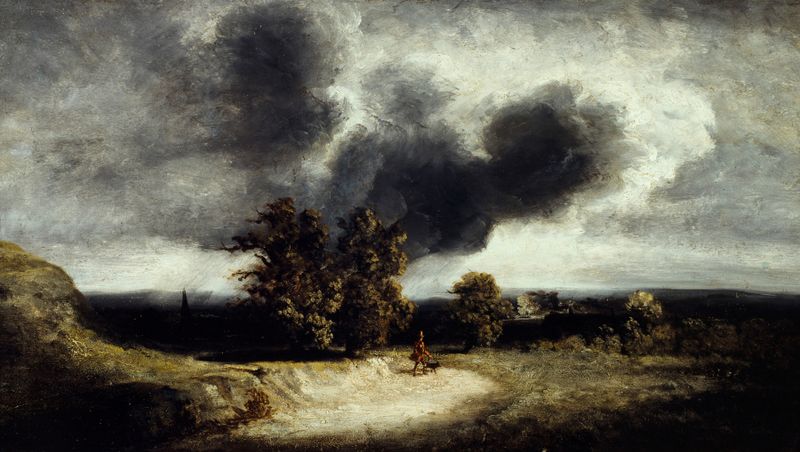
Paysage des environs de Paris.
Georges Michel

Gezicht op de Dome des Invalides uit de Champ de Mars
Georges Michel





