
The Suburbs of a Chinese City — History & Facts
Can paint confess what words never could? In The Suburbs of a Chinese City, the artist unravels a narrative that transcends language, revealing a world caught between the familiar and the foreign, the mundane and the extraordinary. Look to the left at the delicate brushstrokes that define the low-slung rooftops and bustling streets, where life unfolds in vibrant hues of green and ochre. The composition invites your gaze to wander through the urban landscape, with distant mountains silhouetted against a softly lit sky. Each element is rendered with precision, showcasing the artist's mastery of light that dances over the rooftops, creating a sense of warmth and intimacy as it bathes the scene in a golden glow. In this work, the interplay of familiarity and mystery is palpable.
The bustling figures, engaged in their daily rituals, hint at cultural narratives that may remain untold, while the distant mountains symbolize the vast unknown beyond the confines of the city. The void between the bustling life and the serene landscape speaks to the tension of progress—where tradition coexists with the inexorable march of modernity, leaving an ache for what may be lost in translation. William Alexander painted this scene in 1795 during a time of burgeoning interest in the East among European artists and intellectuals. He spent time in China, where his experiences shaped his views on culture and art.
This was a period marked by fascination with exoticism, as Western societies sought to understand and depict the complexities of Asian life through a new lens, bridging worlds that were often perceived as vastly different.
More Artworks by William Alexander
Browse all →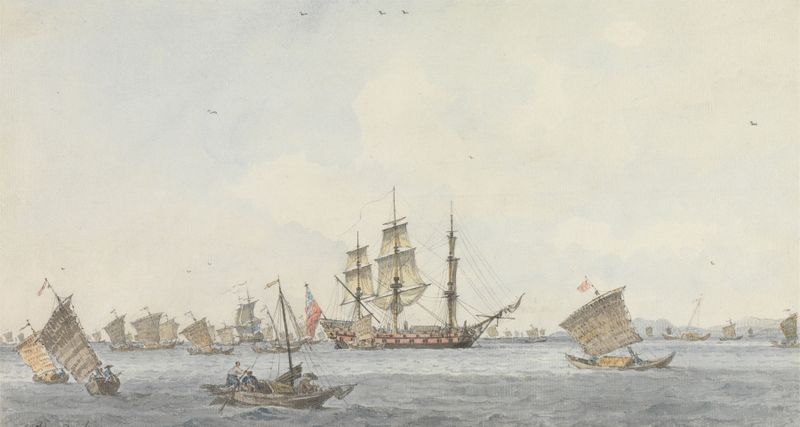
The Hindostan at Anchor in the Strait of Mi-a-tau of the City of Ten-choo-fou at the Entrance to the Gulf of Pekin
William Alexander
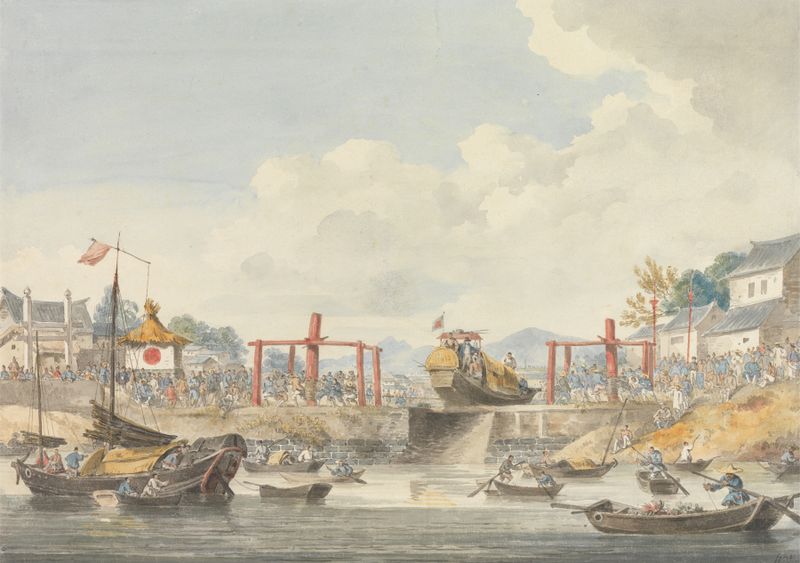
Barges of the Embassy Being Raised from One Canal to Another on Their Way from Han-Tcheou-Foo to Tchu-San, 16 November 1793
William Alexander
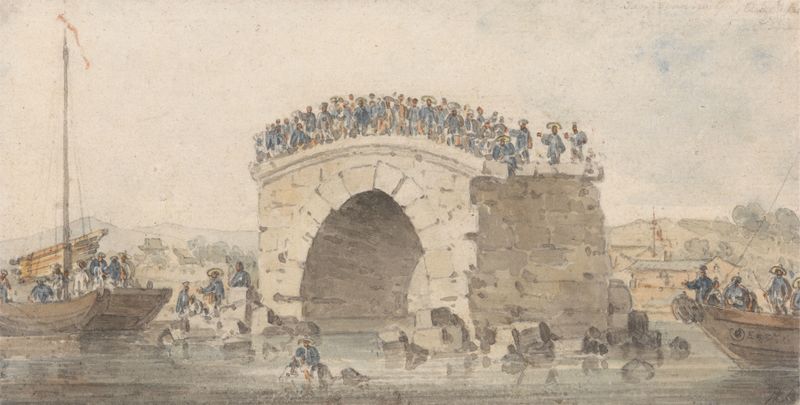
Remains of a Bridge at San-Sien-Wey on the Pei-Ho near Tong-Tcheou, August 15, 1793
William Alexander

City of Lin Tsin, Shantung, with a View of the Grand Canal
William Alexander

A View of the Coast of China
William Alexander
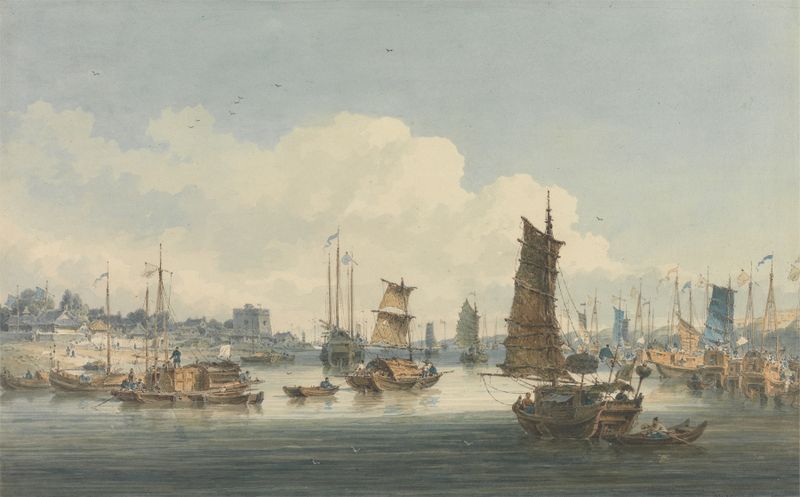
View Near the City of Tientsin
William Alexander

View Near the City of Tientsin
William Alexander
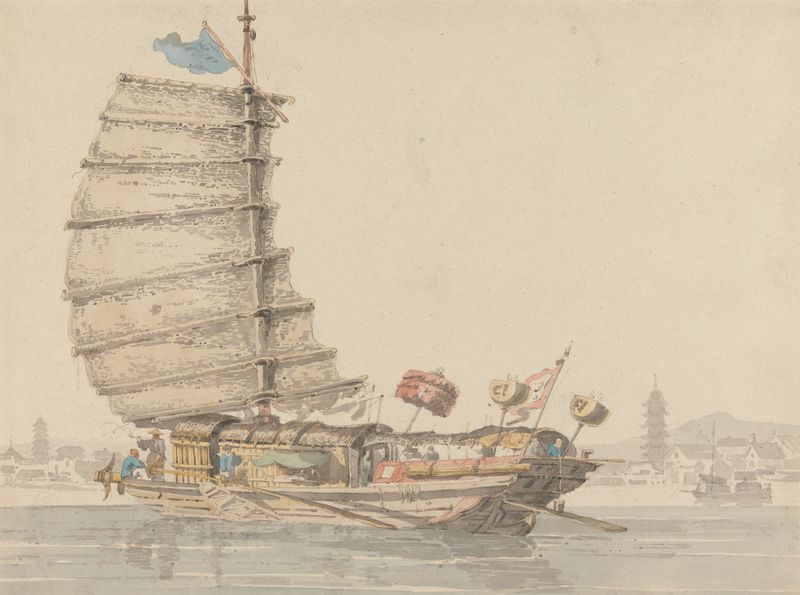
The Traveling Barge
William Alexander
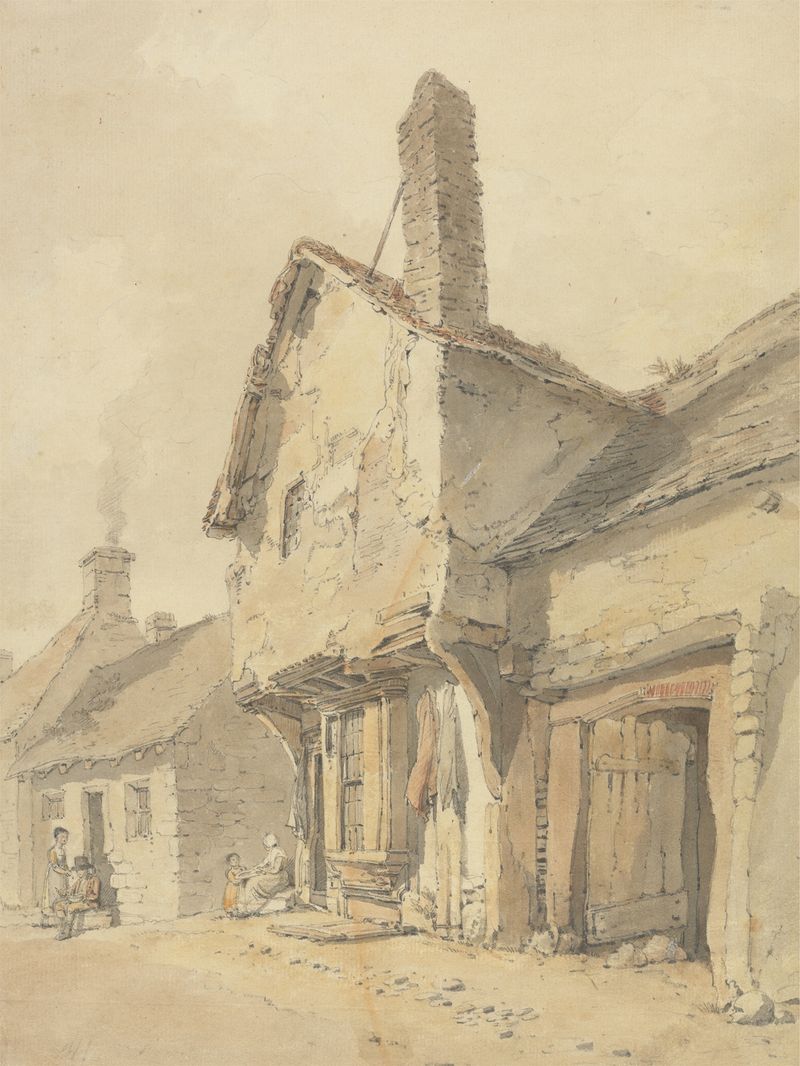
A Village Street, Figures by Old Cottages
William Alexander
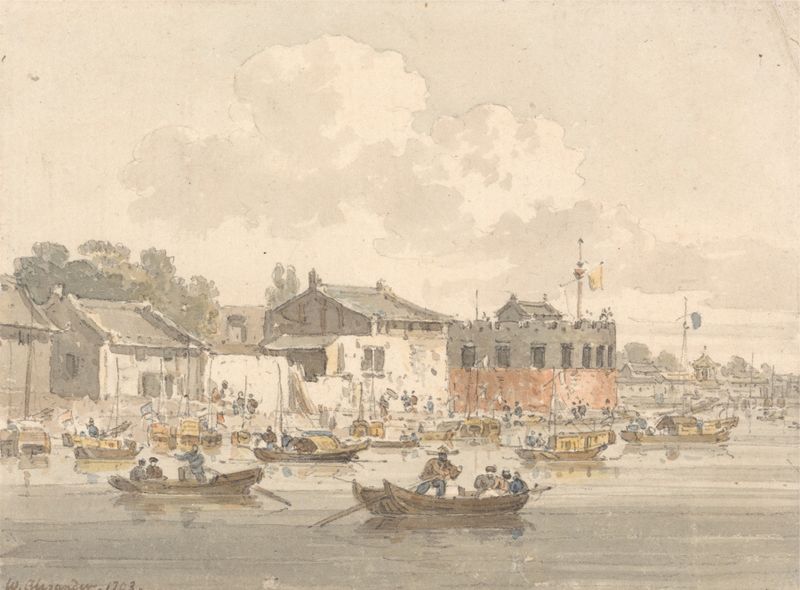
Fort Opposite the Factory, Canton
William Alexander





