
View Near the City of Tientsin — History & Facts
Can paint confess what words never could? In View Near the City of Tientsin, the depths of shadow play a silent yet profound role, whispering secrets of the scene that escape the grasp of language. Focus on the foreground, where the gentle brush strokes evoke swaying reeds that stretch toward the muted horizon. The delicate interplay of light and shadow creates a gradient of greens and browns, inviting the viewer to explore the serene landscape. Notice how the sun’s beams peek through the clouds, casting flickering reflections on the water’s surface, highlighting the artist's careful attention to the subtle nuances of nature. As you delve deeper, the contrast between the vivid greenery and the ominous shadows hints at an underlying tension—the balance between tranquility and melancholy.
The distant city, shrouded in soft mist, symbolizes the encroachment of civilization upon nature, while the stillness captured in the scene suggests a moment of reflection, perhaps even nostalgia. This interplay of light and shadow becomes a metaphor for the impermanence of beauty, echoing a melancholy that lingers beyond the visible. Painted in 1800, during a time of exploration and cultural exchange in the East, William Alexander created this work while serving as a court painter in China. His experiences of the landscapes and cultures around him profoundly influenced his artistic vision, as he sought to document the natural beauty and complexities of this emerging world.
Amidst the shifting tides of art and society, he carved a niche that celebrated both the allure and vulnerability of nature.
More Artworks by William Alexander
Browse all →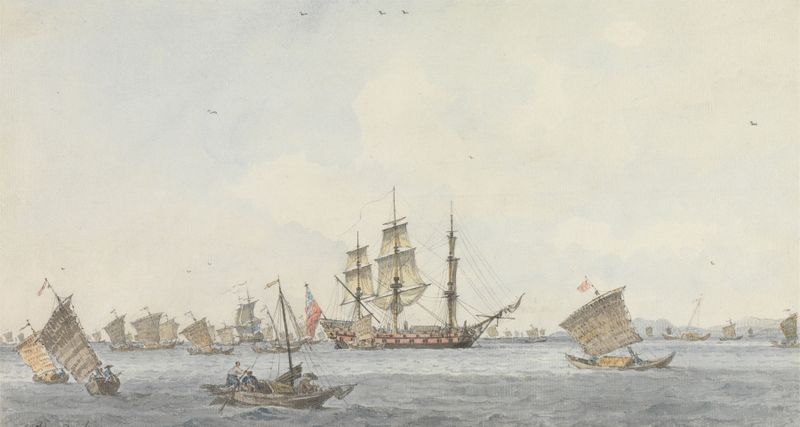
The Hindostan at Anchor in the Strait of Mi-a-tau of the City of Ten-choo-fou at the Entrance to the Gulf of Pekin
William Alexander
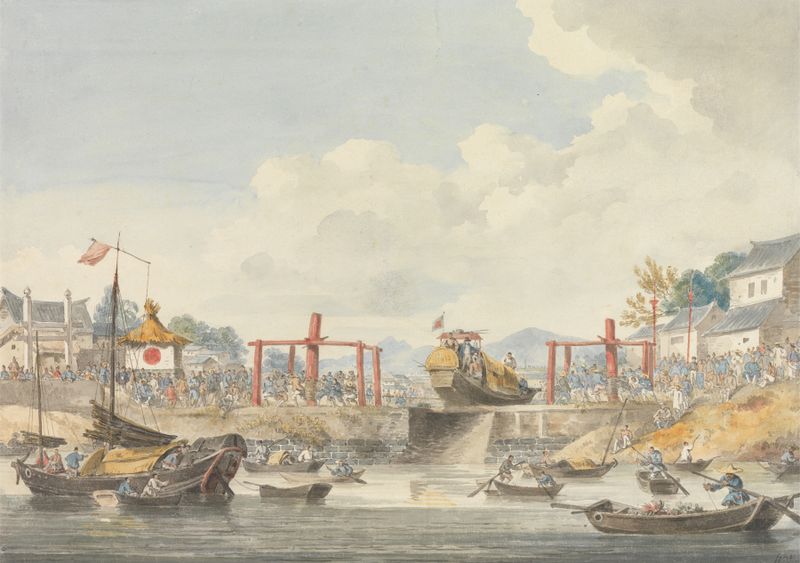
Barges of the Embassy Being Raised from One Canal to Another on Their Way from Han-Tcheou-Foo to Tchu-San, 16 November 1793
William Alexander
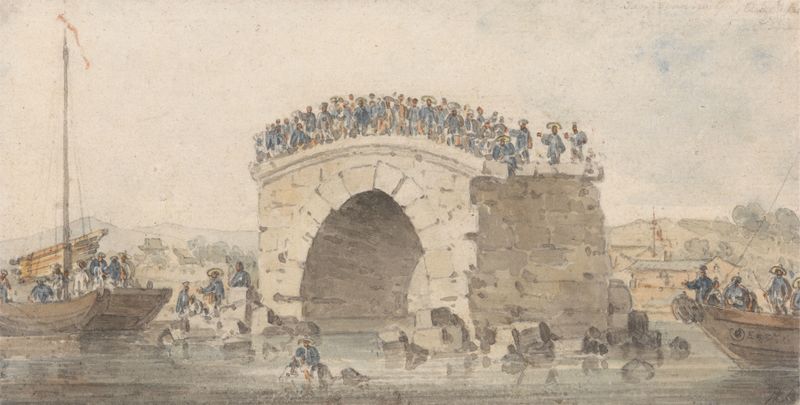
Remains of a Bridge at San-Sien-Wey on the Pei-Ho near Tong-Tcheou, August 15, 1793
William Alexander

City of Lin Tsin, Shantung, with a View of the Grand Canal
William Alexander

A View of the Coast of China
William Alexander
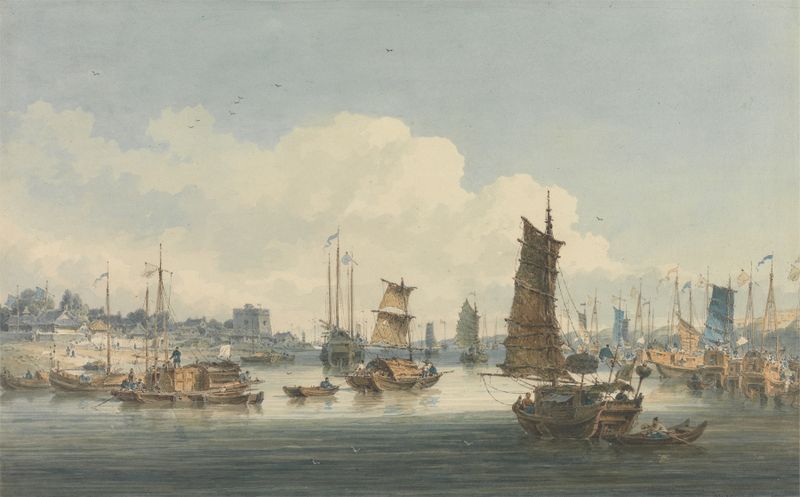
View Near the City of Tientsin
William Alexander
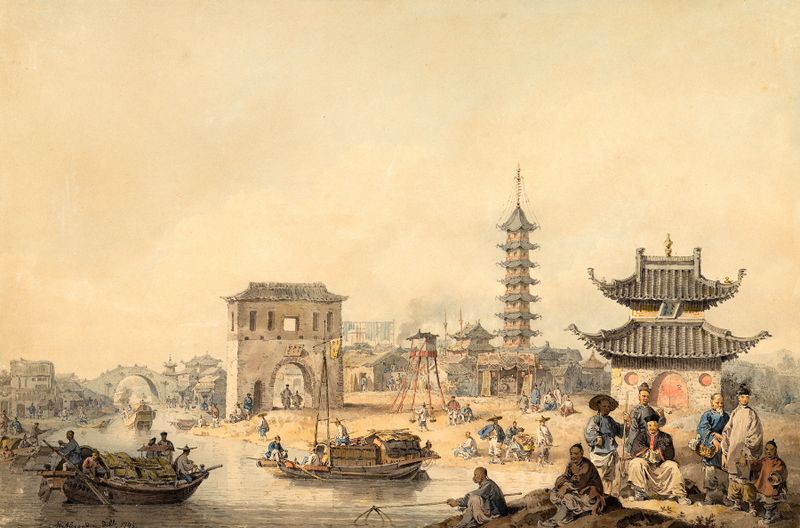
The Suburbs of a Chinese City
William Alexander
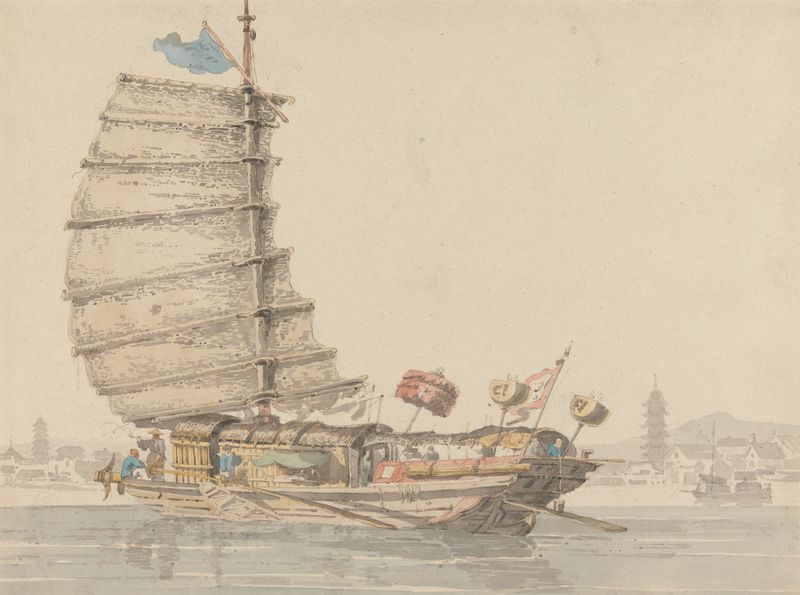
The Traveling Barge
William Alexander
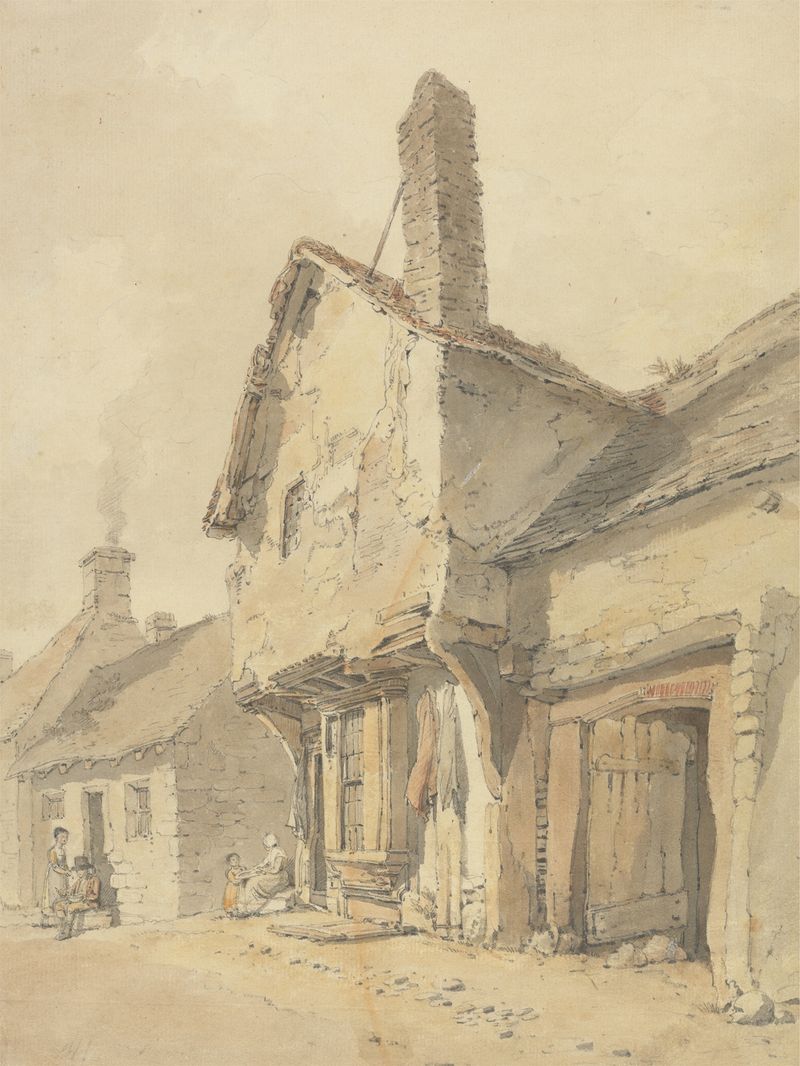
A Village Street, Figures by Old Cottages
William Alexander
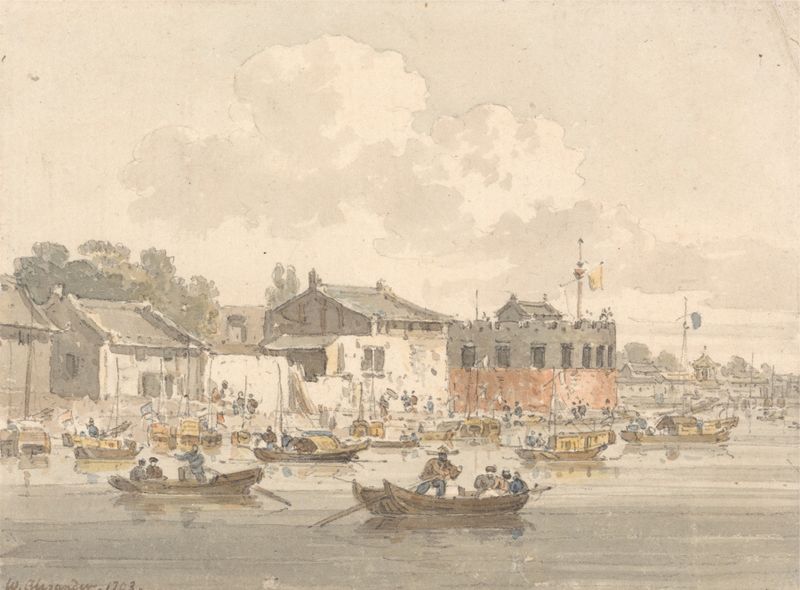
Fort Opposite the Factory, Canton
William Alexander





