
The Temple of Dendur, Showing the Pylon and Terrace — History & Facts
It whispers of innocence trapped in ancient stone and the passage of time, echoing the stories we long to uncover. How do we connect with a past that speaks in silence, with shadows of lives once lived lingering in the air? Focus on the expansive scene before you, where the pylon rises majestically against a warm wash of desert hues. The ochres and muted reds envelop the architecture, inviting your gaze to explore the intricate carvings that narrate tales of deities and rituals.
Notice how the sunlight casts a distinct glow, illuminating the figures and enhancing their forms, while a cool blue sky offers a celestial contrast that grounds this historical narrative in the present. Hidden within the grandeur are quiet moments that evoke empathy and nostalgia. The crumbling stones hint at both decay and endurance, speaking of cultures lost yet revered. The terrace, with its promise of elevation, represents not just a physical ascent but a spiritual journey, merging the sacred with the mundane.
This juxtaposition speaks to the innocence of belief, suspended in time yet still resonant. Frederick Arthur Bridgman painted this work in 1874 while residing in Paris, during a time when the fascination with ancient Egypt surged in Europe. Emerging from an era of academic realism, he sought to capture not only the architecture’s physical beauty but its emotional weight, reflecting both his personal experiences and the broader cultural dialogues of his time. Bridgman's journey influenced the way we perceive historical narrative, blending artistic innovation with a profound respect for the past.
More Artworks by Frederick Arthur Bridgman
Browse all →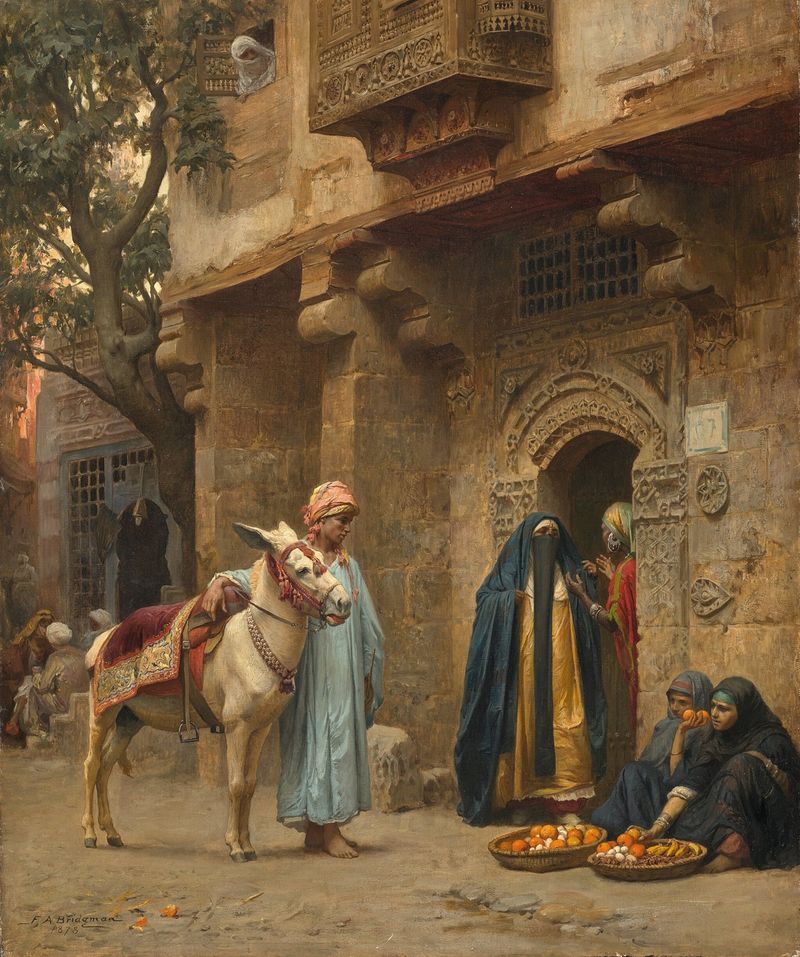
A Cairo Street
Frederick Arthur Bridgman
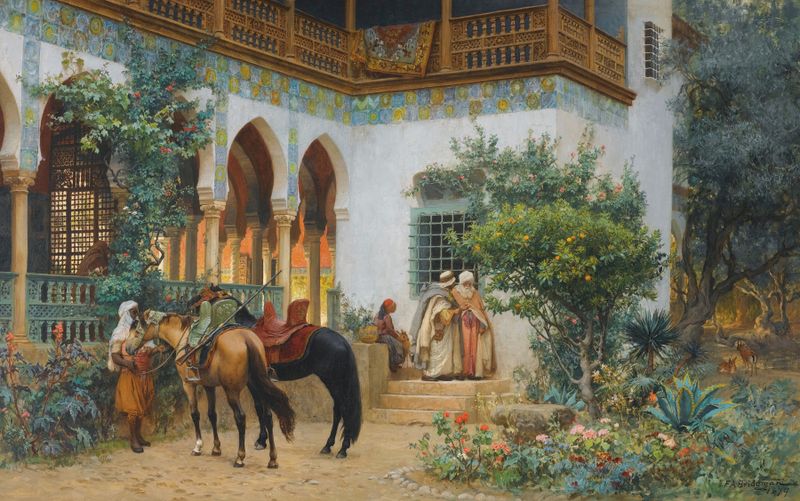
A North African Courtyard
Frederick Arthur Bridgman
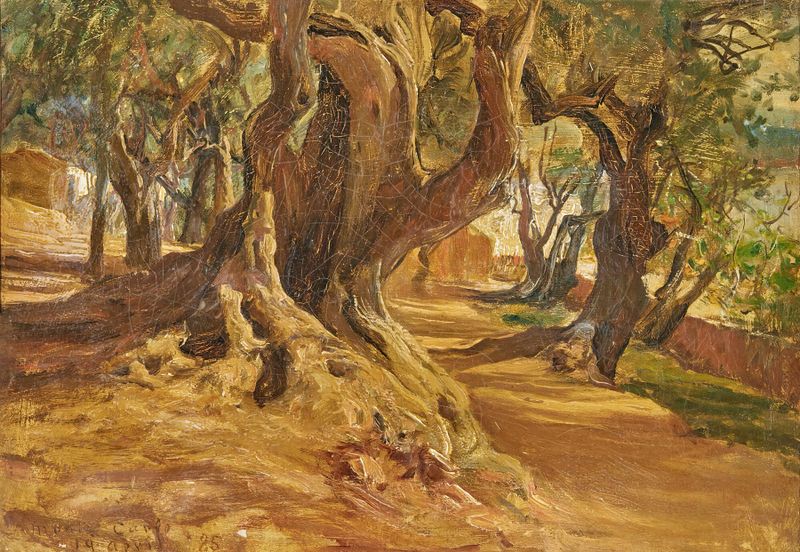
Tree Trunk
Frederick Arthur Bridgman
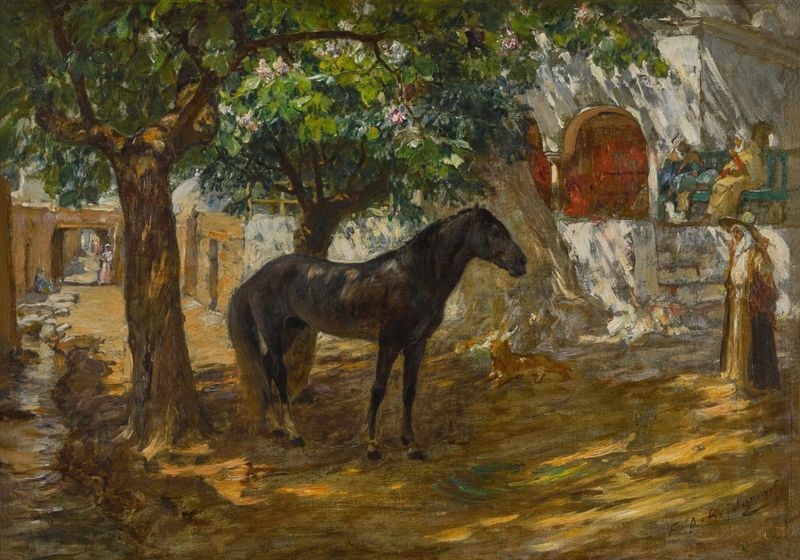
Village in the Sahara
Frederick Arthur Bridgman
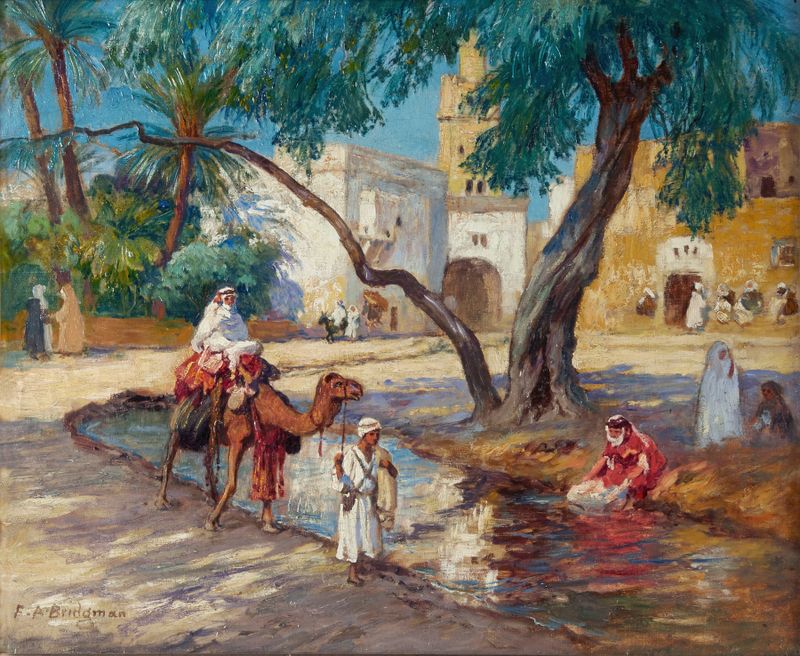
A view of an Algerian village
Frederick Arthur Bridgman
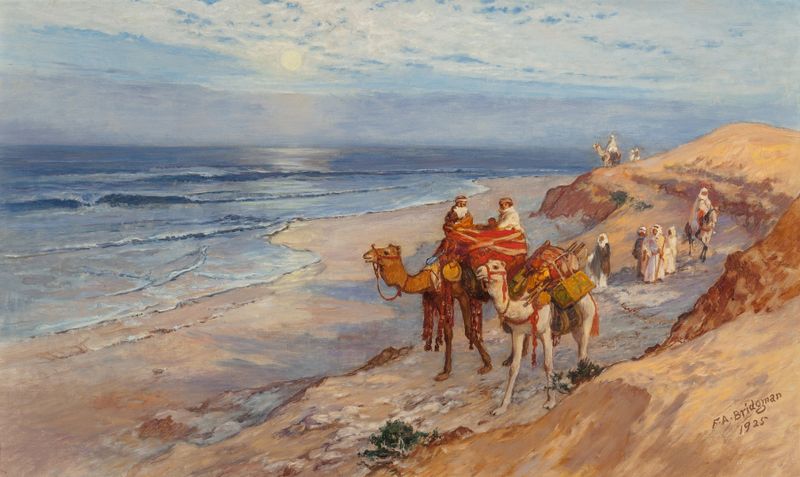
Sur la côte de Tanger l’Atlantique
Frederick Arthur Bridgman
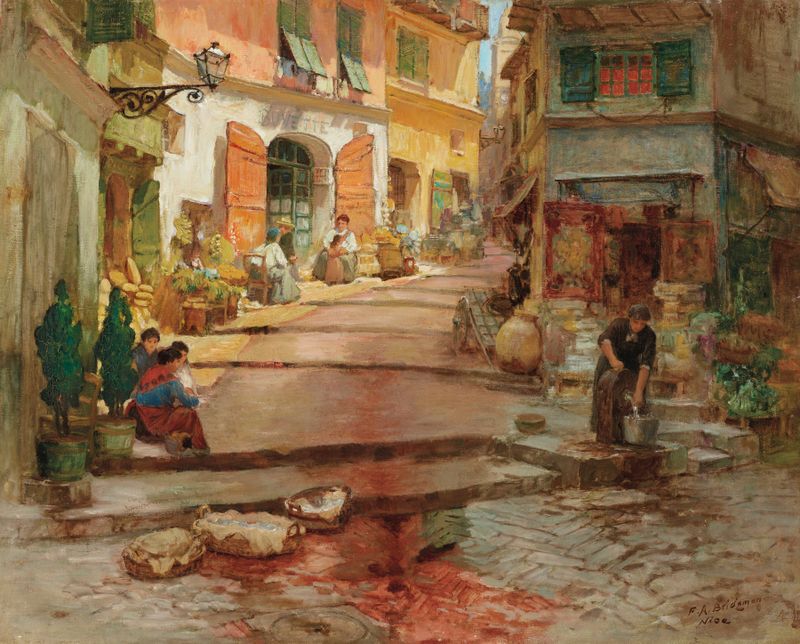
Rue Droite, dans le vieux Nice
Frederick Arthur Bridgman
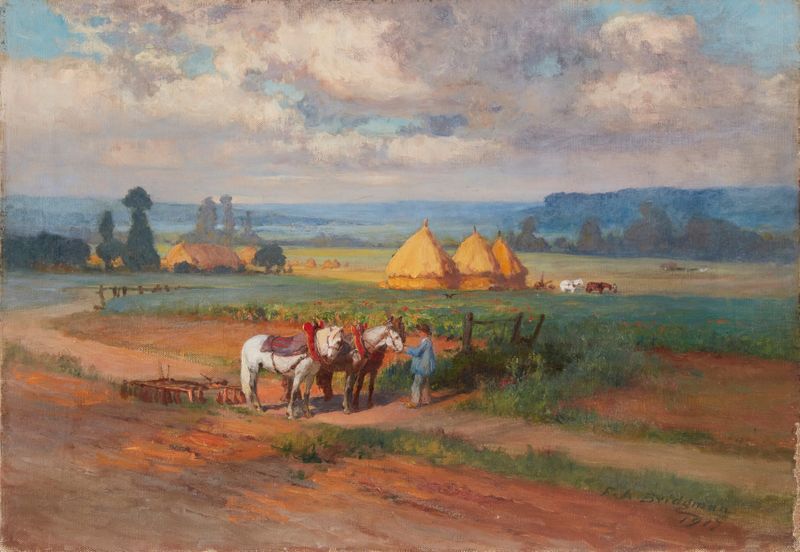
En Normandie
Frederick Arthur Bridgman
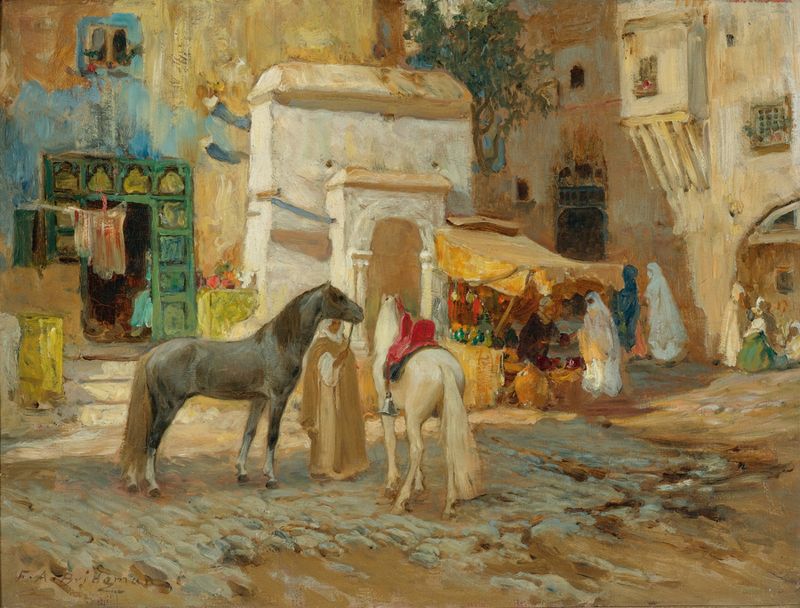
The Market Square
Frederick Arthur Bridgman
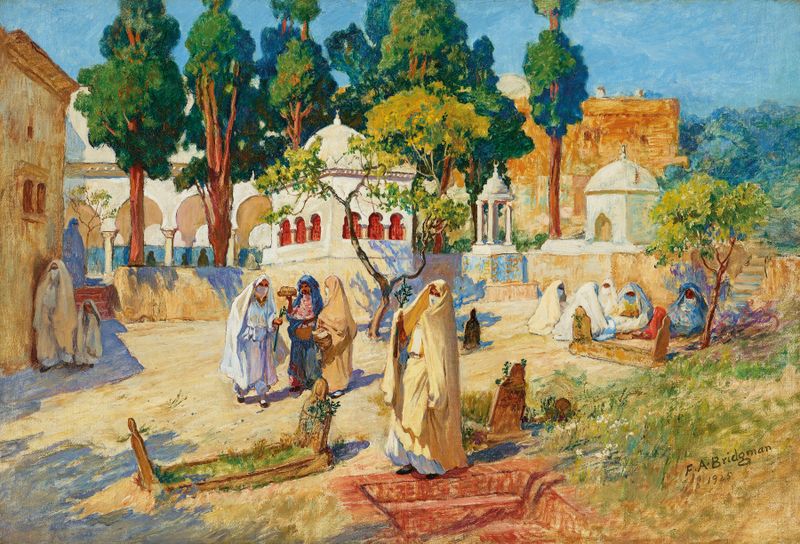
Arab Women’s Day in the Cemetery, Bou-Kobrine
Frederick Arthur Bridgman





