
Arab Women’s Day in the Cemetery, Bou-Kobrine — History & Facts
In Arab Women’s Day in the Cemetery, a serene yet poignant tableau reveals how transcendent moments often emerge from the depths of sorrow and remembrance. Focus first on the vibrant colors that envelop the scene, drawing your eye to the rich oranges and deep blues that blend seamlessly in the sky above. The women, draped in flowing garments, create a contrast against the somber gravestones below, their movements both graceful and deliberate. Notice how the light bathes the figures, illuminating their expressions with a soft glow, symbolizing a connection between the living and the departed.
The artist’s brushwork captures both the texture of the fabrics and the tranquil yet solemn atmosphere of the cemetery. Delve deeper into the emotional undercurrents of the work, where the juxtaposition of life and death resonates throughout. The gathering of women signifies not merely a somber remembrance but a celebration of resilience and communal strength. Beneath the surface, the act of honoring their loved ones becomes a ritual of transcendence—transforming grief into empowerment and continuity.
The flowers they carry become symbols of hope, a testament to life's fleeting beauty amidst the permanence of loss. In 1925, Bridgman was living in Paris, immersed in a world where the avant-garde was reshaping artistic expression. His travels throughout North Africa had left a profound impact on him, deeply inspiring his fascination with the cultural nuances of the region. This work reflects his desire to capture the essence of a moment that transcends time—a poignant intersection of memory and identity amid a rapidly changing world.
More Artworks by Frederick Arthur Bridgman
Browse all →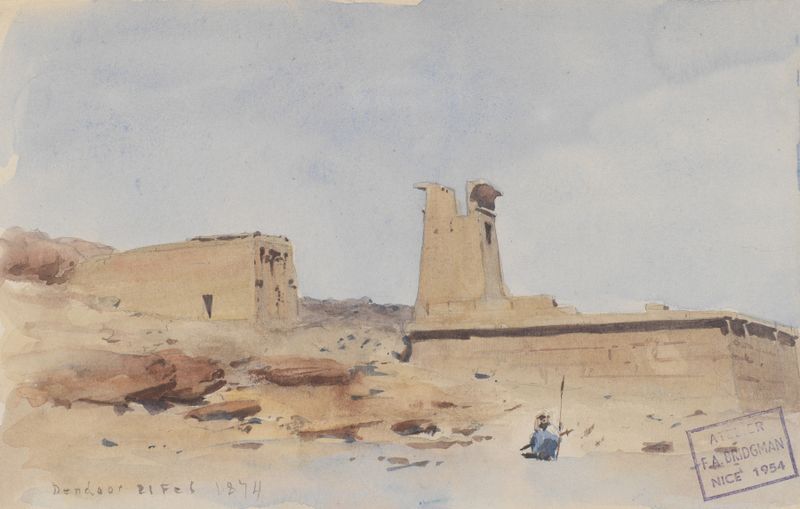
The Temple of Dendur, Showing the Pylon and Terrace
Frederick Arthur Bridgman
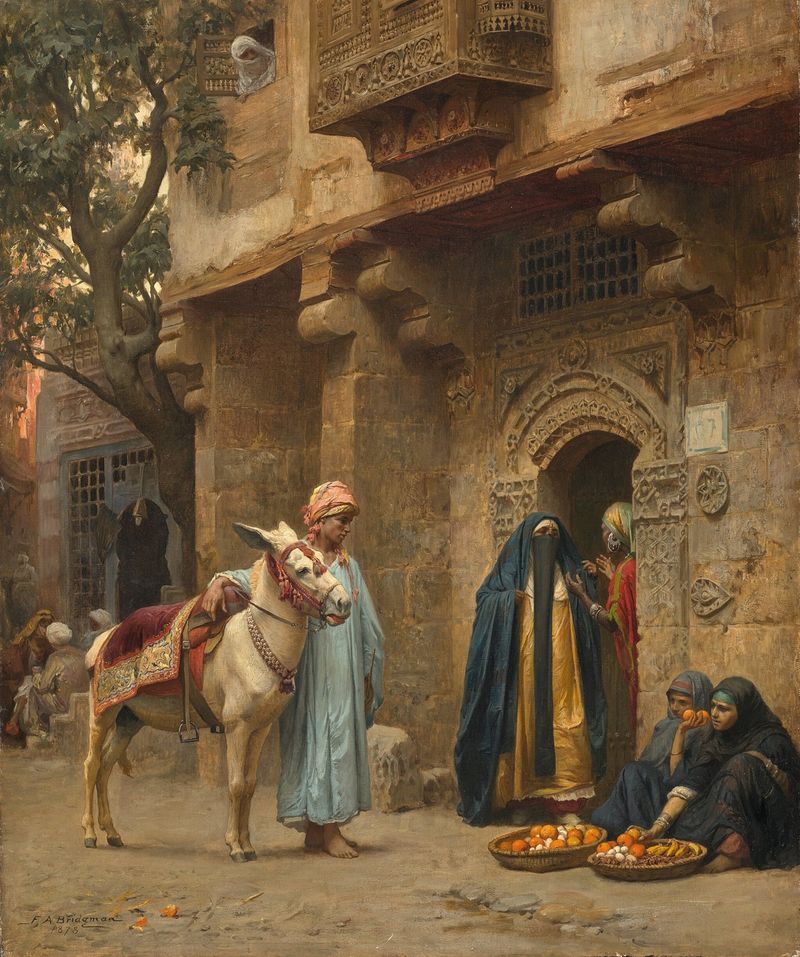
A Cairo Street
Frederick Arthur Bridgman
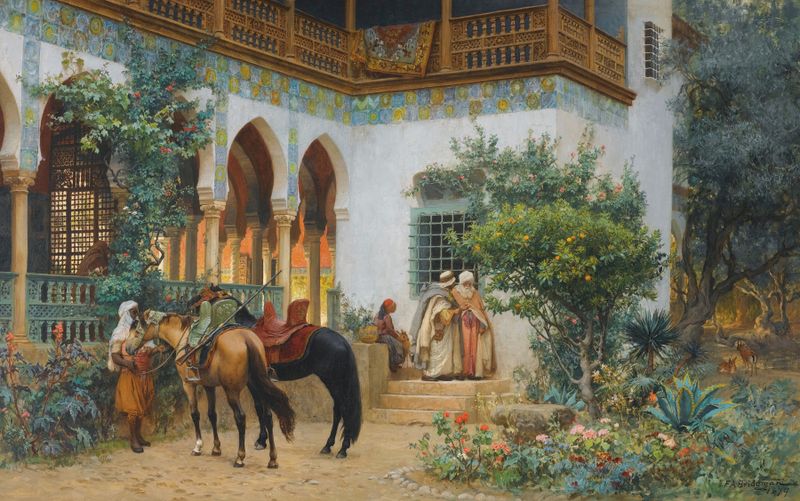
A North African Courtyard
Frederick Arthur Bridgman
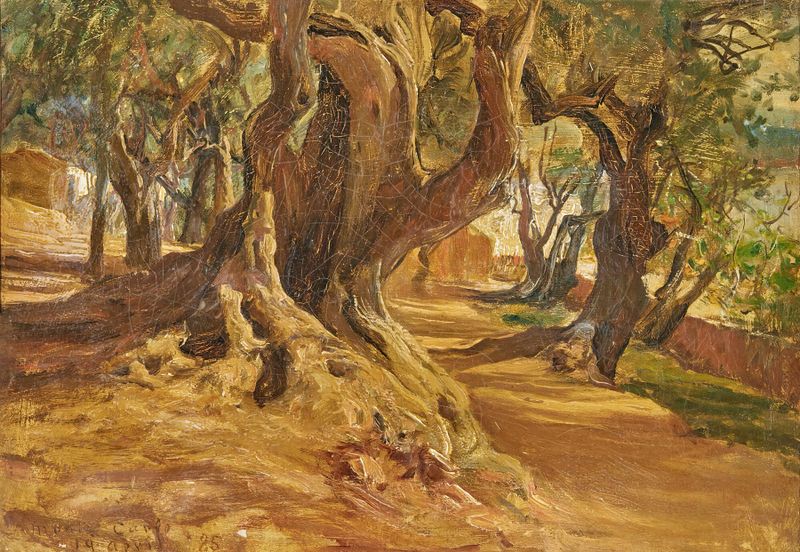
Tree Trunk
Frederick Arthur Bridgman
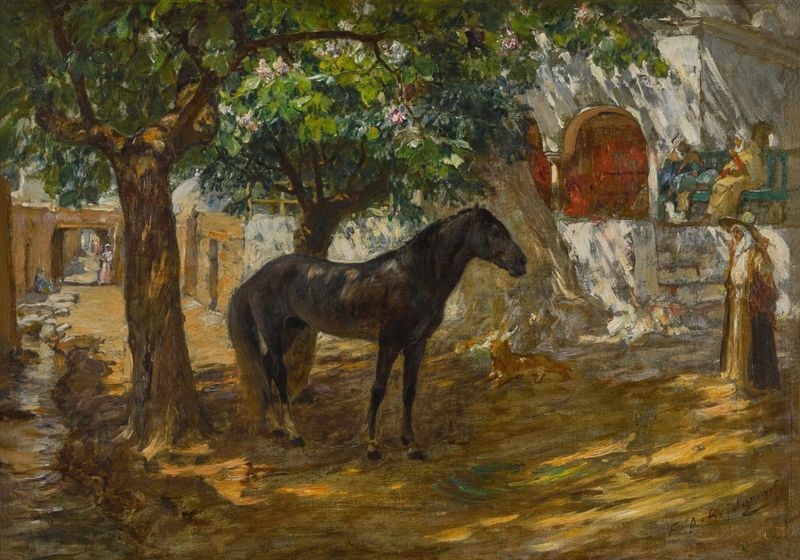
Village in the Sahara
Frederick Arthur Bridgman
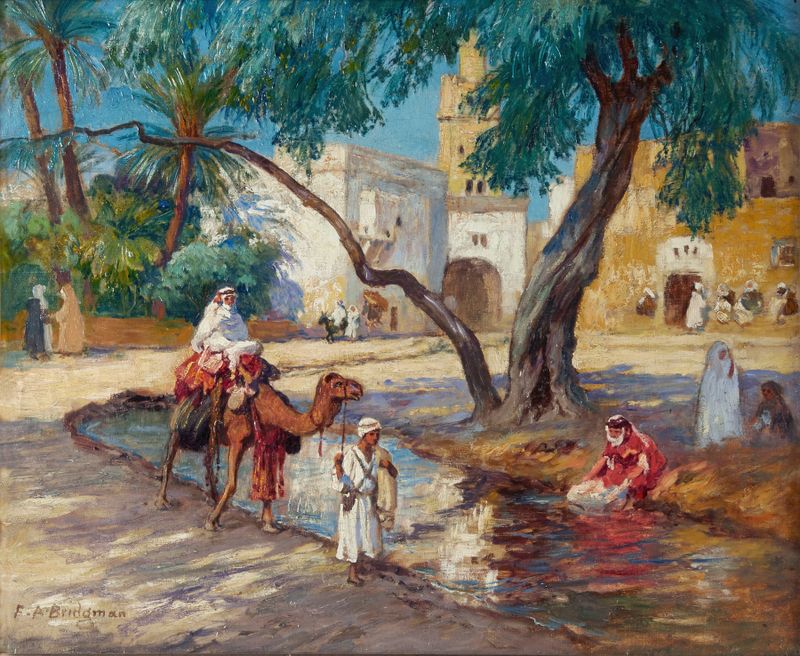
A view of an Algerian village
Frederick Arthur Bridgman
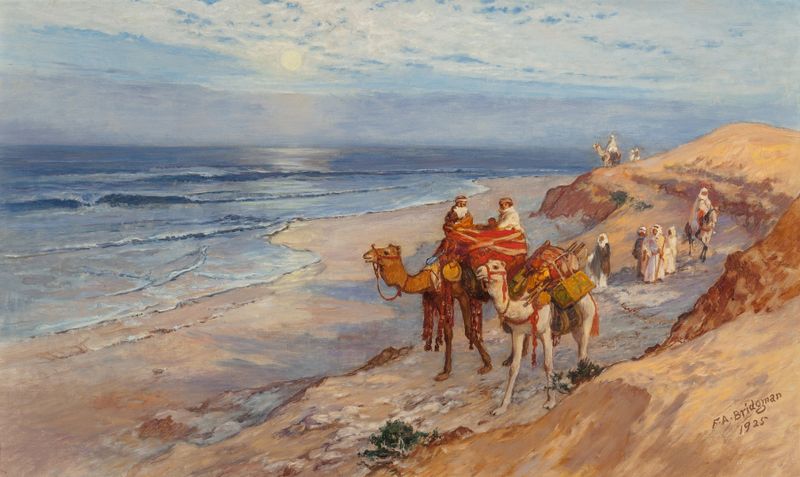
Sur la côte de Tanger l’Atlantique
Frederick Arthur Bridgman
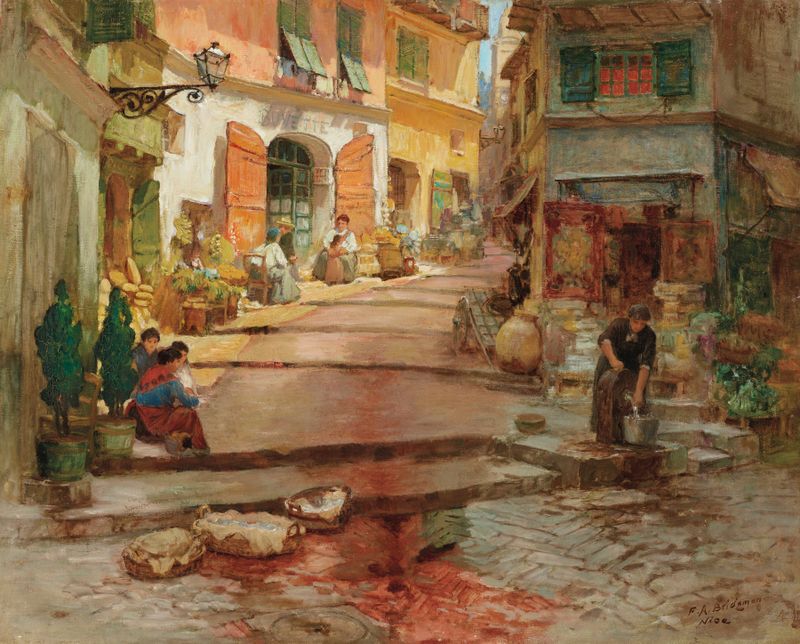
Rue Droite, dans le vieux Nice
Frederick Arthur Bridgman
En Normandie
Frederick Arthur Bridgman
The Market Square
Frederick Arthur Bridgman





