
The Thames at Twickenham — History & Facts
The wistfulness of time lost hangs heavy in the air, echoing through the gentle ripples of the Thames. It captures the essence of nostalgia, drawing viewers into a world where memory dances delicately on the surface of water. Look to the left at the soft hues that blend into a serene sky, painting a tranquil backdrop for the bustling life below. Notice how the river reflects the warm light of the setting sun, creating a golden shimmer that seems to breathe nostalgia.
The composition leads your eyes across the water, where boats glide effortlessly, inviting us to linger in their presence, while the figures on the banks add a dynamic layer of human connection to the scene. In the foreground, the contrast between the stillness of the river and the animated figures suggests a poignant tension—a yearning for simpler times intertwined with the vibrant energy of life. The meticulously rendered foliage and architecture remind us of the passage of time, as the landscape simultaneously provides comfort and evokes longing. Each brushstroke reveals the emotion held within, as if Scott captured the very heartbeat of a moment now gone. Painted in 1760, during a period of change in England, Samuel Scott found himself amidst both personal struggles and a burgeoning art scene.
As the Industrial Revolution loomed, artists began to shift their focus from pastoral scenes to the burgeoning urban landscape. This painting, created in Twickenham, reflects his desire to immortalize the serene beauty of a pre-industrial era, a fleeting glimpse into a world steeped in history and nostalgia.
More Artworks by Samuel Scott
Browse all →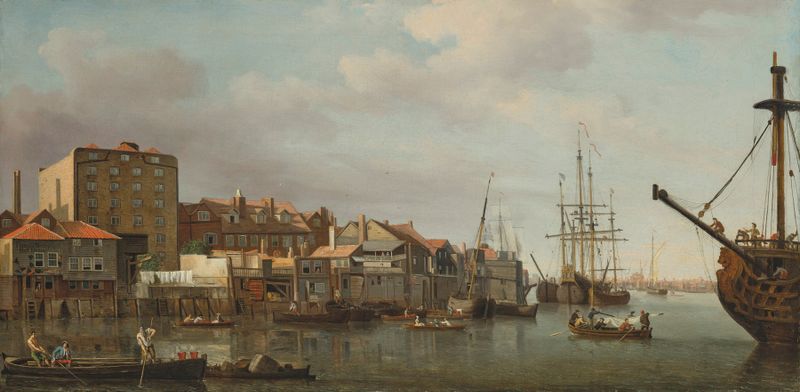
View of the Thames at Wapping
Samuel Scott
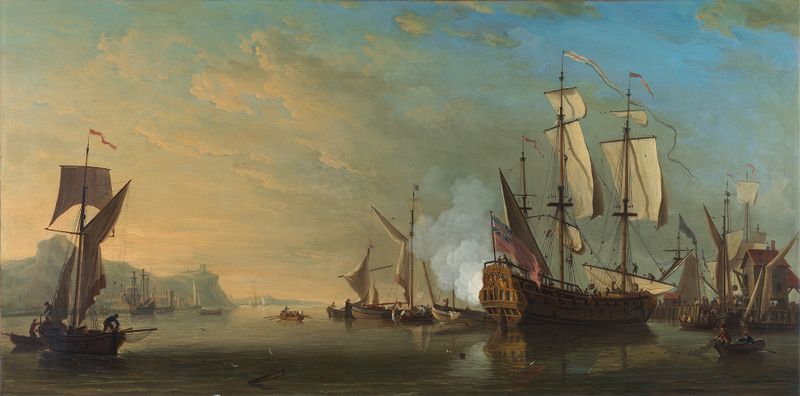
Shipping off Dover
Samuel Scott
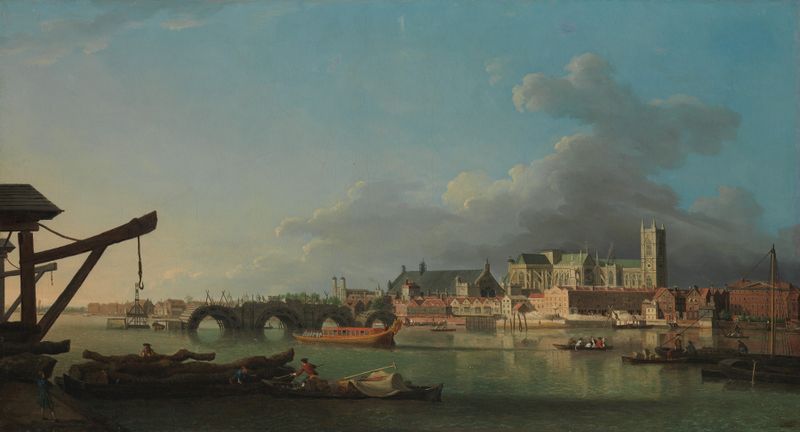
The Building of Westminster Bridge
Samuel Scott
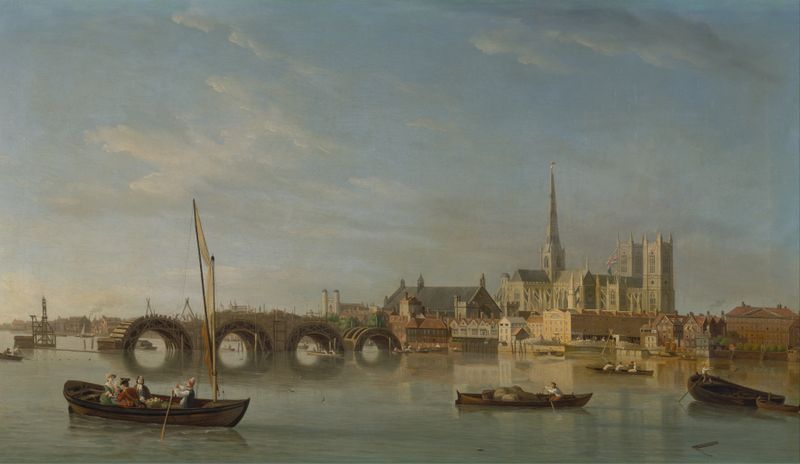
The Building of Westminster Bridge
Samuel Scott
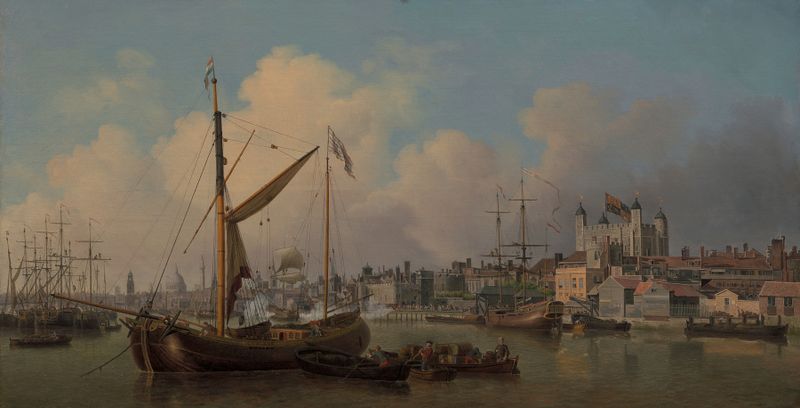
A View of the Tower of London, Supposed on his Majesty’s Birthday
Samuel Scott
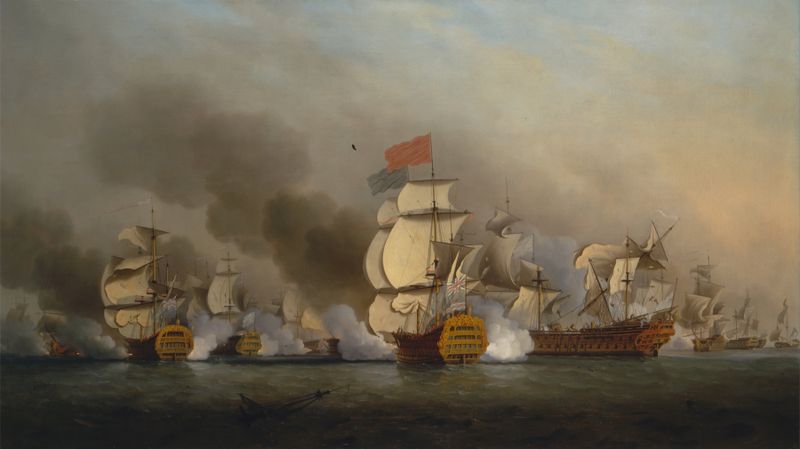
Vice Admiral Sir George Anson’s Victory off Cape Finisterre
Samuel Scott
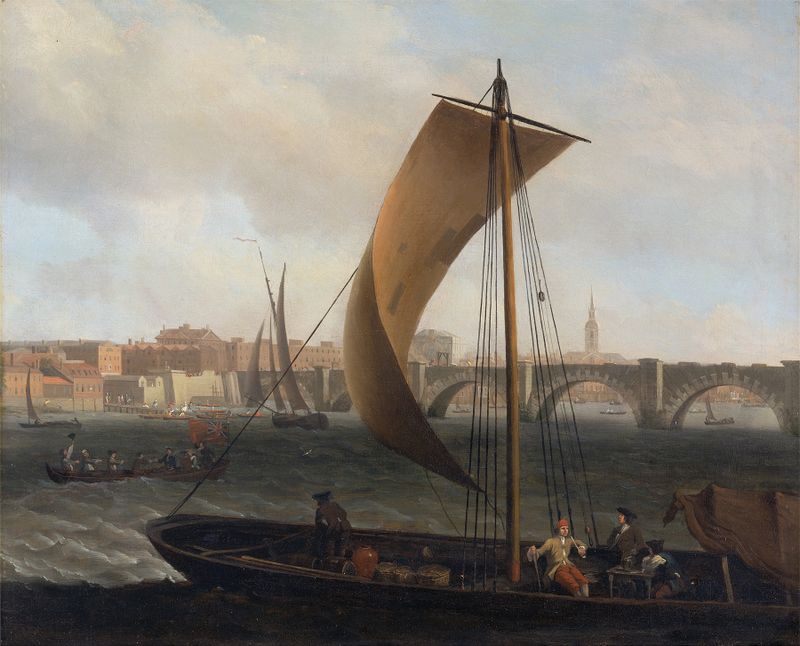
View on the Thames with Westminster Bridge
Samuel Scott
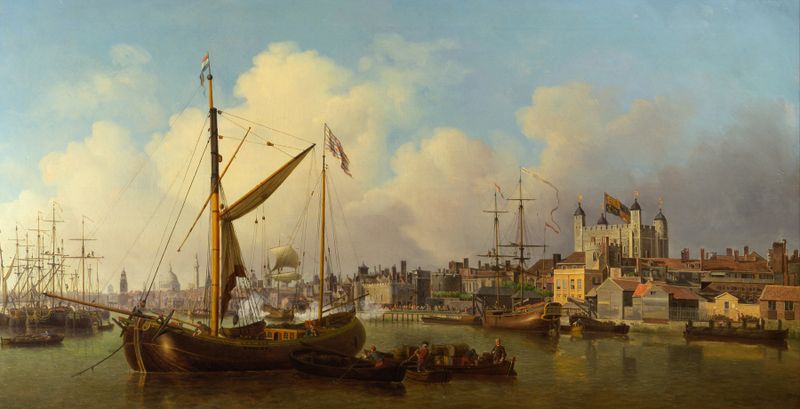
The Thames and the Tower of London Supposedly on the King’s Birthday
Samuel Scott
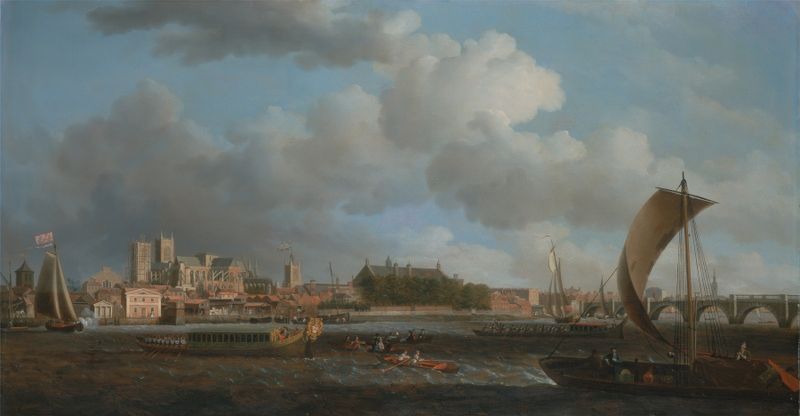
Westminster from Lambeth, with the Ceremonial Barge of the Ironmongers’ Company
Samuel Scott
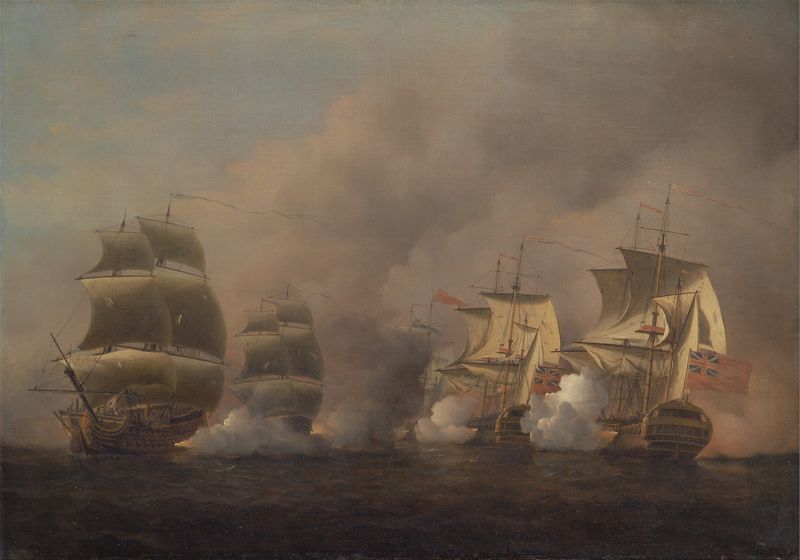
Action off the Cape of Good Hope
Samuel Scott





