The Thames, Early Morning, Towards St. Paul’s — History & Facts
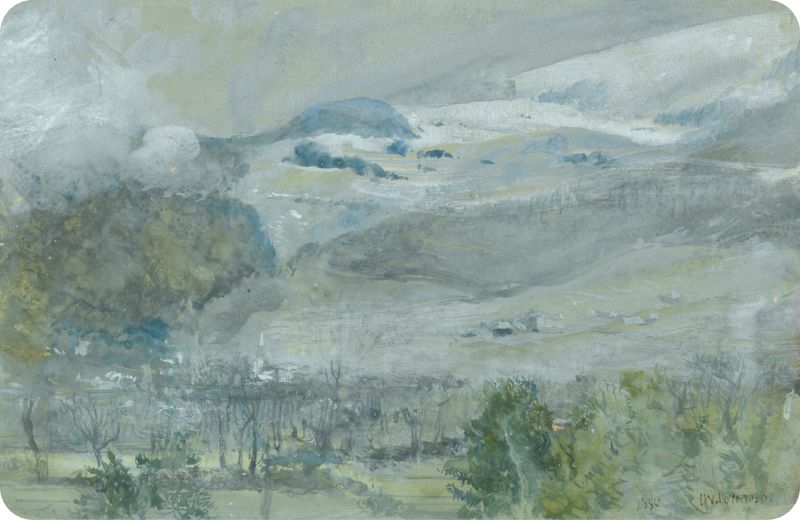
In the stillness of morning, the Thames whispers secrets to those willing to listen, each ripple carrying a memory of the past. The air holds a tension between the promise of a new day and the weight of what has come before it. Look to the center of the canvas, where light filters through the early haze, illuminating the distant silhouette of St. Paul’s Cathedral.
The soft, muted palette of blues and sepias envelops the scene, while delicate brushwork captures the surface of the water, shimmering with a gentle glow. Notice how the boats, barely defined shapes against the backdrop, drift along the river, their presence an echo of life amid the tranquil solitude of dawn. Beneath the surface of this serene landscape lies a poignant contrast: the vibrancy of life juxtaposed with the stillness of time. The cathedral stands as a monument to endurance, a silent witness to countless stories unfolding beneath its gaze.
Each stroke of paint breathes nostalgia for moments fleeting, inviting the viewer to reflect on their own connections to the past, caught between the fleeting and the eternal. In 1849, Inchbold painted this piece during a period of transition in the art world, as romanticism began to give way to more modern interpretations of reality. Working in England, he found inspiration in the changing landscape of his surroundings, capturing a collective yearning for beauty and meaning amidst the industrial progress of the time. This painting encapsulates that moment, inviting us to pause and reflect on the experiences that shape our existence.