
The three stacks — History & Facts
Could beauty survive in a century of chaos? In The Three Stacks, the fleeting essence of nature stands in stark contrast to the temporal struggles of humanity. Look to the left at the elegantly arranged stacks of hay, their golden hues glistening under a soft, diffused light. Notice how the gentle brushstrokes convey texture, wrapping each pile in a sense of warmth and intimacy. The palette, awash in earthy tones, invites a stillness that envelops the viewer, reflecting a moment suspended in time.
The horizon, barely visible, hints at an infinite expanse, emphasizing the haystacks as both a marker of human endeavor and a reminder of nature's cyclical beauty. Delve deeper into the layers of this composition, where the three stacks become a metaphor for life’s fragility and endurance. The surrounding landscape, seemingly tranquil, underscores a tension between permanence and the inevitable decay that awaits all. The interplay of light and shadow creates an emotional resonance, suggesting a silent contemplation of mortality, urging the viewer to ponder the fleeting nature of existence amidst the beauty it begets. During the late 19th century, when this piece was created, Cazin was deeply influenced by the Romantic movement, exploring themes of nostalgia and transience.
Living in France, he witnessed the rapid industrialization that transformed the countryside, making his focus on pastoral scenes a poignant reflection of the tension between nature and human progress. Cazin’s embrace of this peaceful landscape serves as a timeless reminder of the beauty that can endure, even as the world around it changes.
More Artworks by Jean Charles Cazin
Browse all →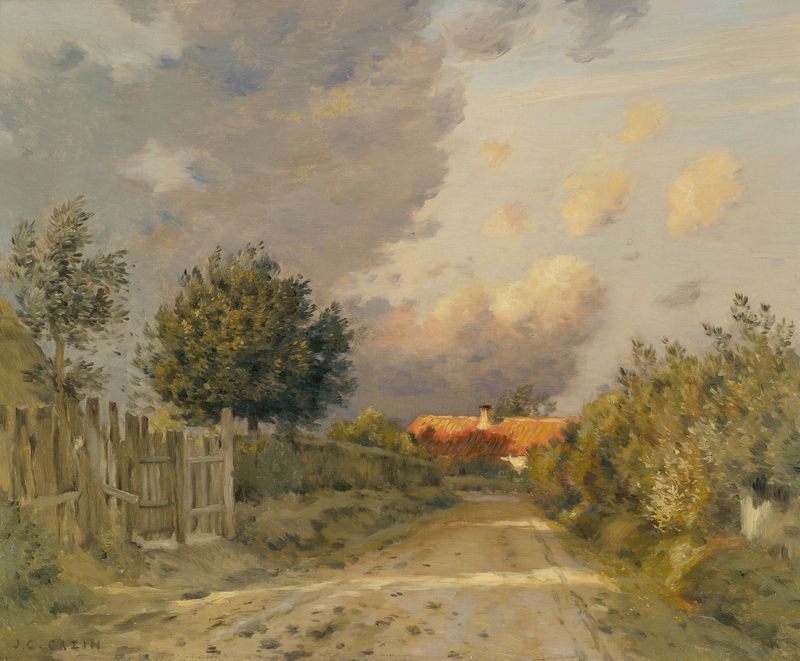
Early Evening In The French Countryside
Jean Charles Cazin
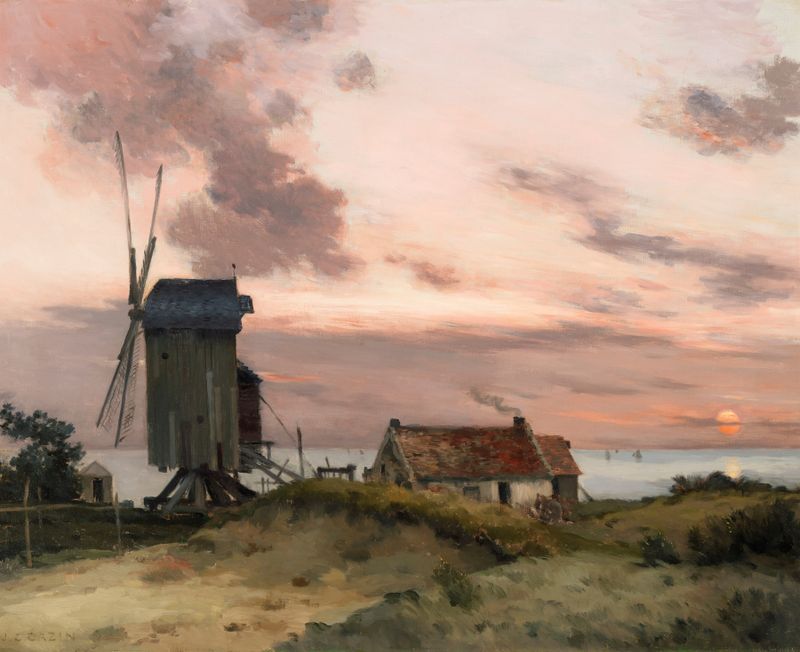
Windmill on a Beach
Jean Charles Cazin
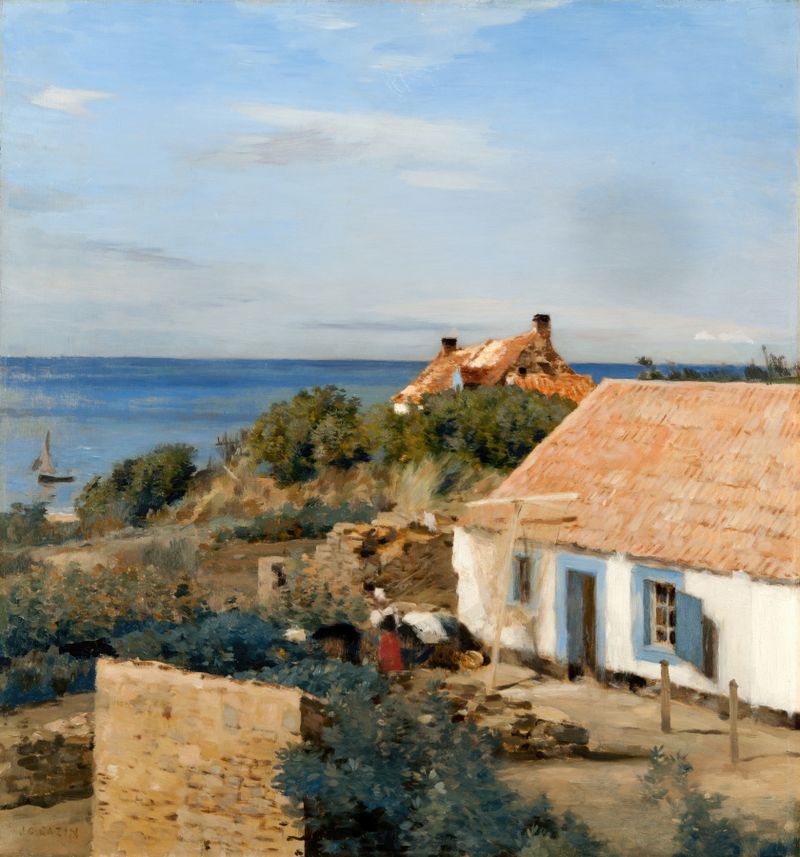
French Landscape
Jean Charles Cazin
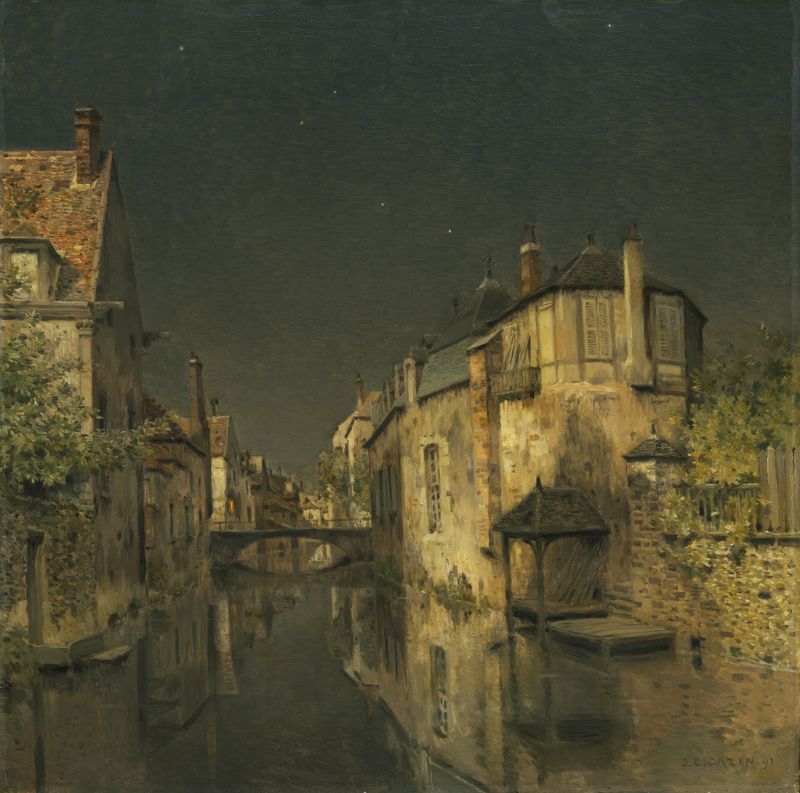
Midnight
Jean Charles Cazin

Tobias and the Angel
Jean Charles Cazin

October Day
Jean Charles Cazin

Paysage au clair de lune
Jean Charles Cazin
Rest on the Flight into Egypt
Jean Charles Cazin
Cottage in the Dunes
Jean Charles Cazin

The Boatyard
Jean Charles Cazin





