
The Toll-house with a Coach Crossing the Bridge — History & Facts
What if beauty was never meant to be finished? This notion echoes through the delicate brushstrokes and vibrant hues of a world caught between order and chaos. In The Toll-house with a Coach Crossing the Bridge, the viewer is invited to contemplate the madness of life, ensconced within the structured elegance of a pastoral scene. Look to the left, where the toll-house stands proud against a backdrop of verdant trees. Notice how the light cascades through the foliage, casting playful shadows on the cobblestone path.
The coach, laden with passengers, becomes a focal point, charged with motion as it crosses the arched bridge. The interplay of color—from the earthy browns of the house to the lively greens of nature—creates a harmonious yet unsettling juxtaposition, reflecting a vibrant yet turbulent existence. As you take in the bustling activity, consider the contrasting emotions on the passengers’ faces: excitement mingled with anxiety as they journey towards the unknown. The toll-house itself stands as a metaphor for transition, a threshold between two worlds—the serene landscape and the frenetic life beyond.
This tension hints at the insanity inherent in our pursuit of beauty and order in an unpredictable reality. Samuel Howitt painted this work during a period of significant change in England, likely in the late 18th to early 19th century. As the Industrial Revolution began to reshape the landscape, artists like Howitt sought to preserve the beauty of rural life and its vanishing charms. This painting serves as both a tribute and a lament, capturing a moment of serenity amid the encroaching madness of modernity.
More Artworks by Samuel Howitt
Browse all →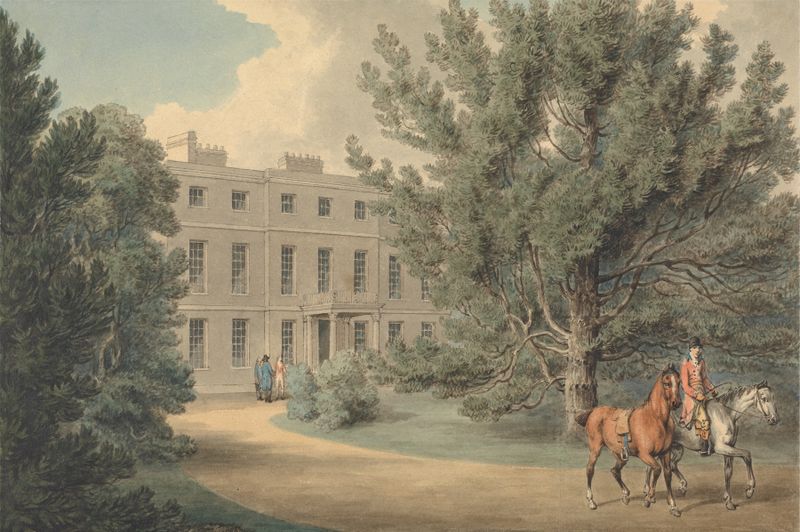
Rider Leading a Second Horse, Leaving the Grounds of a Country House
Samuel Howitt
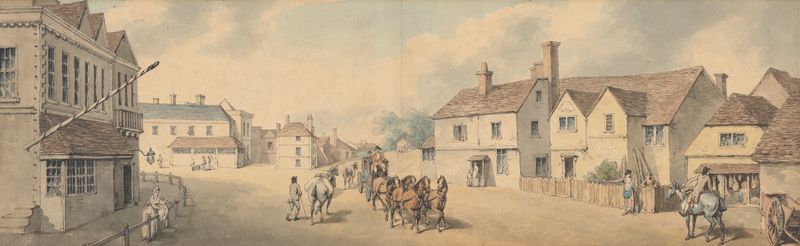
A Coach and Four Passing Through Chippenham, Wiltshire
Samuel Howitt

Valley Landscape with Sheep
Samuel Howitt

Snipe Shooting.
Samuel Howitt
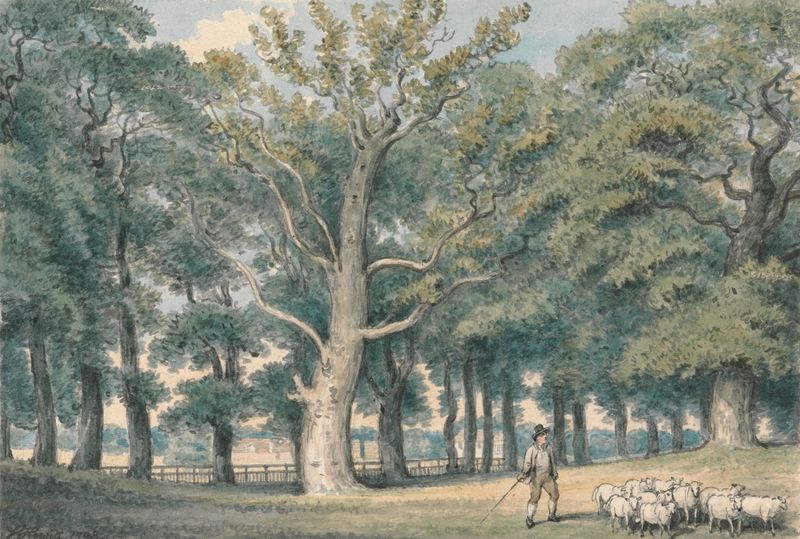
A Park Landscape with Shepherd and Sheep
Samuel Howitt
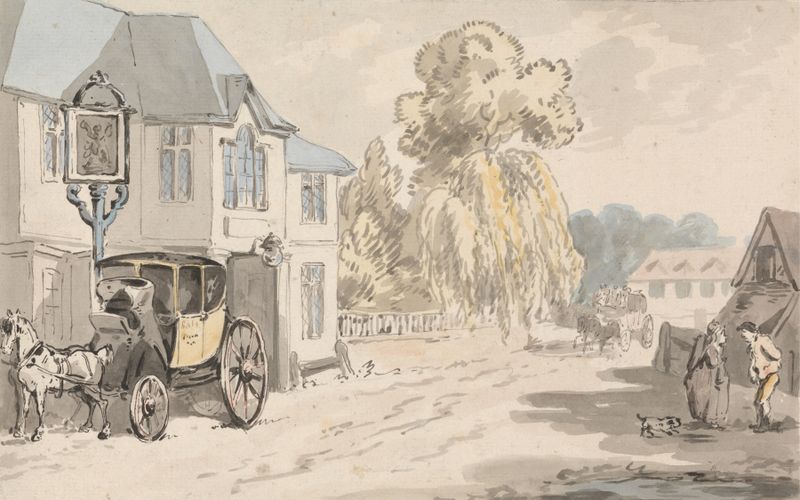
Riders Outside an Inn
Samuel Howitt

The Stone Gatherers
Samuel Howitt
The Village Inn
Samuel Howitt
Horses and Wagon Outside a Cottage
Samuel Howitt

Country Folk with a Child, Beside a River
Samuel Howitt





