
Valley Landscape with Sheep — History & Facts
Could beauty survive in a century of chaos? In a time where turmoil often overshadows serenity, this artwork reminds us of the quiet grace that can exist amidst grief. Look to the center where rolling hills unfurl like gentle waves, leading the eye toward a distant horizon. The soft greens and muted browns invite tranquility, while scattered sheep dot the landscape, their presence a testament to the simplicity of life. Notice how the light cascades across the scene, illuminating patches of grass, creating a harmonious interplay of shadow and glow that enhances the depth of the valley. Delve deeper into the details, and one might uncover the weight of melancholy beneath the surface beauty.
The sheep, though depicted in a serene state, symbolize the vulnerability of nature and the fragility of existence. The expanse of the valley, while picturesque, may also evoke a sense of longing for what is lost, a reminder of the world’s impermanence. Here, the contrast between the peaceful landscape and the undercurrents of sorrow invites reflection on the resilience of nature despite human grief. Samuel Howitt painted this piece during a period when the Romantic movement was flourishing in the late 18th to early 19th century, a time marked by the tumult of the Napoleonic Wars and industrial expansion.
Capturing the essence of the pastoral ideal, Howitt sought to depict nature’s solace amid the chaos surrounding him, merging his artistic vision with a prevailing desire to retreat into the calm of the countryside, away from the clamor of contemporary life.
More Artworks by Samuel Howitt
Browse all →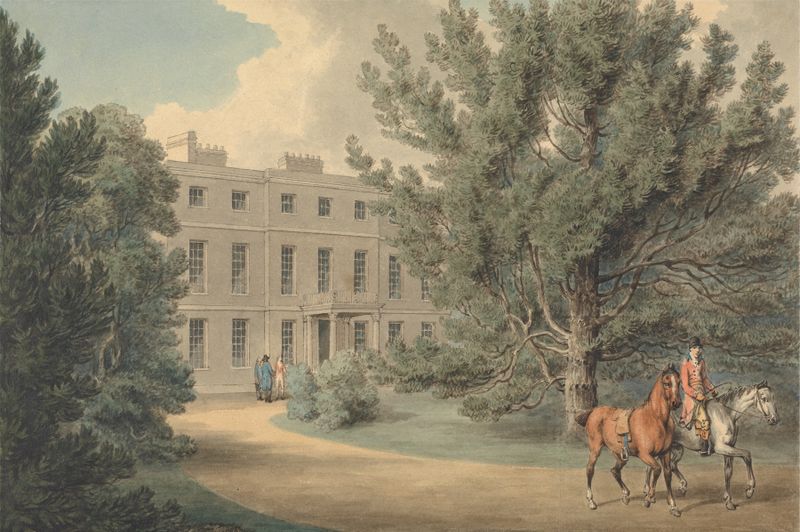
Rider Leading a Second Horse, Leaving the Grounds of a Country House
Samuel Howitt
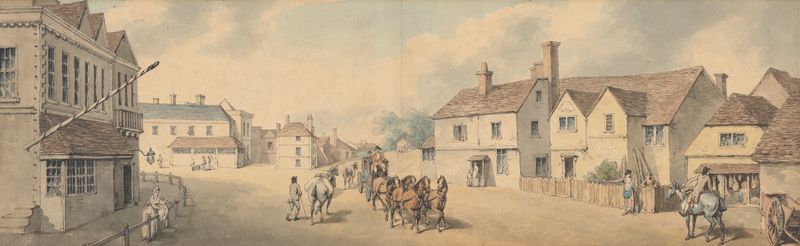
A Coach and Four Passing Through Chippenham, Wiltshire
Samuel Howitt

Snipe Shooting.
Samuel Howitt
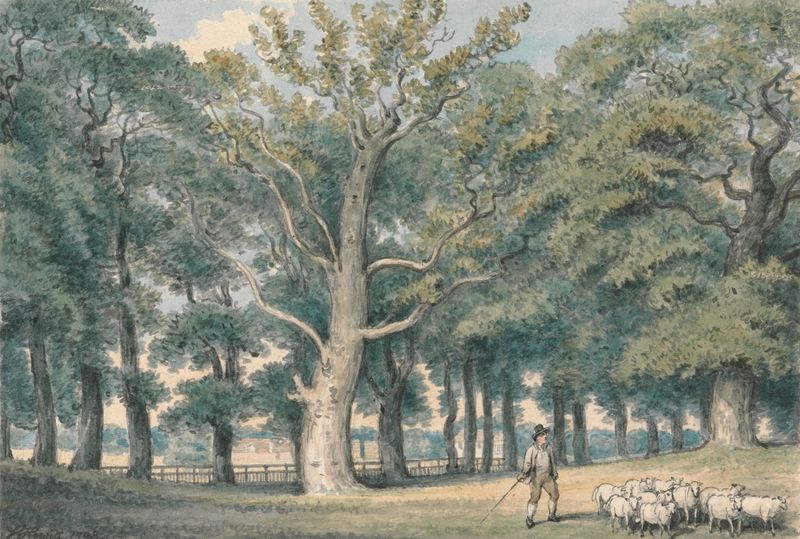
A Park Landscape with Shepherd and Sheep
Samuel Howitt
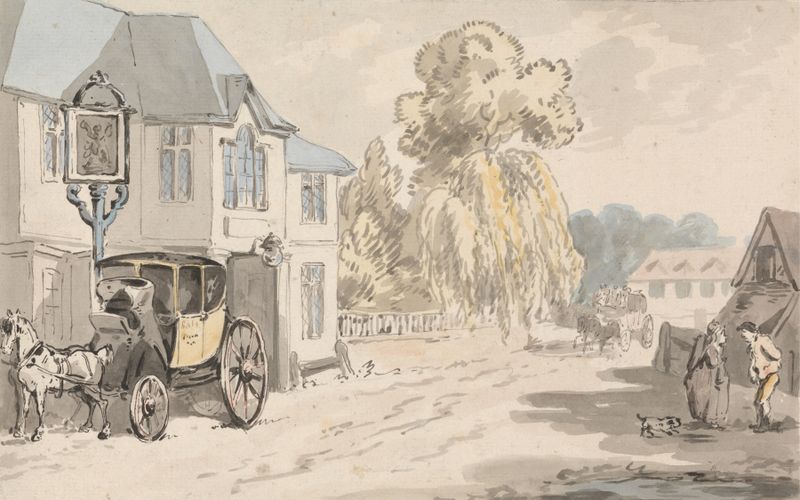
Riders Outside an Inn
Samuel Howitt

The Stone Gatherers
Samuel Howitt
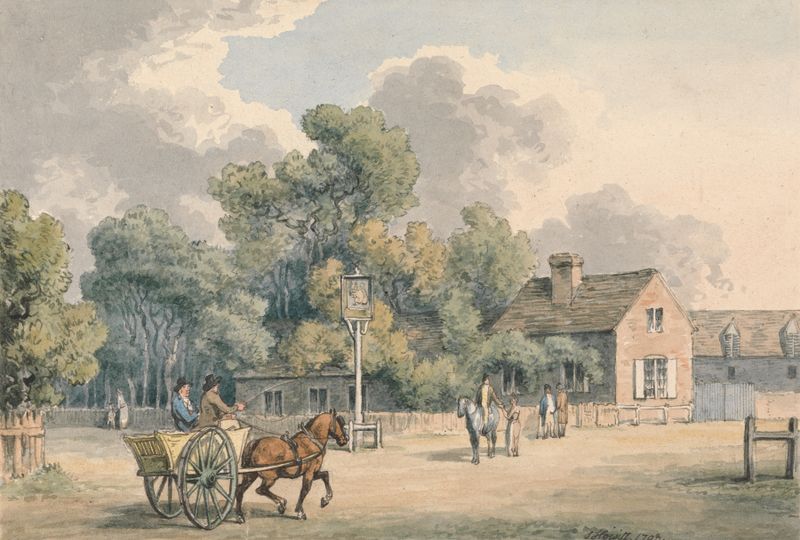
The Village Inn
Samuel Howitt

The Toll-house with a Coach Crossing the Bridge
Samuel Howitt
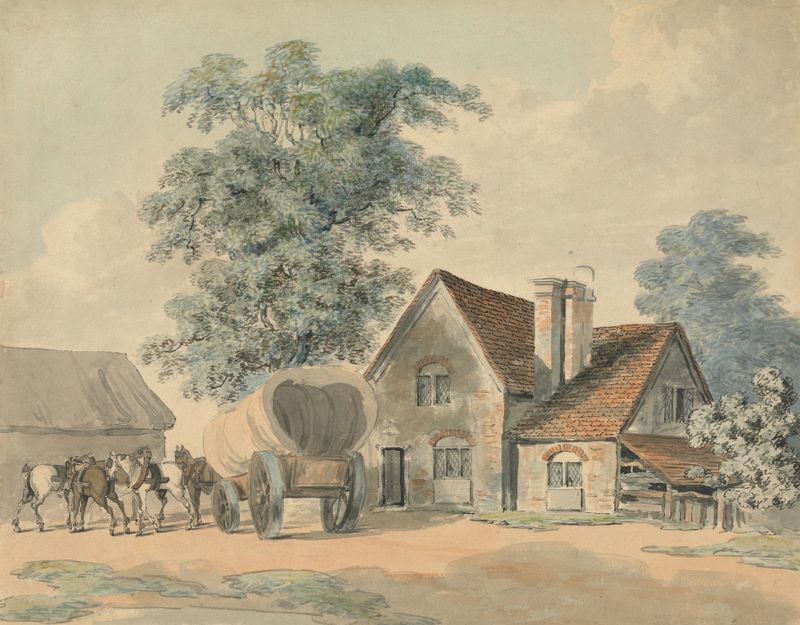
Horses and Wagon Outside a Cottage
Samuel Howitt

Country Folk with a Child, Beside a River
Samuel Howitt





