The Tomb Of Sultan Mehmet I — History & Facts
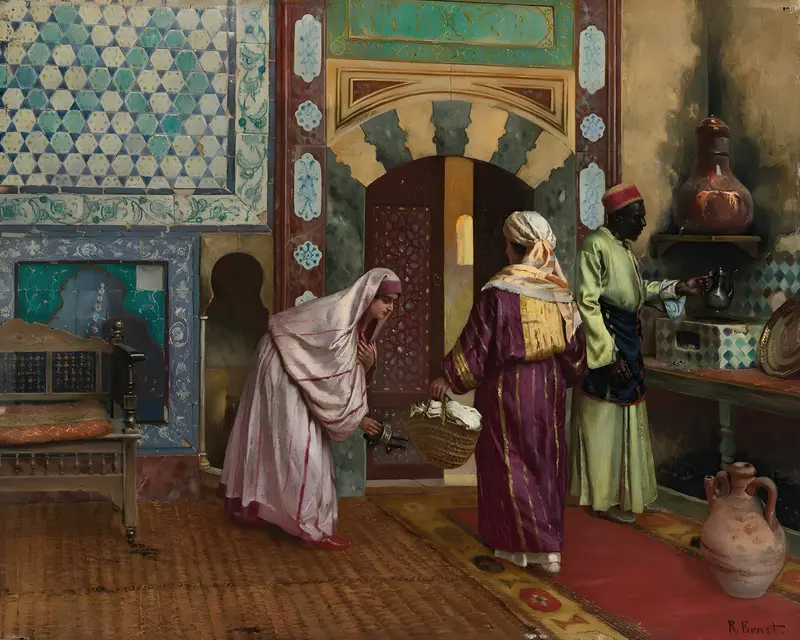
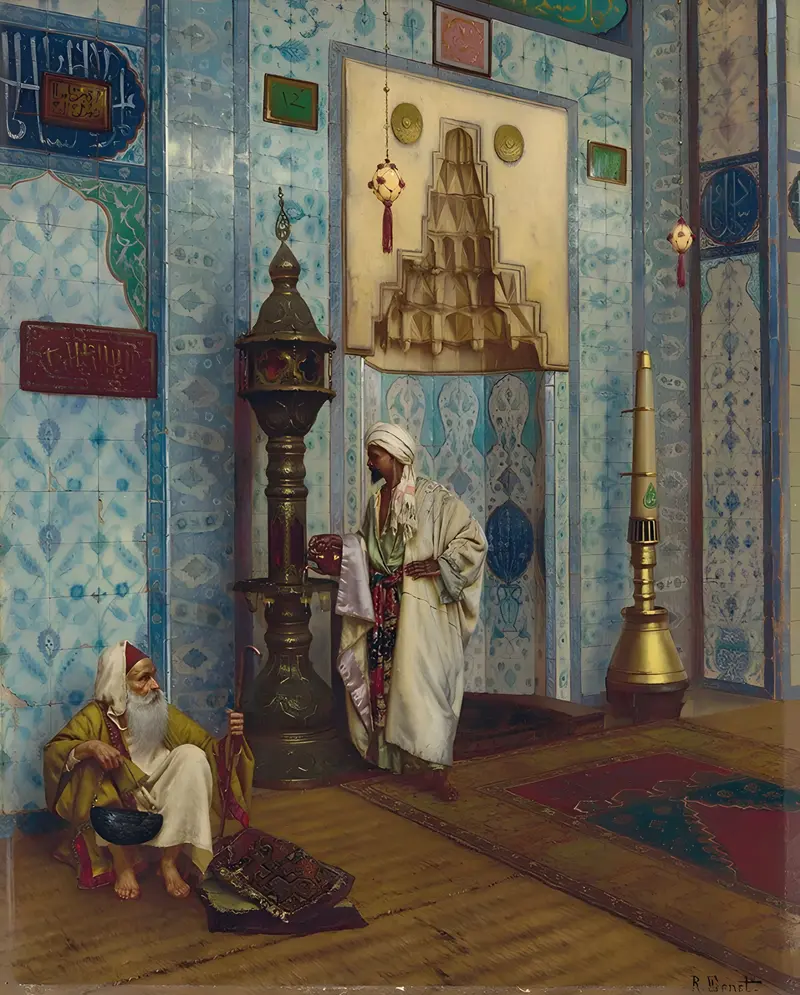
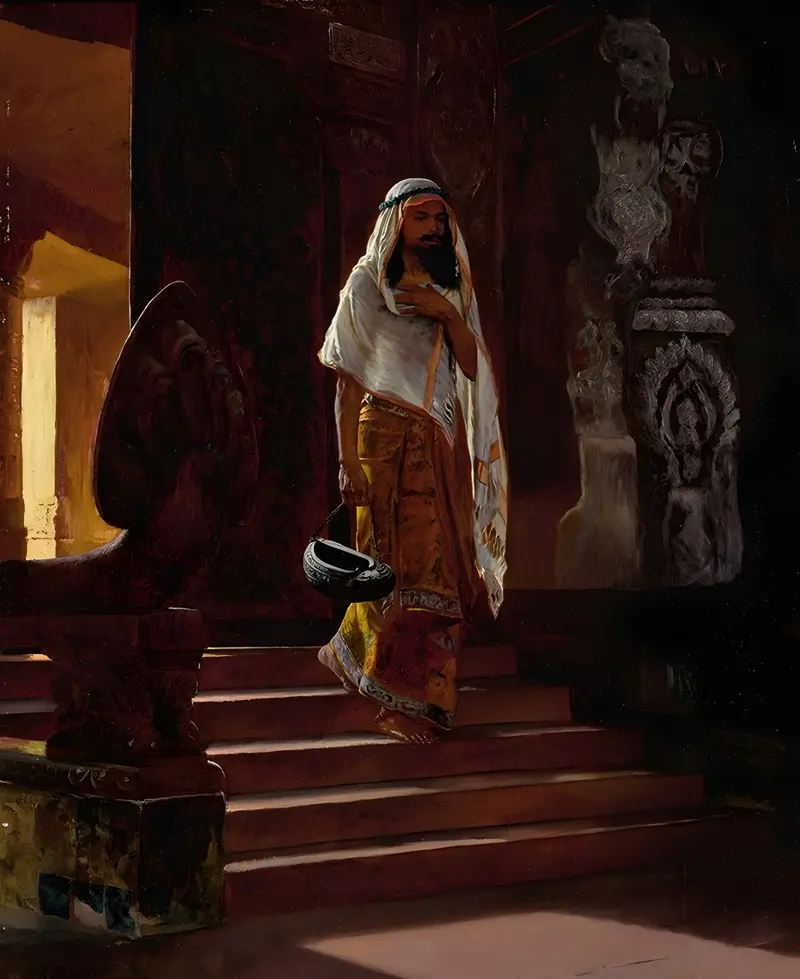
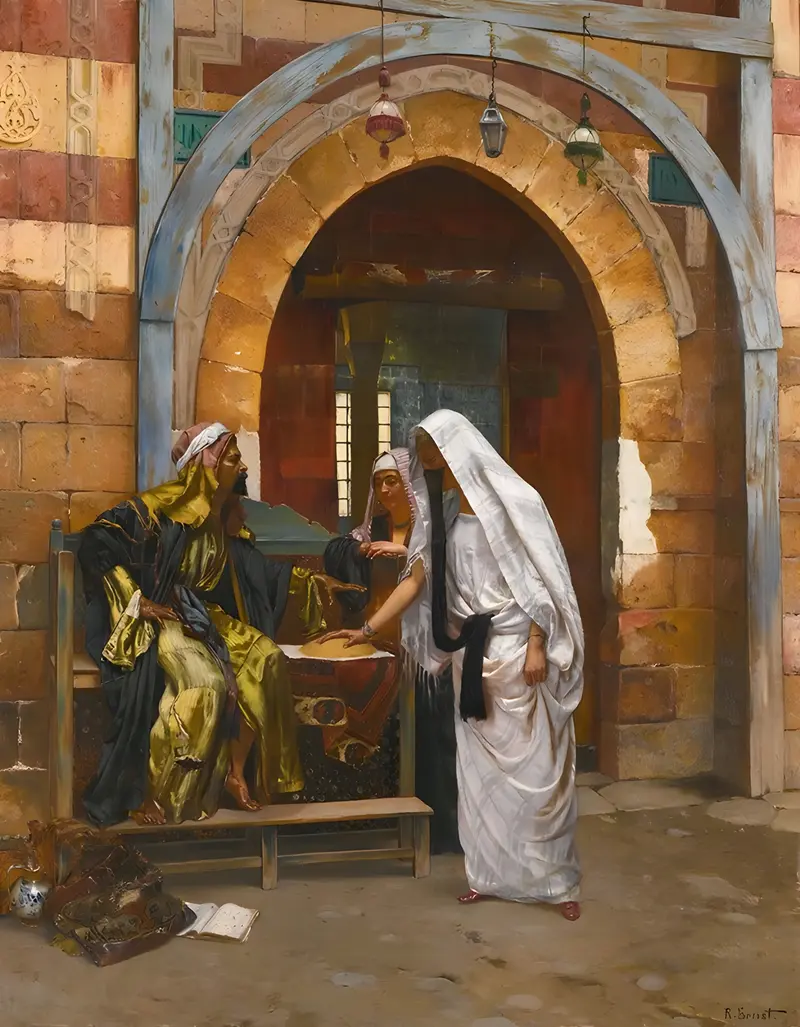
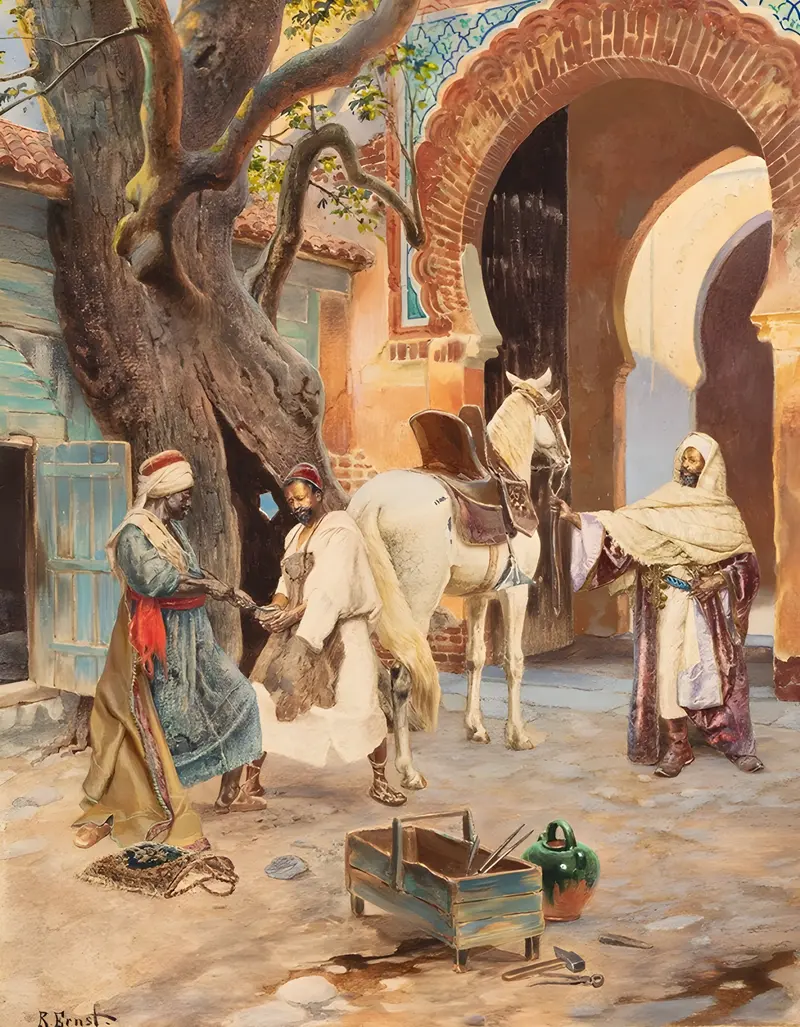
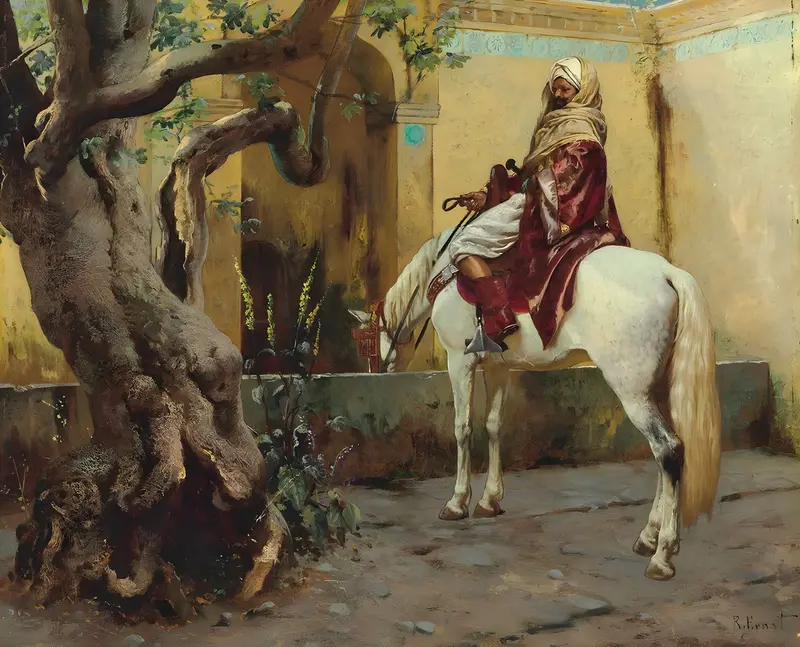
In The Tomb of Sultan Mehmet I, Rudolf Ernst captures a serene architectural scene. The painting features intricate details of the tomb, adorned with ornate decorations and vibrant colors. The setting is bathed in warm light, highlighting the textures of the stone and the lush greenery surrounding the structure.
Figures in traditional attire can be seen, adding a sense of life and context to the historical setting. The painting is executed in oil on canvas, a medium that allows for rich colors and fine details. Ernst's technique showcases his skill in rendering light and shadow, creating depth in the architectural forms. The dimensions are approximately 80 x 100 cm, making it a substantial piece that invites viewers to explore its details closely.
The use of perspective draws the eye toward the tomb, emphasizing its significance. Rudolf Ernst was known for his depictions of Orientalist themes, often focusing on architecture and cultural settings. This work reflects his fascination with the Islamic world and its historical monuments. An interesting fact about this painting is that it was created during a period when European artists were increasingly drawn to the exoticism of the East, influencing their artistic expressions.
Ernst's attention to detail and color makes this piece a notable example of 19th-century Orientalism.