The Watering Hole — History & Facts
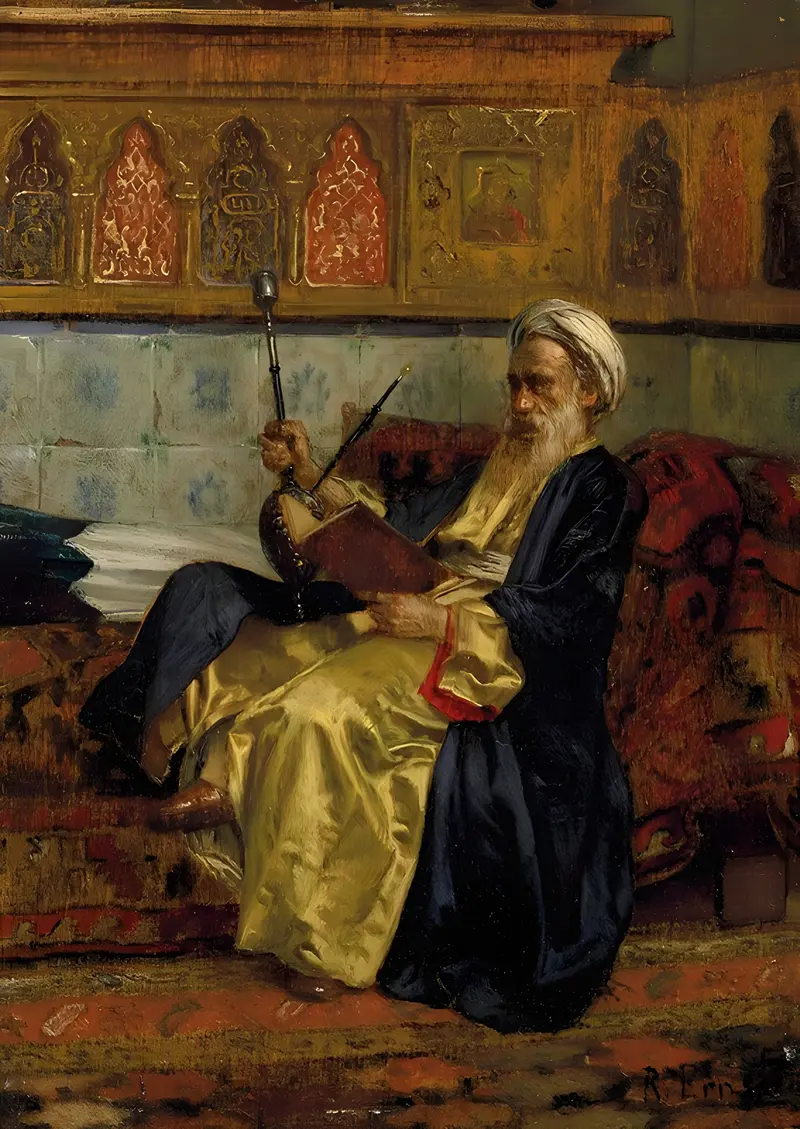
In The Watering Hole, Rudolf Ernst presents a vibrant scene filled with life. The painting features a variety of animals gathered around a watering hole, showcasing rich colors and intricate details. The setting is lush and natural, with greenery surrounding the animals, creating a sense of harmony.
The warm tones of the earth contrast beautifully with the cool blues of the water. The technical aspects of this oil on canvas work are notable for their attention to detail. Ernst employs a realistic style, capturing the textures of the animals' fur and the reflections in the water. The composition is balanced, drawing the viewer's eye to the central watering hole.
The use of light and shadow adds depth, enhancing the three-dimensionality of the scene. Rudolf Ernst was known for his depictions of exotic scenes, often inspired by his travels. The Watering Hole reflects his fascination with wildlife and the natural world. An interesting fact about this work is that it exemplifies the Orientalist movement, which romanticized Eastern cultures and landscapes.
Ernst's ability to blend realism with an exotic subject matter makes this painting a notable example of his artistic style.