The Hammam — History & Facts
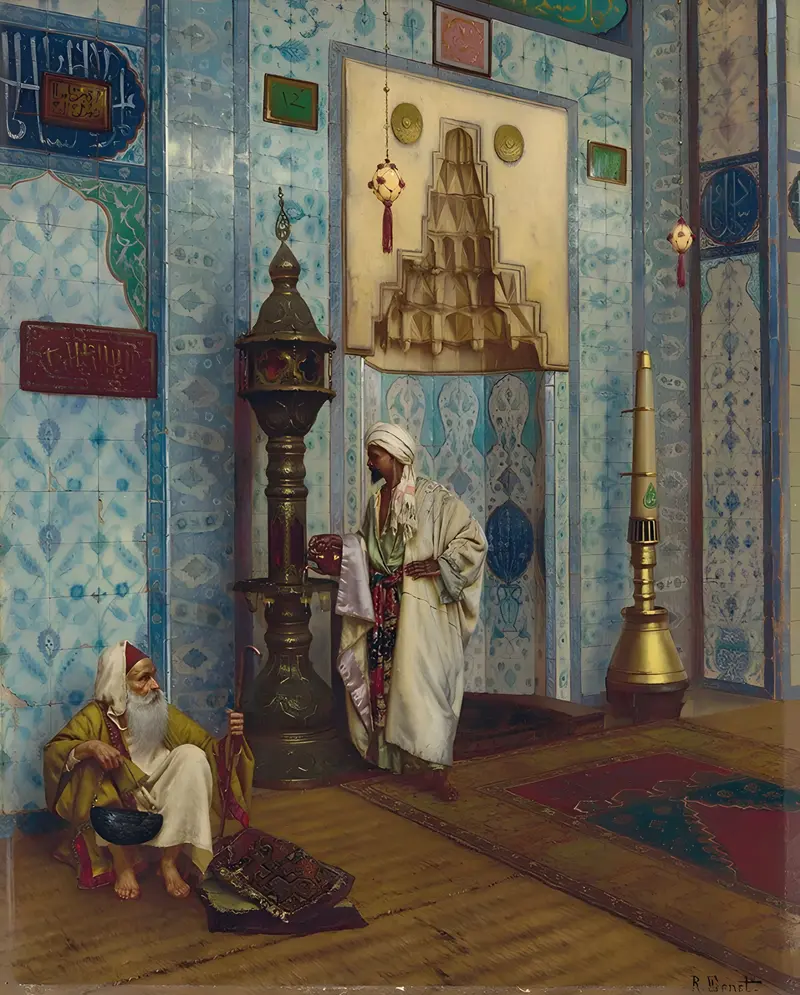
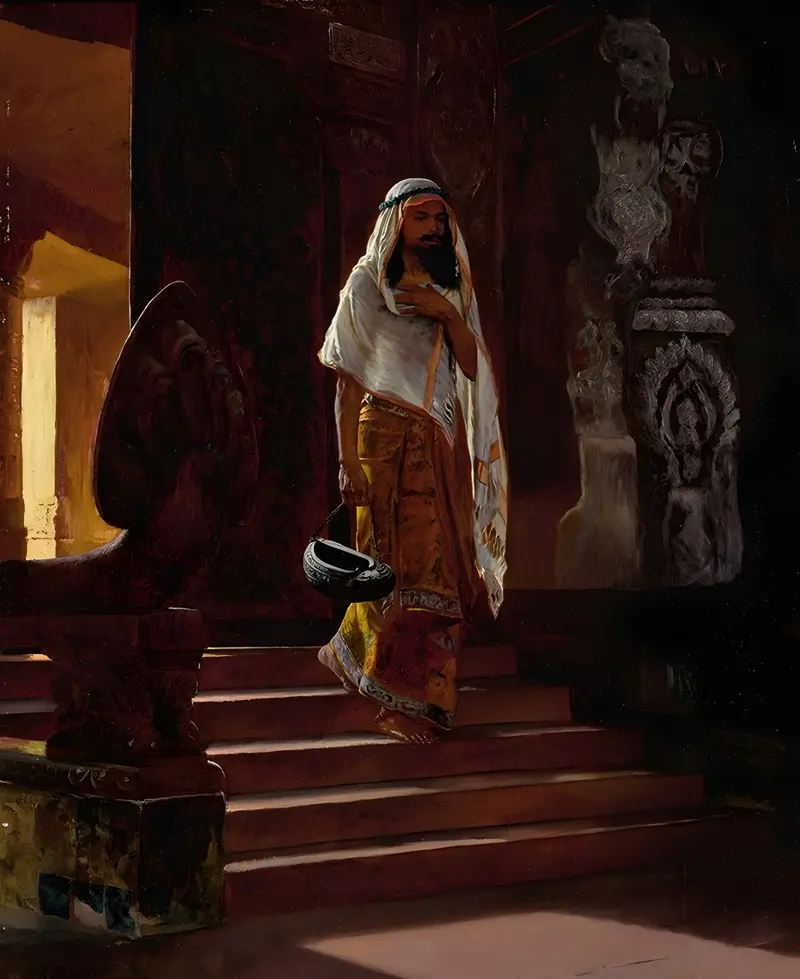
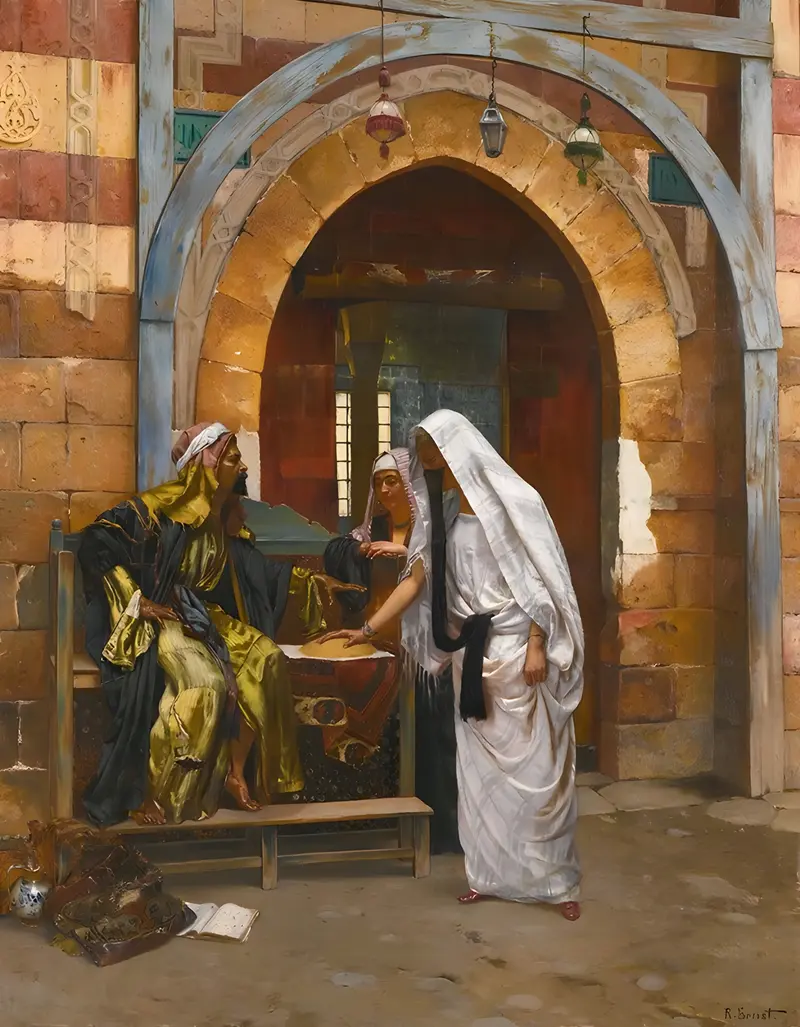
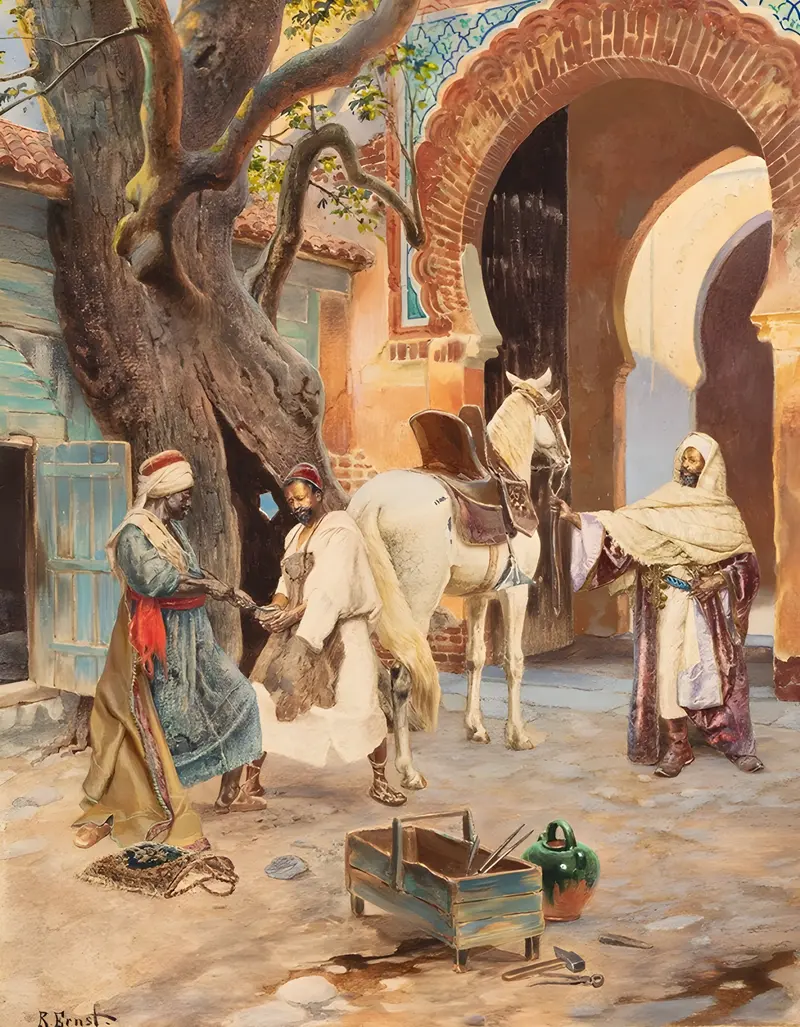
In The Hammam, Rudolf Ernst presents a vibrant interior scene filled with rich colors and intricate details. The painting showcases a group of figures engaged in the ritual of bathing, surrounded by ornate tiles and soft, flowing fabrics. Warm hues of gold and deep reds dominate the composition, creating an inviting atmosphere.
The figures, dressed in traditional attire, are depicted with a sense of intimacy and tranquility. The painting is executed in oil on canvas, a medium that allows for rich texture and depth. Ernst's attention to detail is evident in the intricate patterns of the tiles and the delicate play of light across the figures. The dimensions are approximately 80 x 100 cm, making it a substantial piece that draws the viewer in.
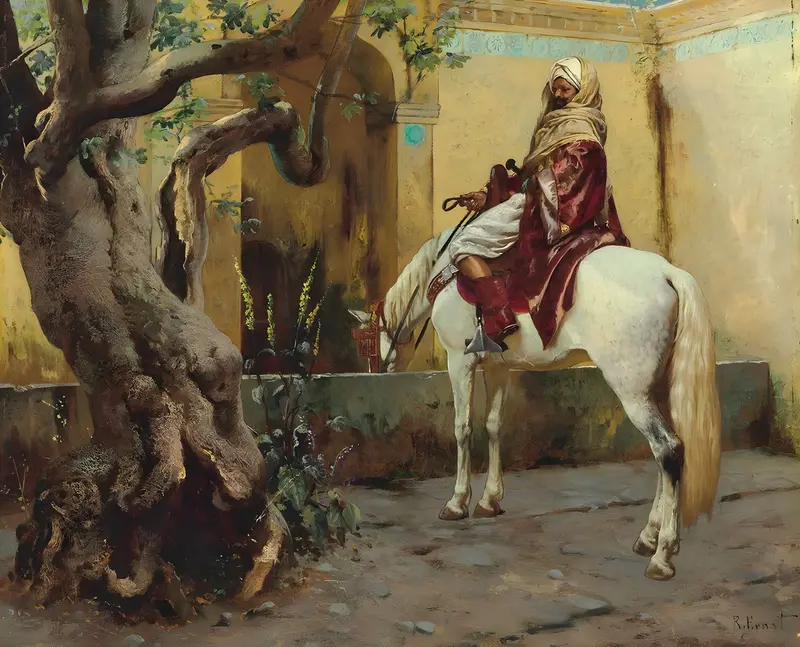
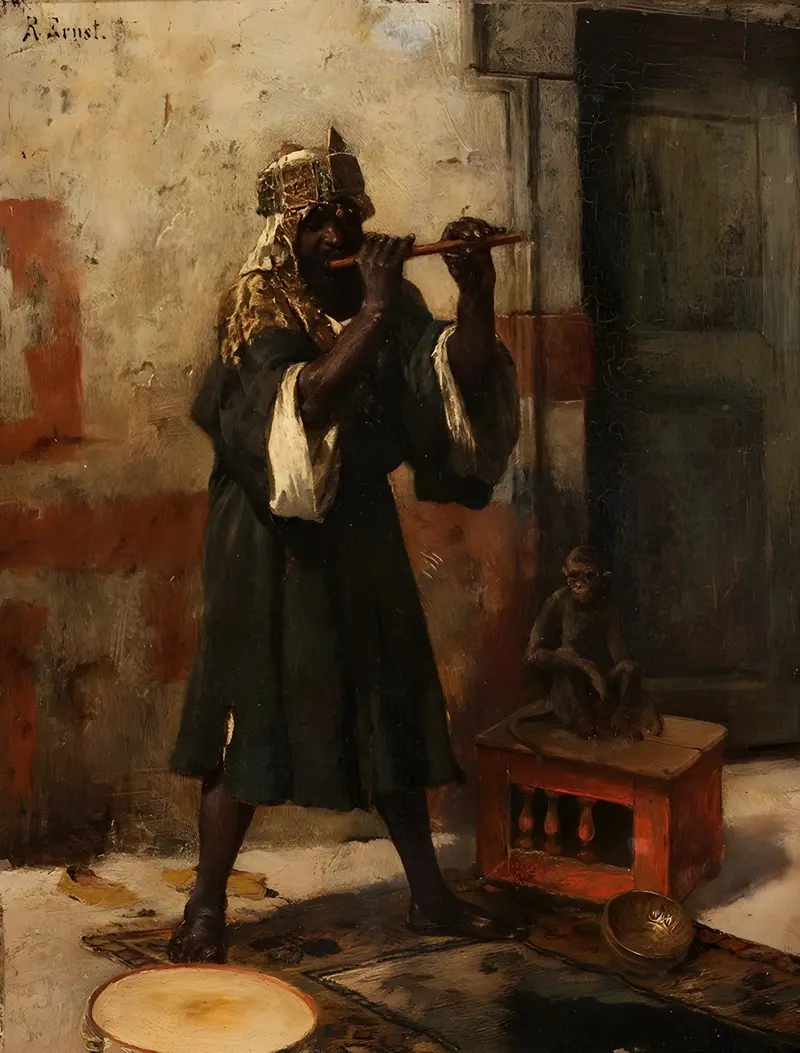
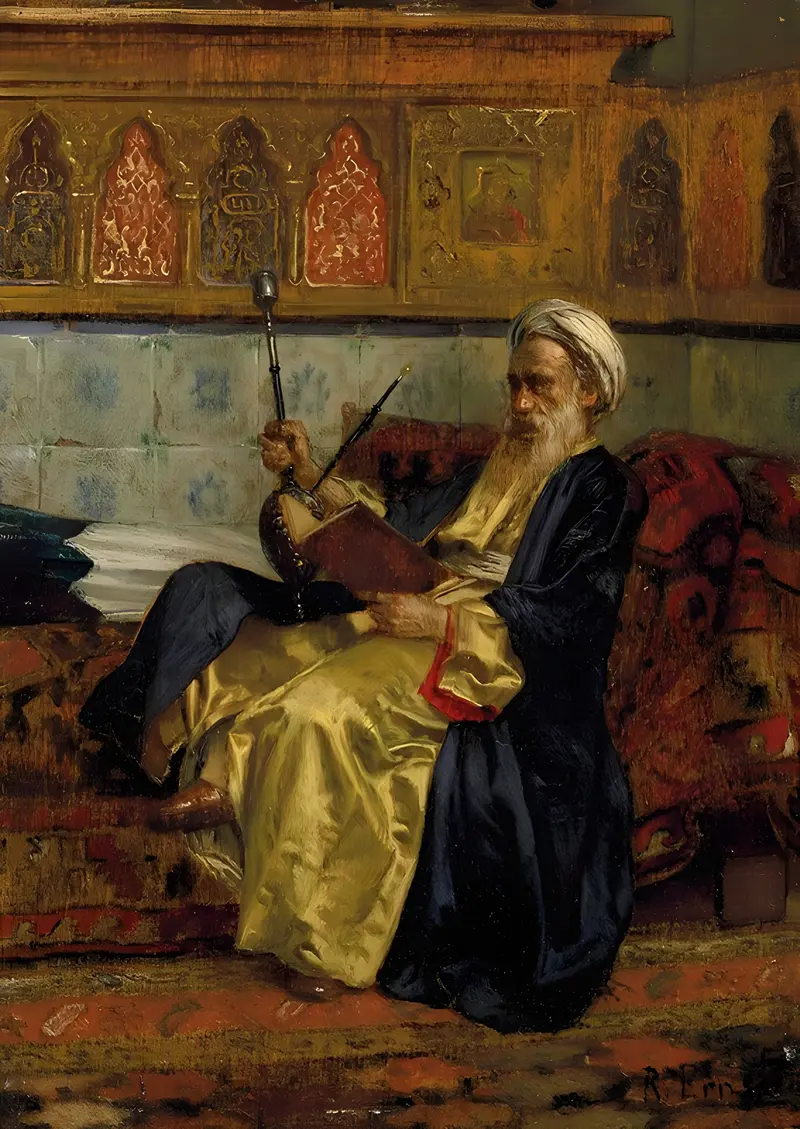
The use of color and light enhances the overall warmth and allure of the scene. Rudolf Ernst was known for his depictions of Orientalist themes, often exploring the cultures of the Middle East and North Africa. The Hammam reflects his fascination with the exotic and the intimate aspects of daily life in these regions. An interesting fact about this work is that it captures not just the physical space of a hammam, but also the social interactions and cultural practices associated with it.
This painting exemplifies the Orientalist movement's interest in portraying the allure of the East.