
The Tower, 1100 Miles Above St. Louis — History & Facts
Can beauty exist without sorrow? In George Catlin's The Tower, 1100 Miles Above St. Louis, serenity intertwines with the melancholy of nature's grandeur, evoking a bittersweet reflection on the passage of time. Focus first on the majestic tower formed by nature, standing powerfully against the expansive sky. Look closely at the way the clouds gather around its peak, embracing the structure like wisps of memory.
The soft pastels of blue and pink harmonize with the earth tones below, creating a tranquil scene that invites contemplation. The composition draws the viewer’s eye upward, encouraging an appreciation of both the monumentality of the tower and the delicate interplay of light. Hidden within the serene landscape are contrasts that unveil deeper truths. The solitude of the tower suggests resilience, a testament to nature's endurance amid the changing world.
Yet, the soft illumination hints at transience, echoing the fleeting nature of beauty. This duality whispers of loss, urging contemplation of what once was and what might never return, transforming the scene into a meditation on existence. In 1832, Catlin was immersed in a burgeoning interest in American landscapes and Indigenous cultures, a time when his explorations in art mirrored the tumult of a nation undergoing rapid change. As he painted this work, he sought to capture the essence of the American frontier, a testament to both its beauty and the underlying tensions present in its history, making it a pivotal piece in his oeuvre.
More Artworks by George Catlin
Browse all →
Wichita Lodge, Thatched With Prairie Grass
George Catlin

Ball-play of the Choctaw–Ball Up
George Catlin

Sioux Worshiping At The Red Boulders
George Catlin
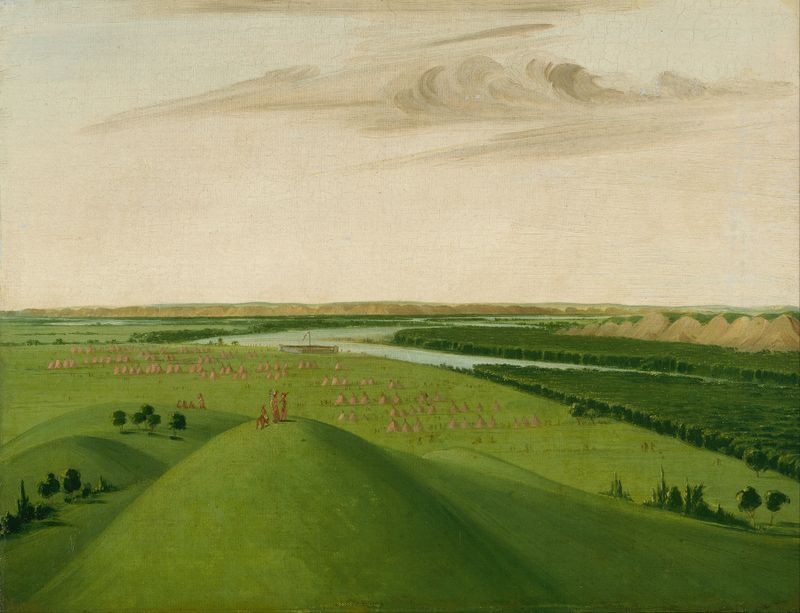
Fort Union, Mouth of the Yellowstone River, 2000 Miles above St. Louis
George Catlin
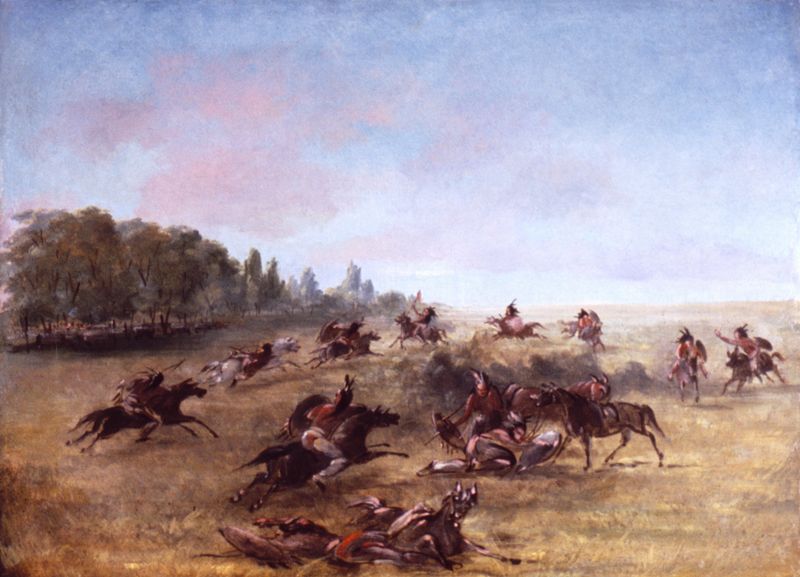
Mounted War Party Scouring A Thicket
George Catlin

Buffalo Chase, A Surround by the Hidatsa
George Catlin
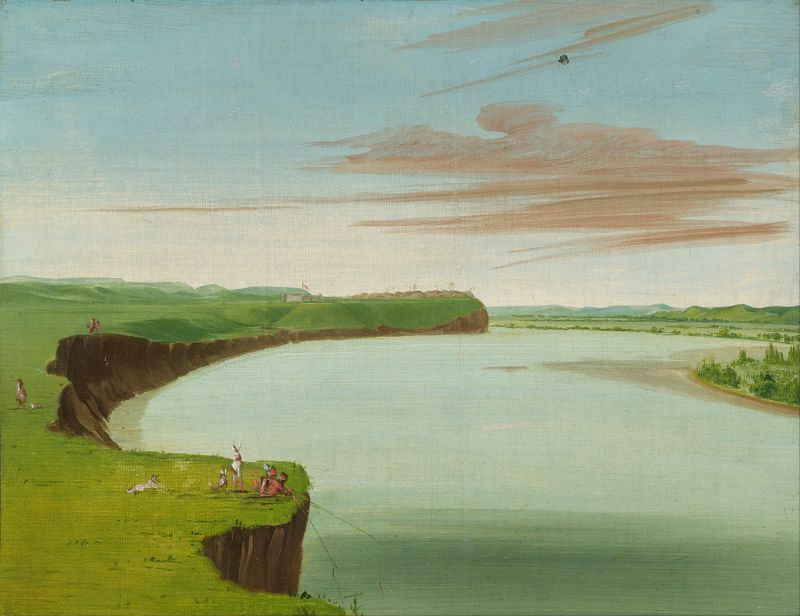
Distant View of the Mandan Village
George Catlin
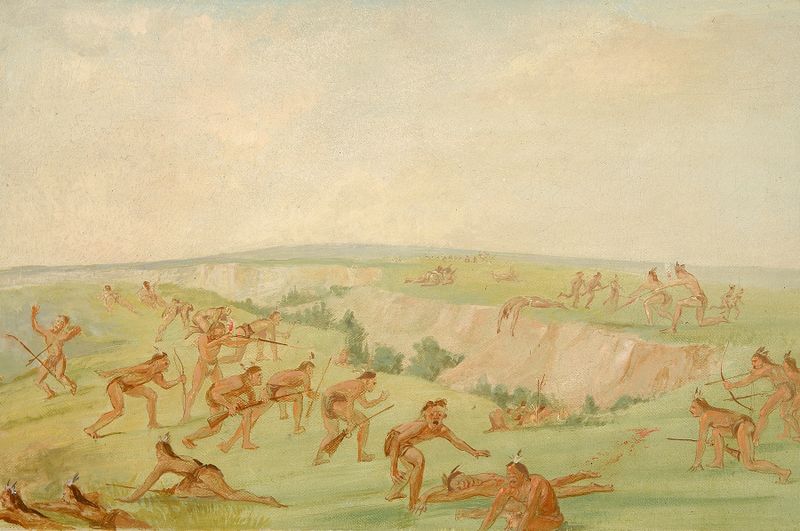
Mandan Attacking A Party Of Arikara
George Catlin
View On The Upper Mississippi, Beautiful Prairie Bluffs
George Catlin
Sac And Fox Sailing In Canoes
George Catlin





