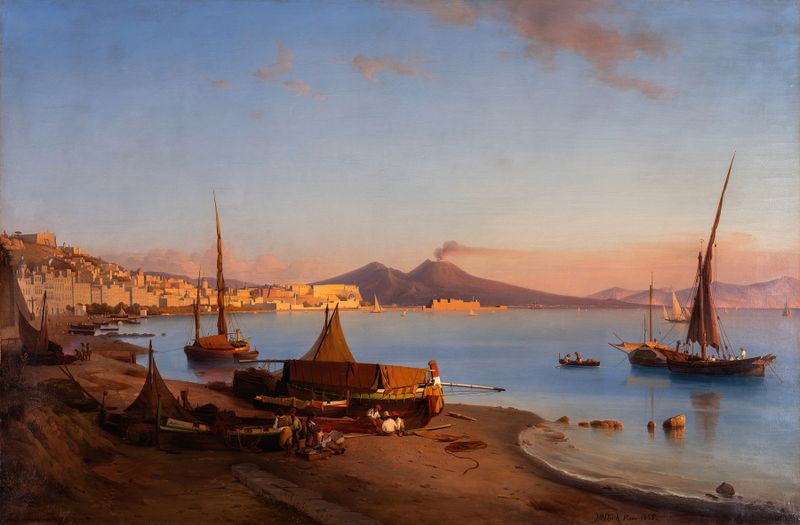
The Town Gate, Boppart — History & Facts
Did the painter know this moment would outlive them? In a world where time marches relentlessly forward, the vivid hues of an everyday scene hold a lasting power, whispering stories to those who pause to listen. Look to the vibrant orange and soft ochre that dominate the scene. These warm tones illuminate the town gate, drawing the eye immediately to its welcoming arch, inviting viewers into a quaint yet bustling community. Notice how the brushstrokes capture the gentle play of light, casting shadows that dance along the cobblestones, while the verdant greens in the background hint at life beyond the walls.
Each detail, from the textured rustic stone to the billowing clouds above, enhances the feeling of a fleeting moment suspended in time. As you explore further, subtle contrasts emerge—between warm and cool, light and shadow, openness and enclosure. The gate stands as a threshold, representing both the safety of home and the lure of the unknown. In the activities of the townsfolk, there lies a juxtaposition of individual stories; a child playing innocently near the threshold, while an older figure gazes thoughtfully outward, perhaps contemplating the day ahead or reminiscing about the past.
These hidden narratives weave a rich tapestry, revealing the complexities of daily life and the passage of time. In the 1800s, Joseph Magnus Stäck painted this work during a period marked by rapid social change in Europe. Living in the wake of the Enlightenment, he sought to capture the essence of everyday life, showcasing moments that reflected the values of community and tradition. This era encouraged artists to embrace realism and detail, ushering in a new way of seeing the world that would resonate well beyond his own lifetime.