Landscape Near Tivoli. Study — History & Facts
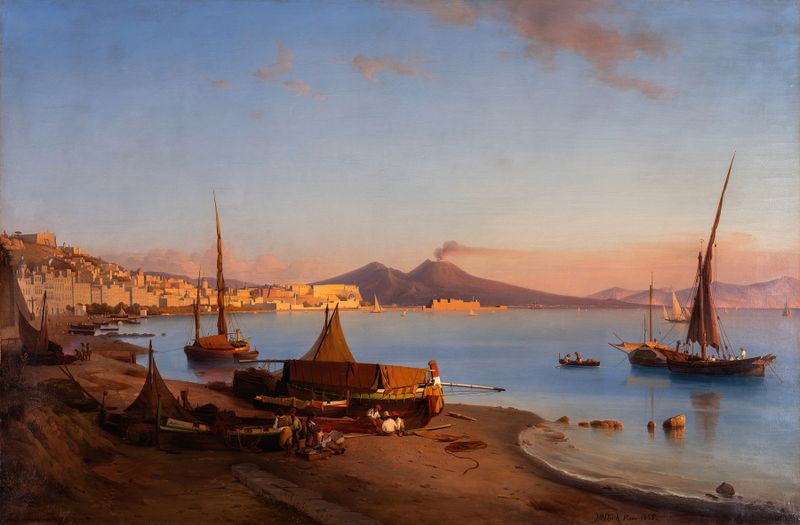
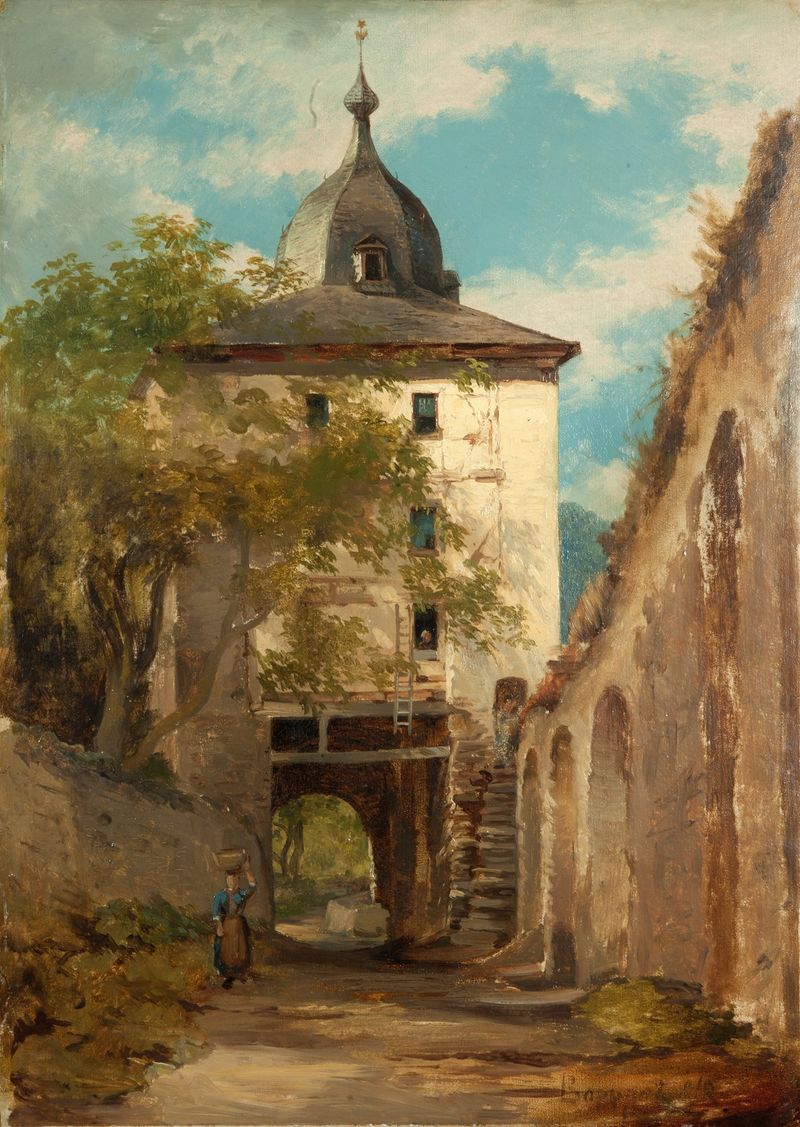
Could beauty survive in a century of chaos? In Landscape Near Tivoli. Study, Joseph Magnus Stäck explores the delicate interplay between tranquility and turmoil, inviting the viewer to ponder the resilience of nature amid human upheaval. Look to the foreground, where the gentle undulations of the hills draw your eye, their verdant greens and soft browns illuminated by a warm, golden light. The brushwork captures texture, each stroke breathing life into the foliage and rocky outcrops.
Notice how the horizon line elegantly separates the land from an expansive sky, where soft clouds drift lazily, creating a serene backdrop that contrasts with the complexities of the scene. The composition is balanced, yet the subtle tension between the ordered beauty of nature and the potential for disruption remains palpable. Hidden within this picturesque view are echoes of uncertainty. The lush landscape, while tranquil, is also a reminder of the revolutionary fervor of the time; the natural world persists, yet hints of unrest ripple through its serenity.
The interplay of light and shadow hints at the duality of existence—beauty that flourishes side by side with the potential for chaos. Each element, from the distant mountains to the gentle stream, serves as a metaphor for the fragility of peace amid societal upheaval. Stäck painted this work in 1844 while living in Europe, a period marked by turbulence and the rise of revolutionary sentiments across the continent. As artists sought new ways to express their responses to social and political upheaval, Stäck’s focus on the natural landscape reflected a yearning for stability in an uncertain world.
His study captures the essence of a moment before change, where beauty stands resilient against the backdrop of history.