View from La Spezia — History & Facts
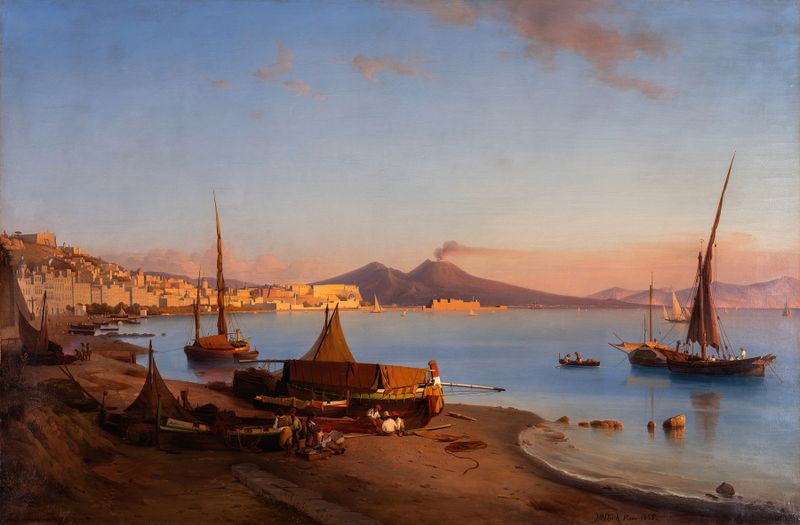
What secret hides in the quiet of the canvas? In the tranquility of View from La Spezia, a silent obsession emerges, whispering tales of nature's beauty and human endeavor. Look to the foreground, where the gentle slope of the hillside leads your eye toward the shimmering waters of the Gulf of La Spezia. The soft, muted tones of green and blue harmonize beautifully, inviting you to linger. Notice how the light dances across the surface of the water, creating a glimmer that feels both inviting and elusive.
The composition draws a delicate line between the lush land and the vast sea, suggesting the fragility of this moment — a fleeting interaction between man and nature. Delve deeper into the soft clouds that hover over the distant mountains, hinting at an impending change, perhaps a storm or a mere obscuring of beauty. There’s a sense of yearning in the depiction of the boats, which bob on the surface, both anchored and adrift, reflecting a balance between stability and uncertainty. This subtle tension underscores the artist’s obsession with capturing not just a landscape, but an emotional state — a moment suspended in time where nature remains untouched by the chaos of human life. In 1846, Joseph Magnus Stäck captured this serene view during a period of artistic transformation in Europe.
While he painted in La Spezia, the art world was grappling with Romanticism's fervor, emphasizing emotion and individual experience. Stäck, residing in Italy at the time, was influenced by this movement, and his work reflects both admiration for the natural world and an exploration of the profound connections it inspires.