
The Tweed at Coldstream — History & Facts
What if silence could speak through light? In The Tweed at Coldstream, the tranquility of the river whispers stories of time and place, captured in delicate hues and reflective surfaces. Look to the left, where the river meanders gently, its surface a shimmering mirror of soft blues and greens. Notice how the warm sunlight cascades through the trees lining the bank, dappling the water with patches of golden light. The artist’s use of texture in the foliage draws your eye upward, creating a serene contrast to the fluidity of the river below.
Each brushstroke seems to breathe life into the landscape, inviting you to linger in its peaceful embrace. As you explore the painting further, consider the tension between stillness and motion. The rippling water reflects the vibrant sky, suggesting a transient moment caught in time. Yet, the stillness of the trees and the quiet of the banks evoke a sense of permanence, grounding the scene in nature’s embrace.
This duality hints at the interplay between change and stability, as life flows onward while nature remains steadfast. David Young Cameron created this piece in 1905 while living in Scotland, a time when he was increasingly recognized for his landscape works. The early 20th century was marked by a shift in artistic styles, yet Cameron skillfully balanced impressionistic techniques with a deep appreciation for the natural beauty of his homeland. His focus on light and reflection in this painting captures a moment of serenity, showcasing both his technical prowess and emotional sensitivity to the environment.
More Artworks by David Young Cameron
Browse all →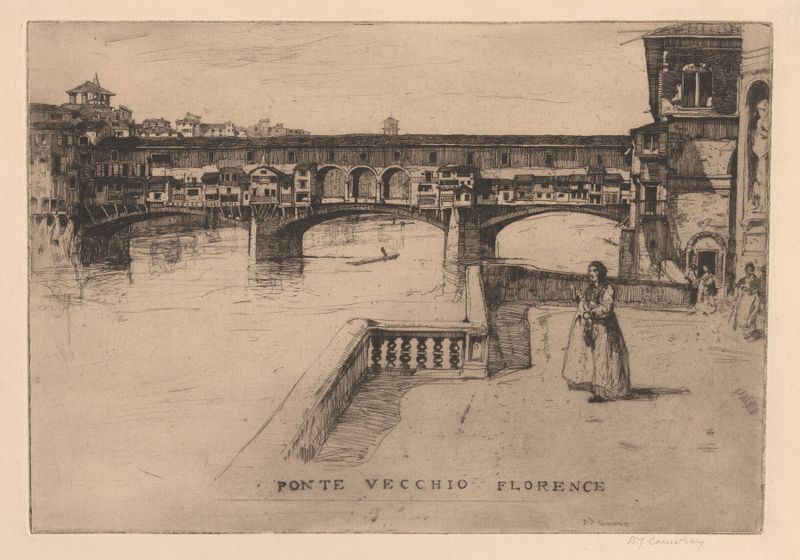
Ponte Vecchio
David Young Cameron

The Deanery, Winchester
David Young Cameron
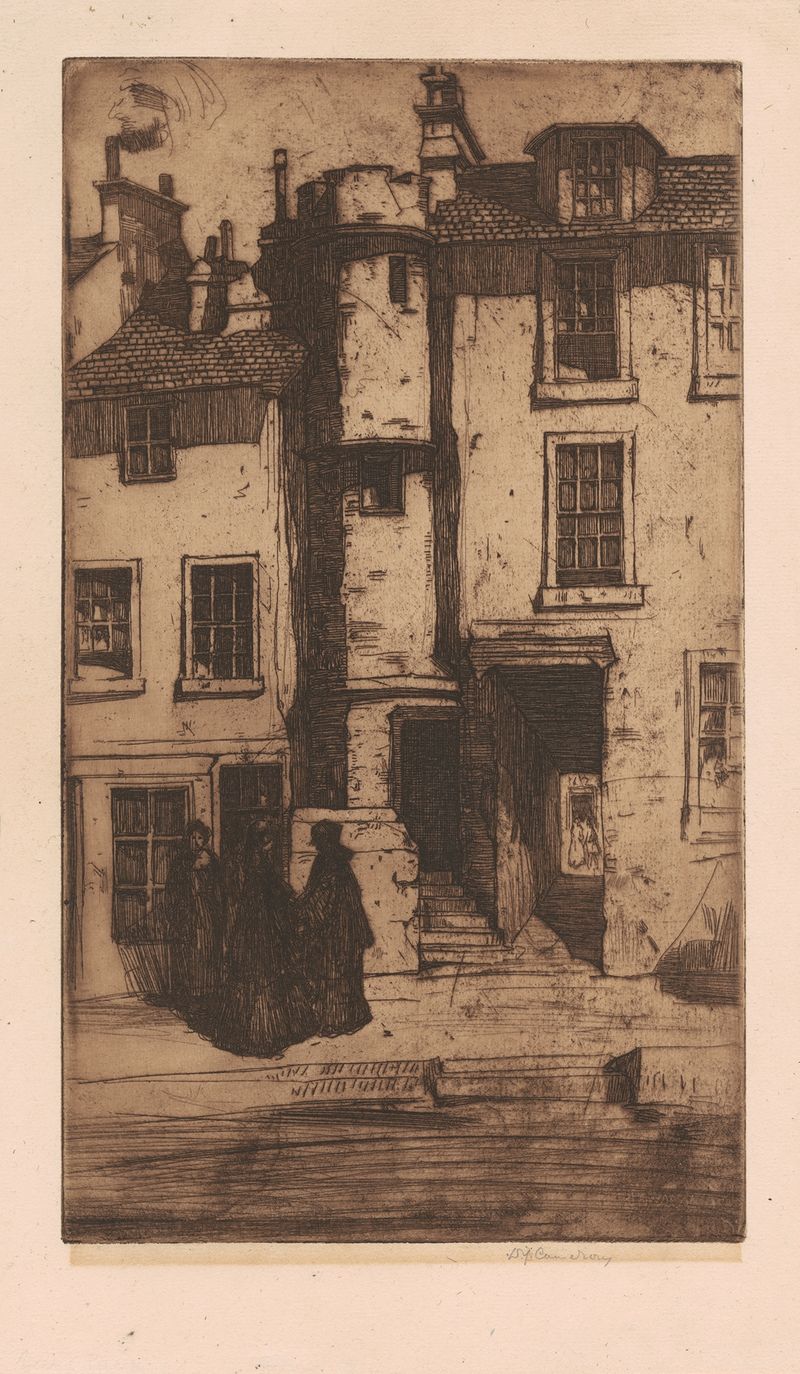
Old Houses, Stirling
David Young Cameron
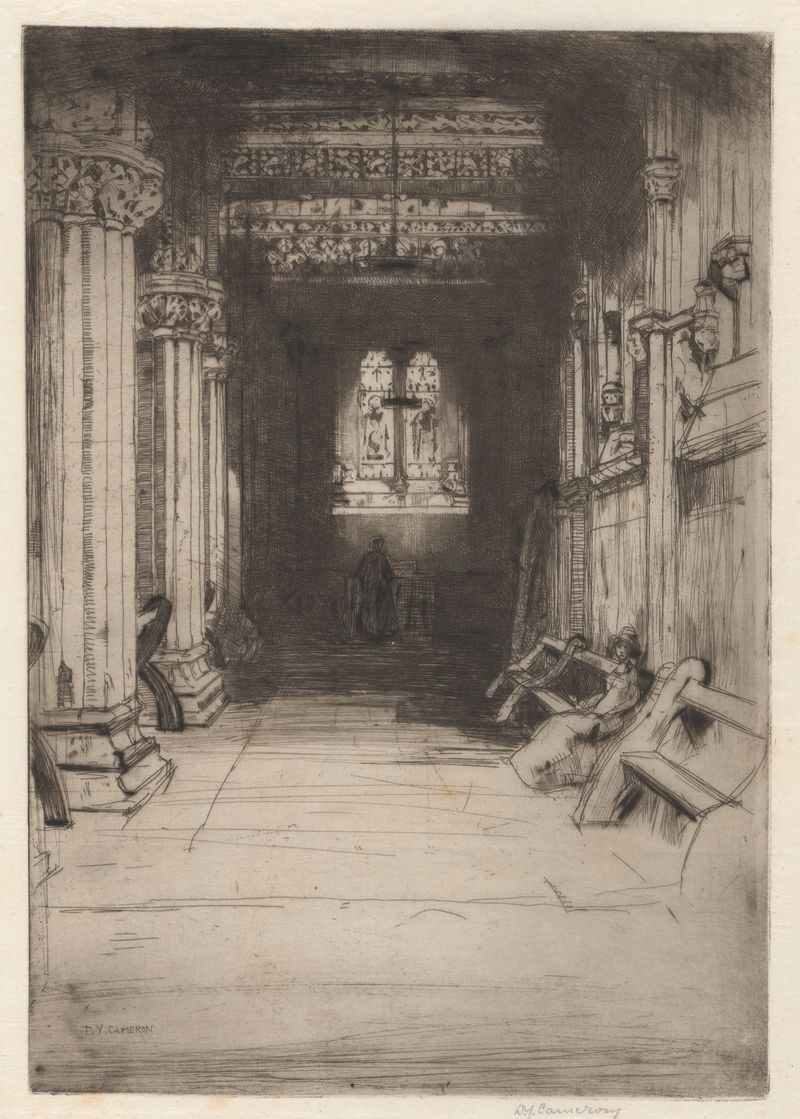
Rosslyn Chapel
David Young Cameron

The Old Museum, Beauvais
David Young Cameron
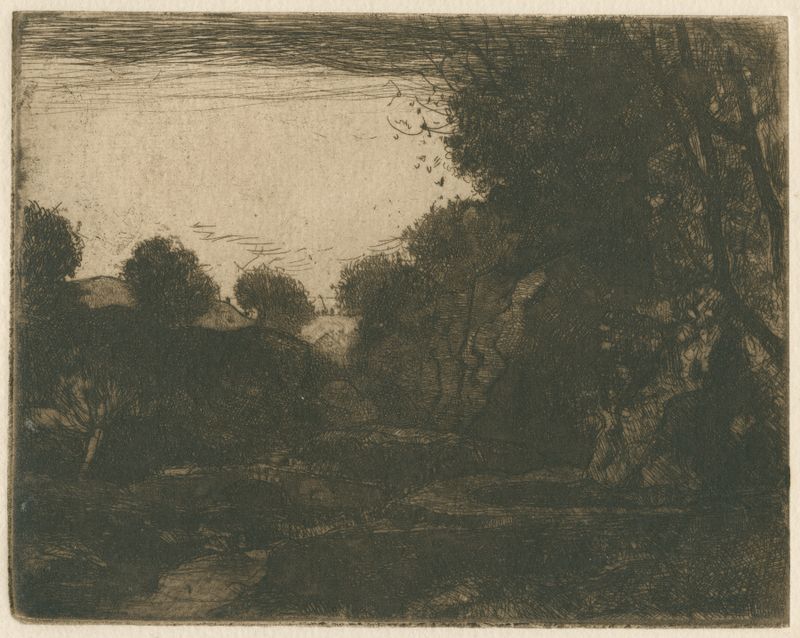
On the Bradford
David Young Cameron

The Smithy
David Young Cameron
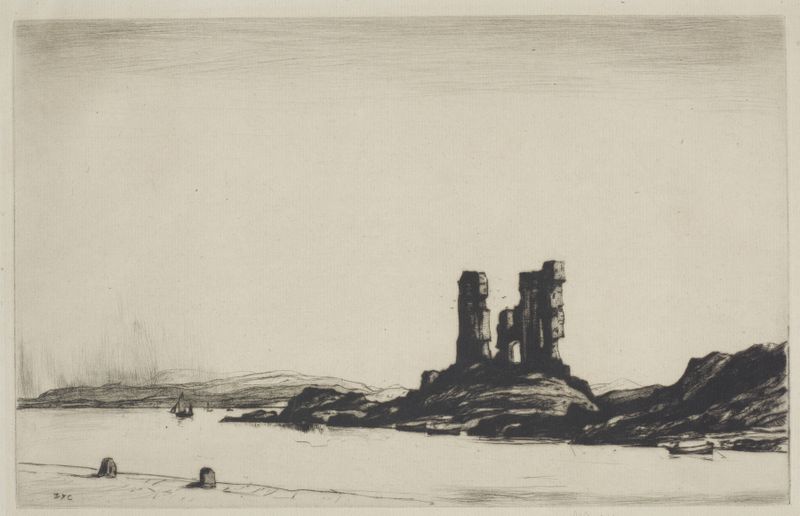
Castle Moyle
David Young Cameron
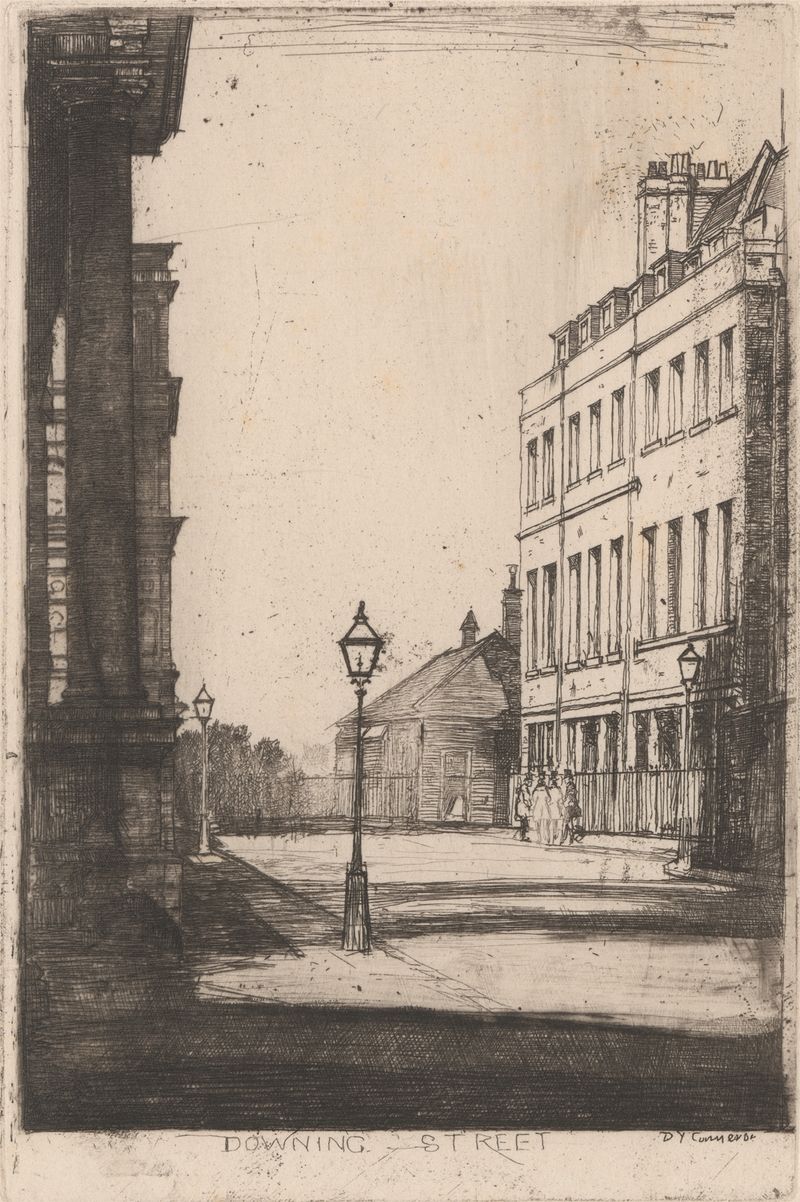
Downing Street
David Young Cameron

Glasgow Cathedral
David Young Cameron





