
The Valley of Mexico — History & Facts
Is this a mirror — or a memory? In The Valley of Mexico, the landscape unfolds like a dream where the beauty of nature intertwines with an undercurrent of fear, hinting at the fragility of existence itself. Look to the horizon where the mountains rise majestically, their rugged forms contrasting against the soft, pastel sky. Notice how the light falls upon the valley, casting shadows that dance across the canvas like fleeting thoughts. The gentle hues of green and blue invite the viewer in, but the dark foreboding clouds overhead loom ominously, suggesting a storm that may soon break.
This tension between light and dark, serenity and chaos, creates a palpable sense of unease. Hidden within the lush vegetation are hints of decay and neglect, echoing the relentless passage of time. The interplay of vibrant foliage and shadow evokes a bittersweet nostalgia, contrasting the idyllic beauty of the valley with the haunting notion of impermanence. The stillness of the scene, while superficially peaceful, carries an underlying tension, as if the valley itself holds its breath, anticipating a change that could shatter this fragile tranquility. In 1871, Conrad Wise Chapman painted this landscape during a period of personal and artistic exploration.
Having recently traveled to Mexico, he sought to capture the breathtaking beauty of its vistas while reflecting on the turmoil of the world around him. As the art community grappled with evolving styles and ideas, Chapman’s work stood out, balancing realism with emotional depth, inviting viewers to contemplate not just the beauty of nature, but the fears that lie beneath its surface.
More Artworks by Conrad Wise Chapman
Browse all →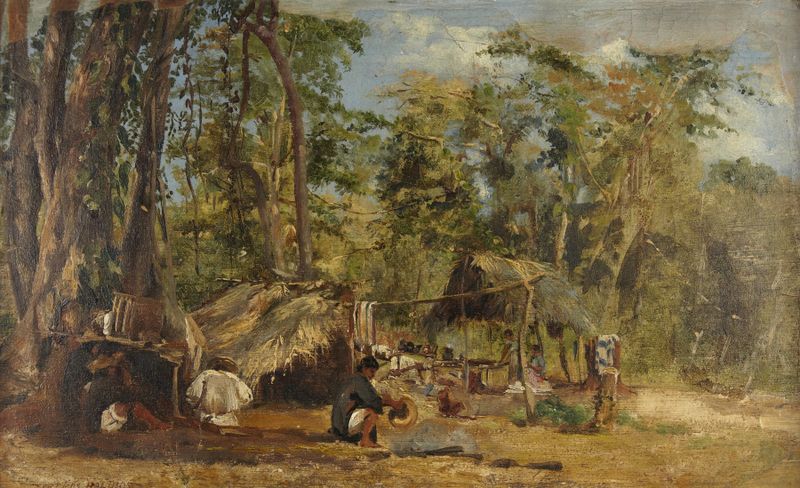
Camp No. 2, Terrenos Baldios
Conrad Wise Chapman
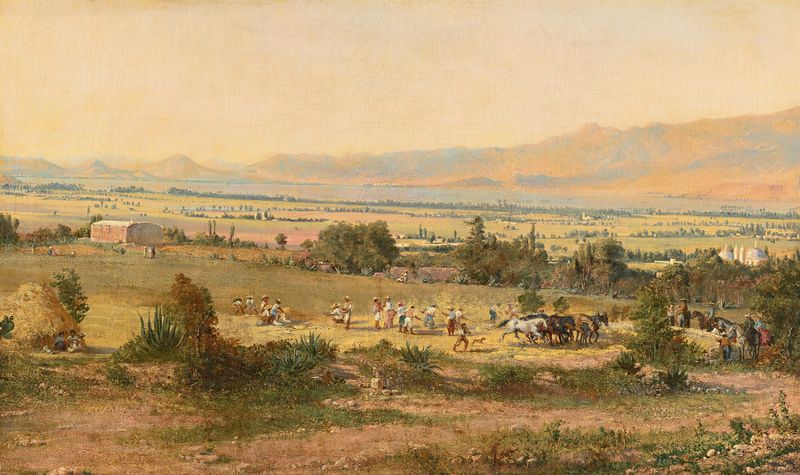
Paisaje Del Valle De México Con El Lago De Texcoco
Conrad Wise Chapman
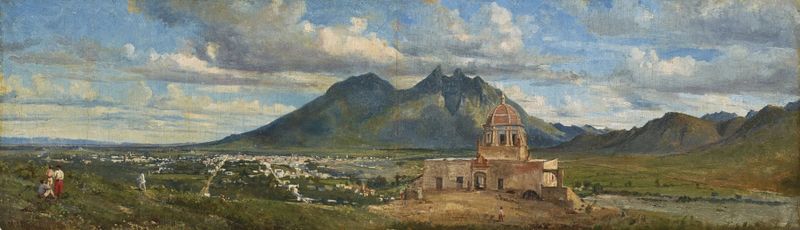
View of Bishop’s Palace Near Monterrey
Conrad Wise Chapman

The Valley of Mexico, the Two Volcanoes Popocatépetl and Iztaccihuatl Beyond
Conrad Wise Chapman

A Day At The Beach
Conrad Wise Chapman

City of Mexico from the Hacienda de los Morales
Conrad Wise Chapman
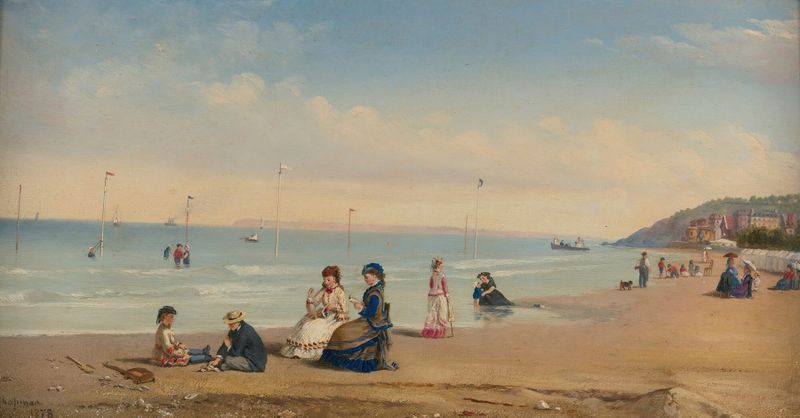
Trouville
Conrad Wise Chapman





