
A Day At The Beach — History & Facts
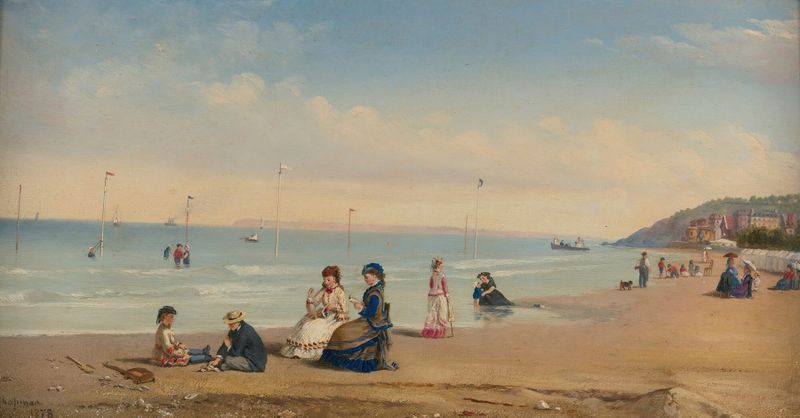
In the serene expanse of a beach, the whispers of the waves echo unspoken truths, laying bare the heart's quiet betrayals. Look to the left where the gentle curves of the sand meet the shoreline, inviting the eye to trace the soft footprints that lead further into the scene. The delicate play of light and shadow creates a rhythmic dance across the surface, illuminating the figures as they bask in the sun’s embrace. The palette of blues and warm earth tones harmonizes the tranquil atmosphere, drawing attention to the subtle expressions on the faces of those present, each one a silent vessel of emotion. Yet beneath this idyllic façade lies an intricate web of tension.
The juxtaposition of the carefree children playing in the surf against the adults’ distant gazes hints at unvoiced dilemmas. Notice the way the horizon seems to stretch infinitely, suggesting both freedom and isolation—as if the beach, while inviting, is also a barrier to deeper connections and hidden resentments amongst the group. In 1878, the artist found himself at a crossroads in his career, capturing scenes of leisure and domesticity while wrestling with personal challenges. Living in the post-Civil War South, Chapman sought to redefine his artistic identity in a rapidly changing world, marked by new artistic movements and the lingering shadows of conflict.
A Day At The Beach reflects both a moment of respite and the complexities of human relationships, encapsulating a time when life was marked by both leisure and unspoken struggles.
More Artworks by Conrad Wise Chapman
Browse all →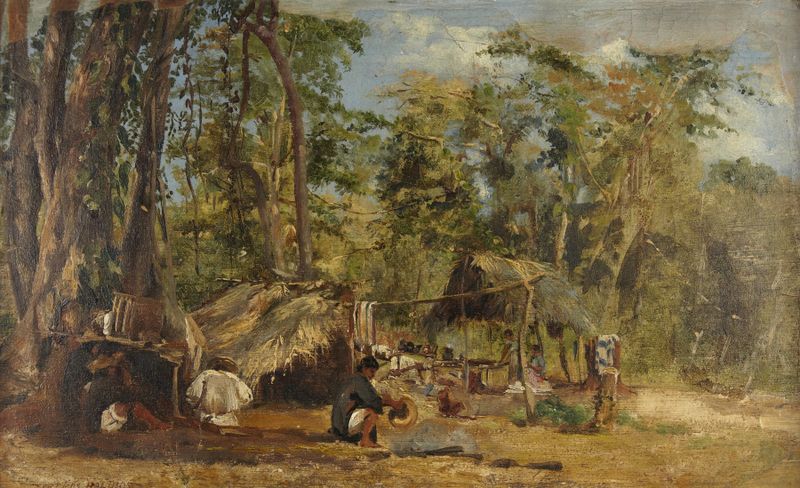
Camp No. 2, Terrenos Baldios
Conrad Wise Chapman
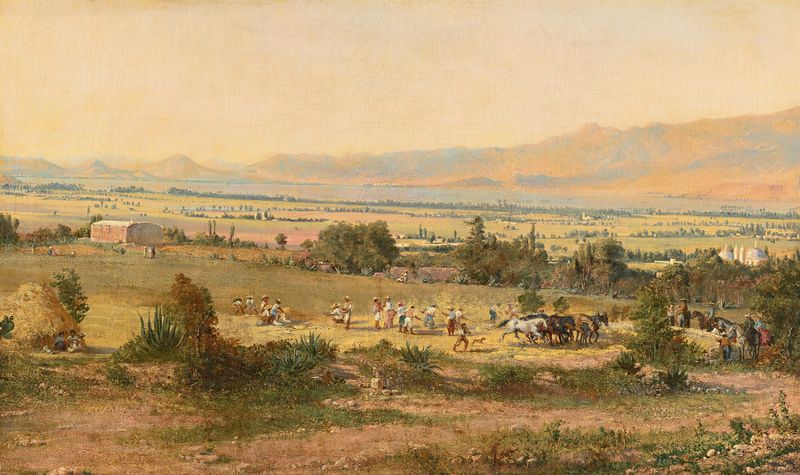
Paisaje Del Valle De México Con El Lago De Texcoco
Conrad Wise Chapman
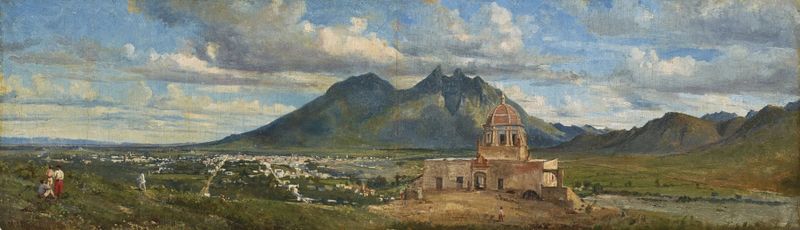
View of Bishop’s Palace Near Monterrey
Conrad Wise Chapman

The Valley of Mexico, the Two Volcanoes Popocatépetl and Iztaccihuatl Beyond
Conrad Wise Chapman
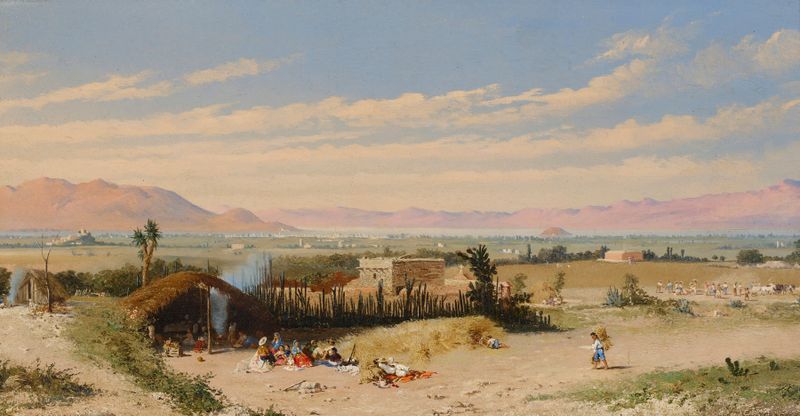
The Valley of Mexico
Conrad Wise Chapman

City of Mexico from the Hacienda de los Morales
Conrad Wise Chapman
Trouville
Conrad Wise Chapman





