
View of Bishop’s Palace Near Monterrey — History & Facts
What if beauty was never meant to be finished? This contemplation lingers in the air as one gazes upon the tranquil landscape before them. Look to the left at the soft roll of hills that cradle the Bishop’s Palace, its warm ochres and muted greens harmonizing with the serene sky. Notice how the delicate brushstrokes evoke a gentle breeze, creating a sense of movement that contrasts with the stillness of the architectural majesty. The sunlight glimmers on the water's surface, leading one’s eye to the farthest reaches of the canvas, where distant mountains loom like forgotten dreams. Beneath the peaceful exterior lies a tension between nature and manmade beauty, an interplay that suggests both harmony and longing.
The meticulous attention to detail in the palace's structure invites a contemplation of its historical significance, while the surrounding wilderness hints at the transient nature of human endeavors. This duality speaks to a deeper yearning—a desire to connect with both the land and its legacy, captured in a singular moment of time. In 1865, Chapman painted this scene during a period of exploration and expansion in the American Southwest. It was a time when artists were beginning to embrace the unique landscapes of the region, reflecting a growing national identity.
As he navigated this shifting artistic landscape, his work sought to bridge the gap between the grandeur of manmade structures and the wild beauty of the natural world, illustrating both a personal and cultural longing for belonging and permanence.
More Artworks by Conrad Wise Chapman
Browse all →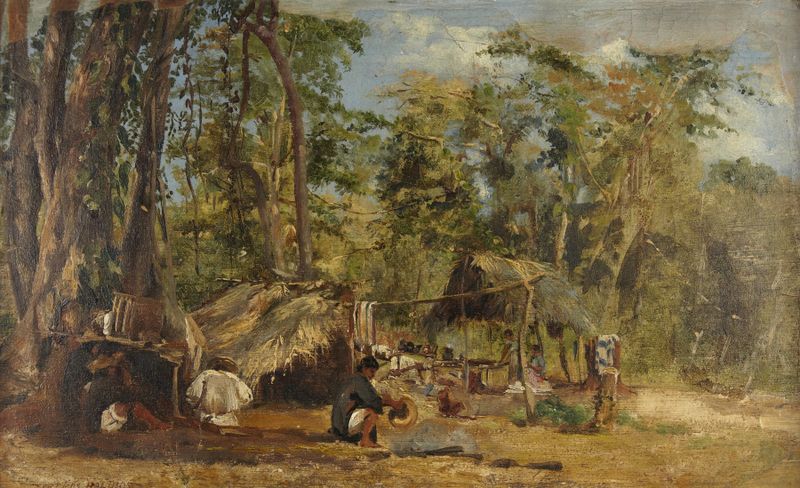
Camp No. 2, Terrenos Baldios
Conrad Wise Chapman
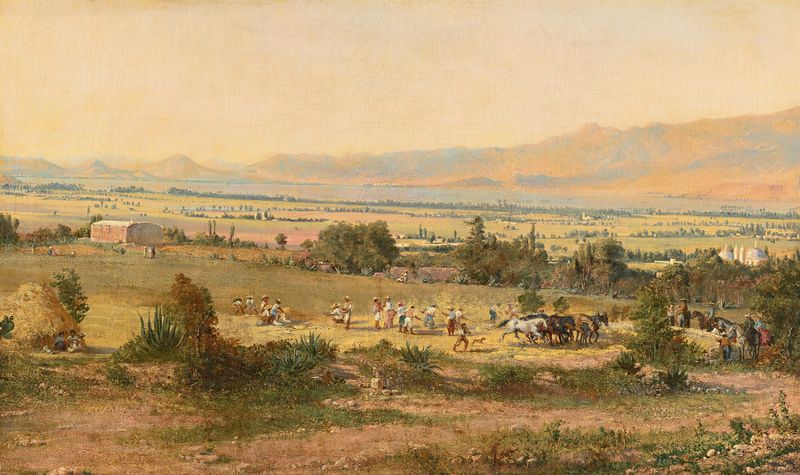
Paisaje Del Valle De México Con El Lago De Texcoco
Conrad Wise Chapman

The Valley of Mexico, the Two Volcanoes Popocatépetl and Iztaccihuatl Beyond
Conrad Wise Chapman
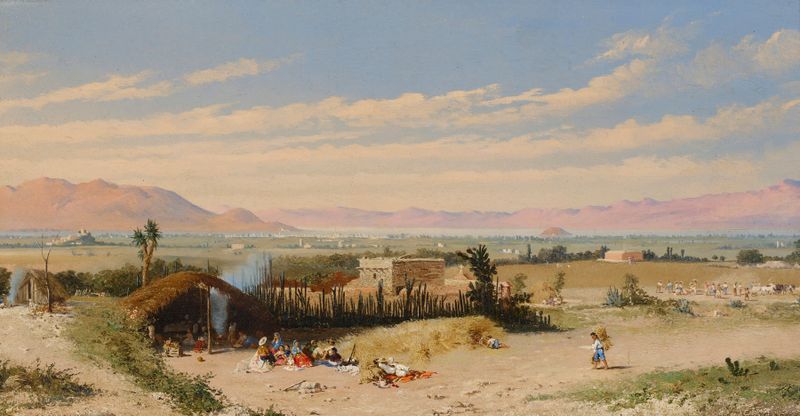
The Valley of Mexico
Conrad Wise Chapman

A Day At The Beach
Conrad Wise Chapman

City of Mexico from the Hacienda de los Morales
Conrad Wise Chapman
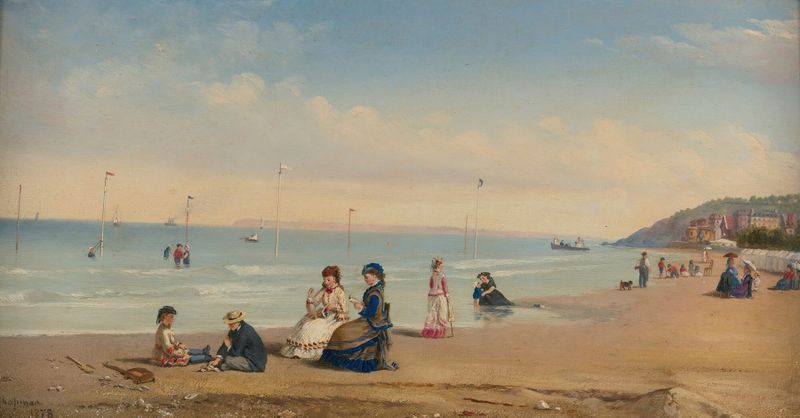
Trouville
Conrad Wise Chapman





