The Vegetable Market In Venice — History & Facts
When did color learn to lie? The vibrant hues of a market, alive with fresh produce, beckon yet conceal the emptiness lurking beneath their surface. Look to the left at the striking red and green vegetables piled high, their glossy skins reflecting the warm sunlight that bathes the scene. Notice how the artist meticulously captures the angles of the stalls, creating a rhythmic pattern that draws the eye toward the bustling crowd. The composition, lively yet oddly static, hints at the vibrancy of life while simultaneously invoking a sense of longing—each color meticulously chosen to enhance both allure and distance. Within the canvas's vibrant arrangement lies a contrast between abundance and emptiness.
The cheerful colors suggest a feast, yet the lack of human interaction echoes an unsettling solitude. These vegetables, so enticing, seem to whisper tales of joy, but the quiet spaces surrounding them yield a feeling of absence, as if the market pulses with life that has been abruptly paused. This tension invites the viewer to question the nature of presence and absence, reflecting on the duality of the everyday. During this period, the artist was deeply engaged with the Impressionist movement, capturing fleeting moments while exploring the interplay of light and color.
Though the exact date remains unknown, the work likely stems from the late 19th or early 20th century, a time when European art was undergoing significant transformation. The artist sought to convey not just the beauty of a market scene, but also the underlying emotions that accompany such vibrancy, capturing a fleeting moment rife with both life and silence.
More Artworks by Louis Abel-Truchet
Browse all →
Le boulevard de Clichy
Louis Abel-Truchet
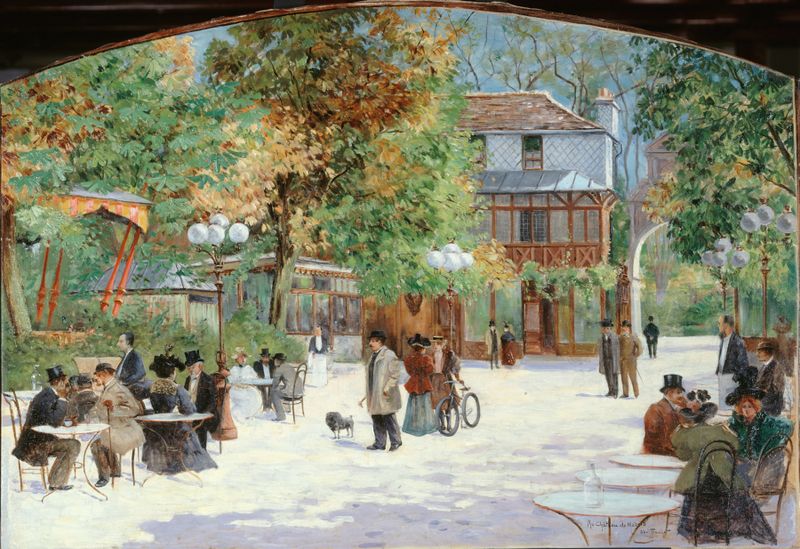
Au Chalet du Château de Madrid, au Bois de Boulogne
Louis Abel-Truchet

Le Jardin
Louis Abel-Truchet
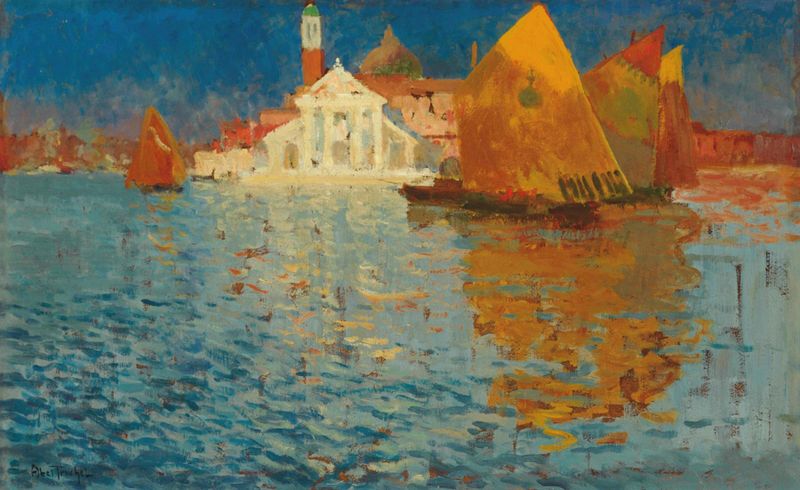
Vessels before San Giorgio Maggiore, Venice
Louis Abel-Truchet

Fairground With The Sacré-Coeur In The Background
Louis Abel-Truchet
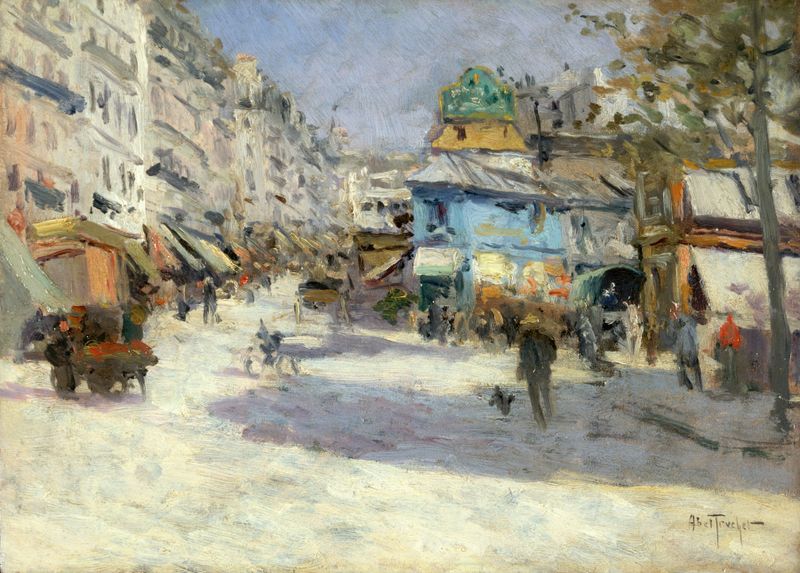
La rue Lepic, l’angle de la rue Puget et la place Blanche
Louis Abel-Truchet
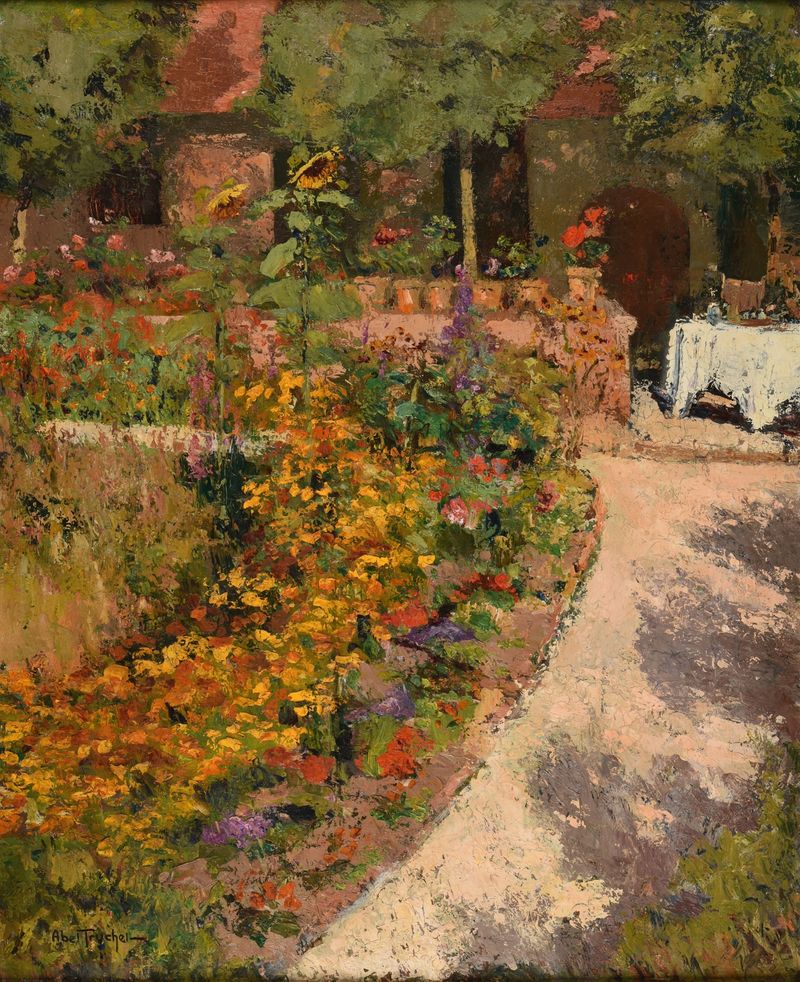
Pergola ; jardin fleuri
Louis Abel-Truchet