
The White Night – A River — History & Facts
Where does light end, and longing begin? In The White Night – A River, a luminous expanse invites us to ponder the boundaries between reality and desire, illuminating our deepest yearnings. Look to the center, where the river unspools like a shimmering ribbon against the fading light. The soft gradient of blues and whites melds seamlessly, capturing the ethereal quality of twilight. Notice how the delicate brushstrokes suggest the gentle ripples on the water’s surface, inviting your gaze to wander across the scene.
The horizon, where sky and water blur, evokes a sense of both calm and anticipation, as if the night is holding its breath. As you explore further, the ochre tones creeping in from the edges contrast with the serene blues, suggesting the encroachment of darkness. The stillness of the water reflects not just the waning light but also a profound sense of nostalgia, evoking a longing for moments that slip away like the day. The subtle interplay between light and shadow hints at the complexities of human emotion, revealing the beauty that often lies in ephemeral experiences. In 1910, Jan Ciągliński created this work during a period rich with experimentation in color and light.
Living in Paris, he was influenced by the emerging art movements of the time, including Impressionism, which focused on capturing fleeting moments. This painting reflects his mastery of the artistic language of light, drawing from both personal introspection and broader artistic currents that sought to depict the transient nature of existence.
More Artworks by Jan Ciągliński
Browse all →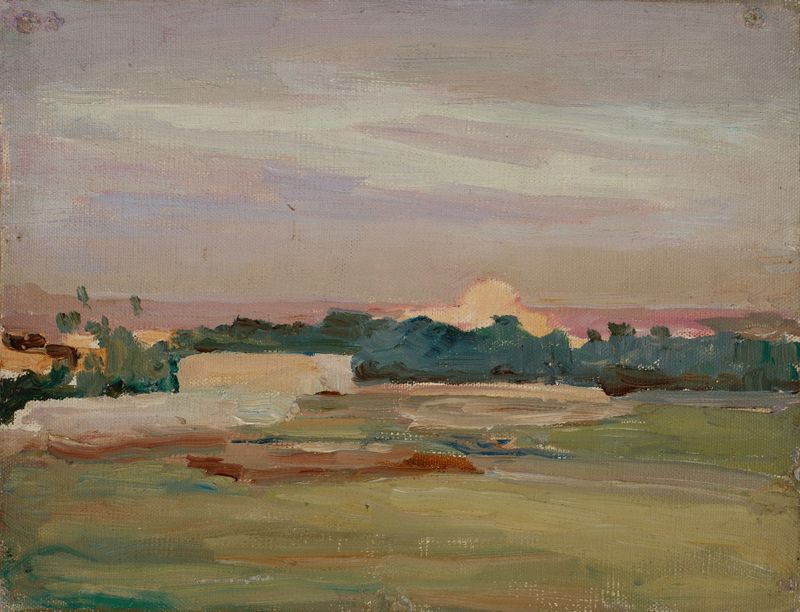
The Sirocco
Jan Ciągliński
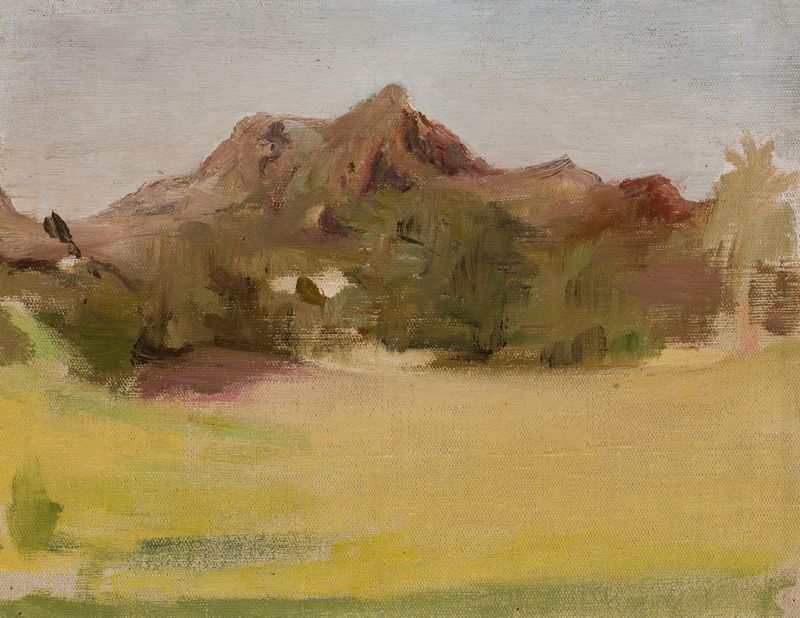
Mountain landscape. From the journey to India
Jan Ciągliński
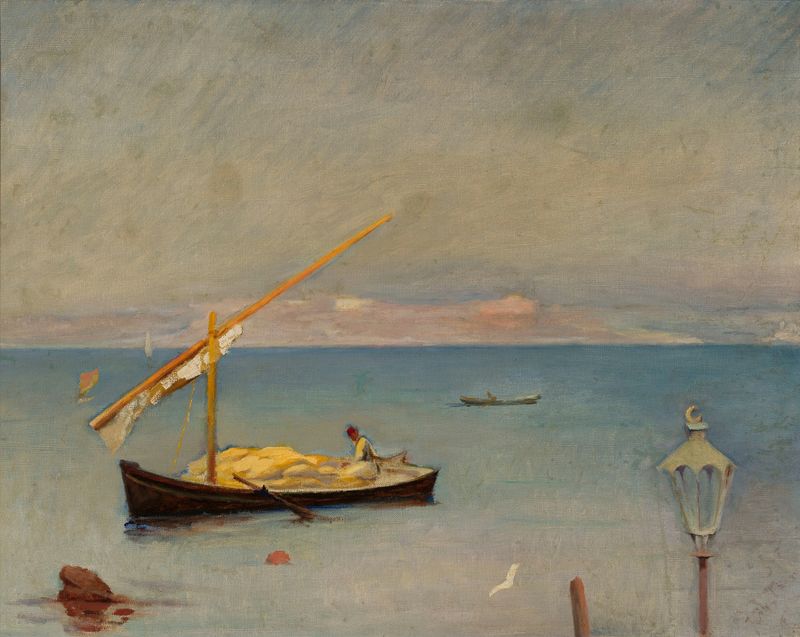
At Bosporus
Jan Ciągliński
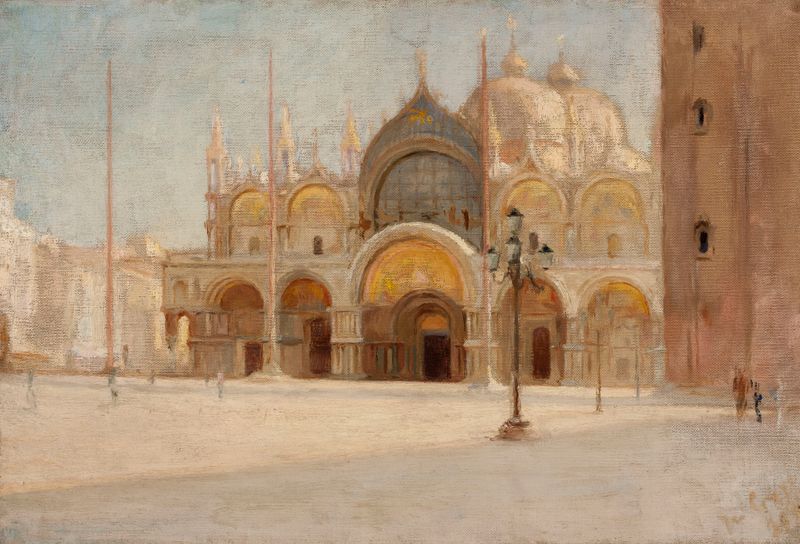
St Mark’s Square in Venice
Jan Ciągliński
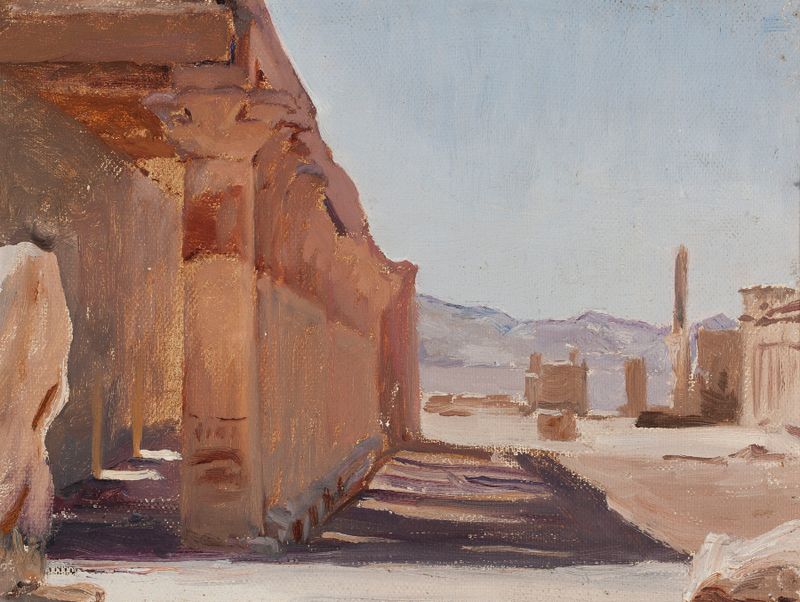
Temple. From the journey to Egypt
Jan Ciągliński
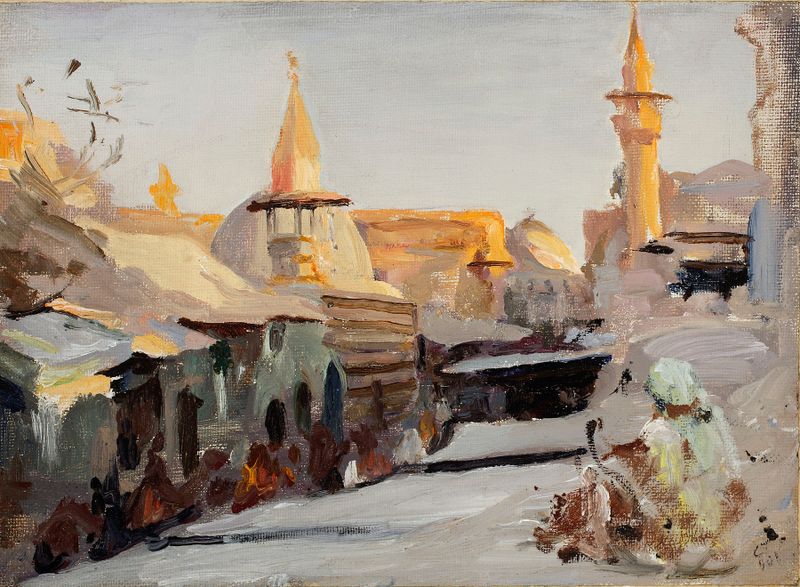
Street in Damascus. From the journey to Palestine
Jan Ciągliński
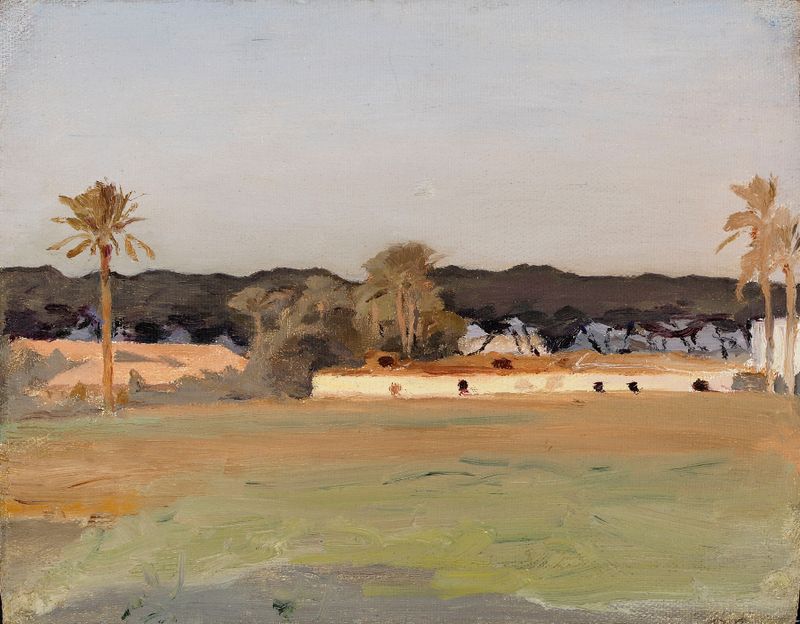
Evening. From the journey to Egypt
Jan Ciągliński
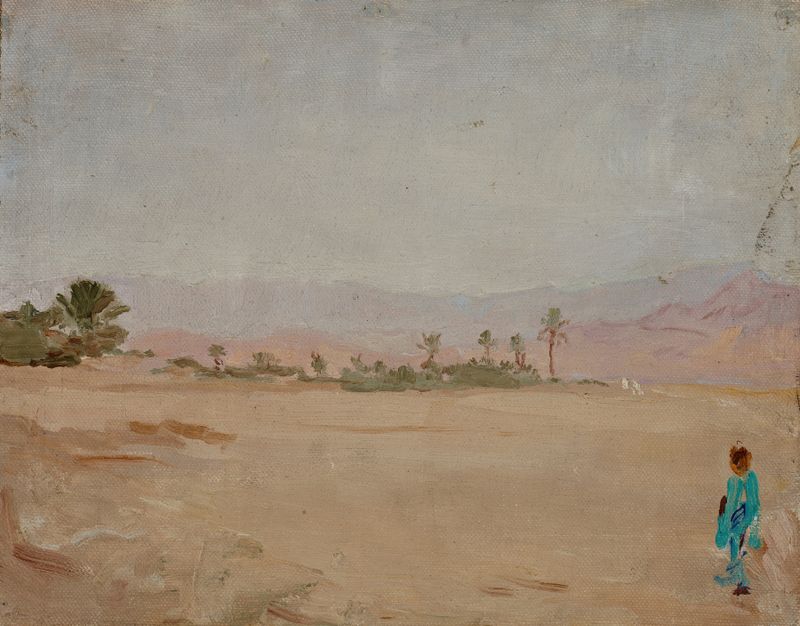
Sahara (Desert)
Jan Ciągliński
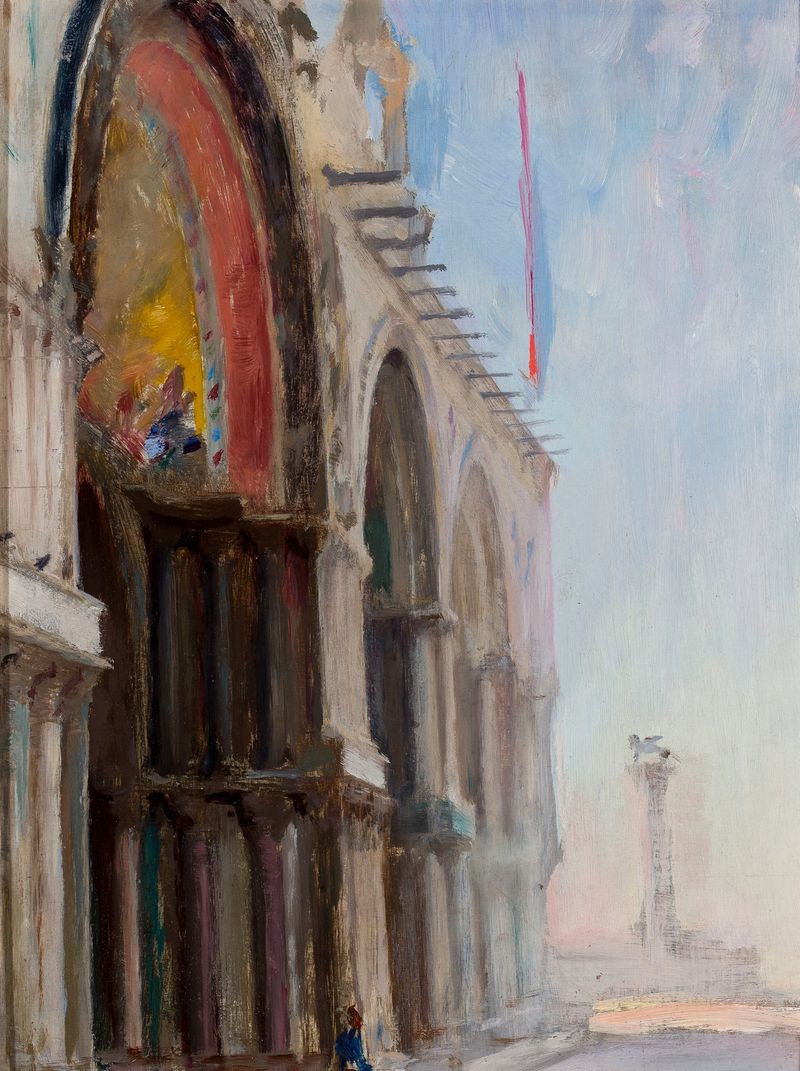
Venice – San Marco. From the journey to Italy
Jan Ciągliński
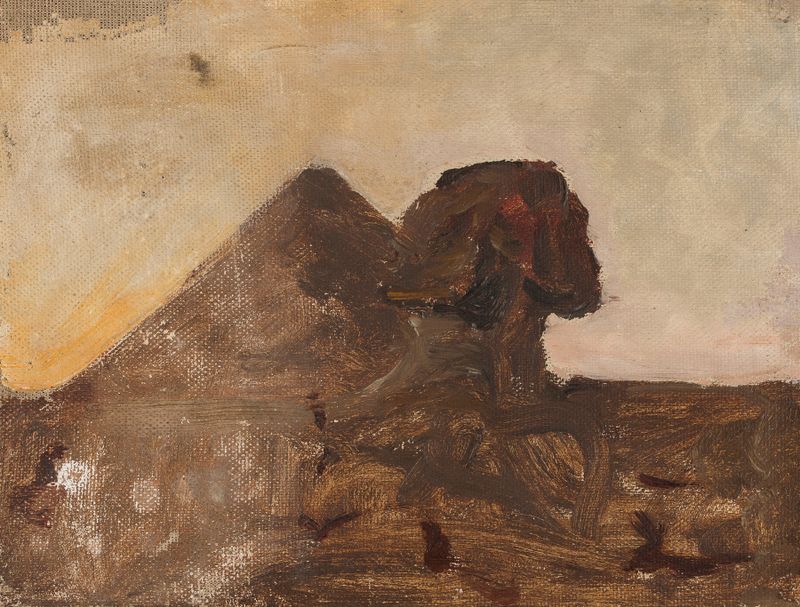
Evening in the desert – Sphinx and pyramid. From the journey to Egypt
Jan Ciągliński





