
Theodor Gülcher 3788.1 Amsterdam Museum — History & Facts
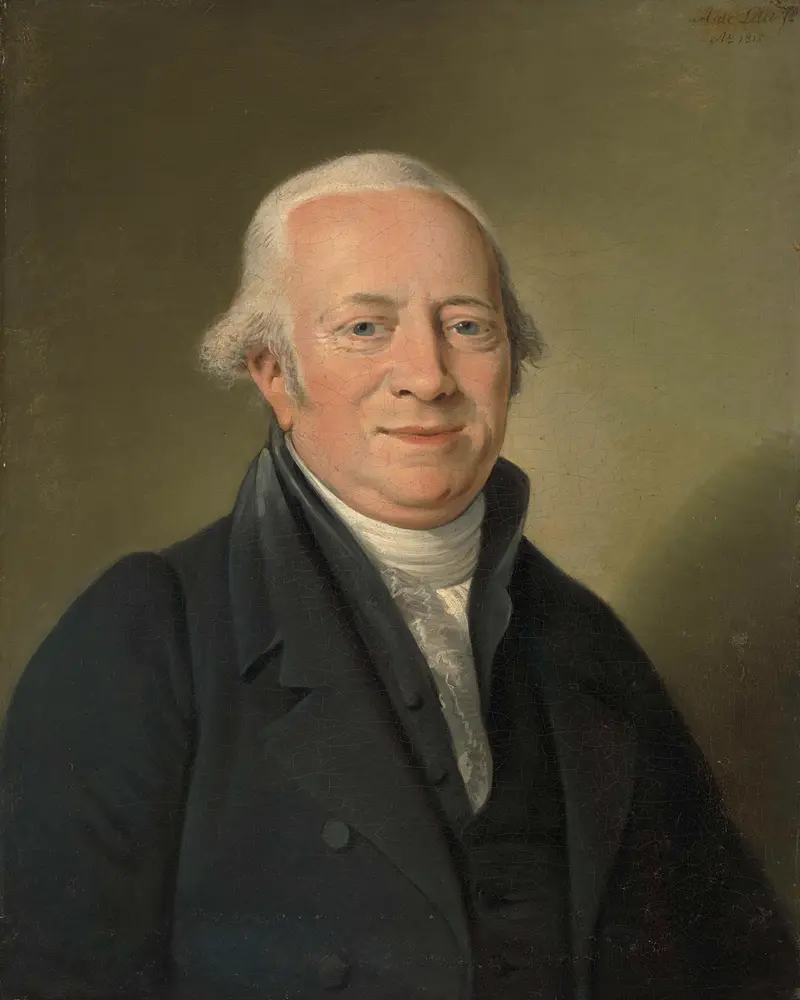
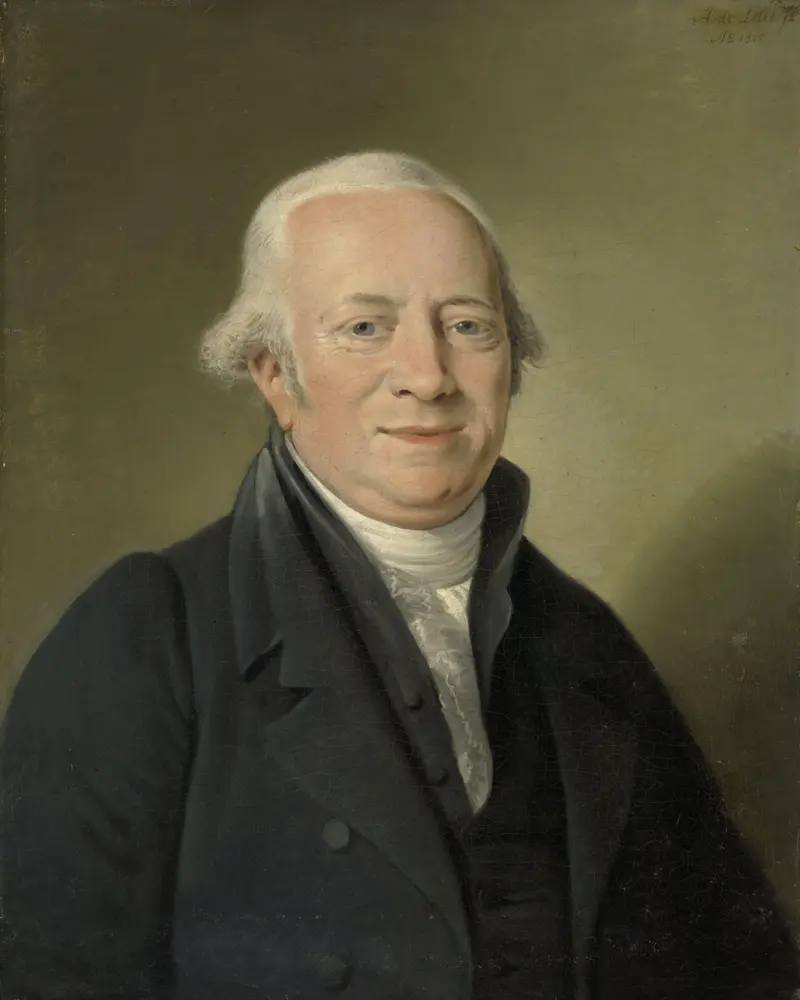
What first draws the eye in this portrait is the sitter’s knowing half-smile, a flicker of private amusement caught by Adriaan de Lelie with a delicacy that makes the moment feel both immediate and hard-won. The sitter turns slightly toward the viewer, his white hair carefully dressed, the light falling across his forehead and cheek to model the gentle folds of age. The background is a warm, featureless brown, which throws all attention onto the face—no distractions, no symbols, just the subtle interplay of flesh and fabric.
The artist’s brush lingers over the textures: the crisp white of the cravat, the soft velvet of the coat, the faint gleam in the eye. This is not a grand public likeness, but a private encounter, as if the sitter has just paused in conversation. Painted between 1790 and 1810, this portrait belongs to a world in flux, when the Dutch Republic was giving way to new political realities and the middle class was eager to see itself reflected in art. Portraits like this, often commissioned to mark a life’s achievement or a family’s pride, were less about public status than about preserving character and presence for future generations.
Adriaan de Lelie was known for his ability to capture personality with economy and warmth, and this work, now in the Amsterdam Museum, is a quiet testament to that gift. History has kept few traces of the sitter’s story, but the painting’s gaze invites us to imagine the world behind those eyes, and to linger a moment longer in his company.
More Artworks by Adriaan de Lelie
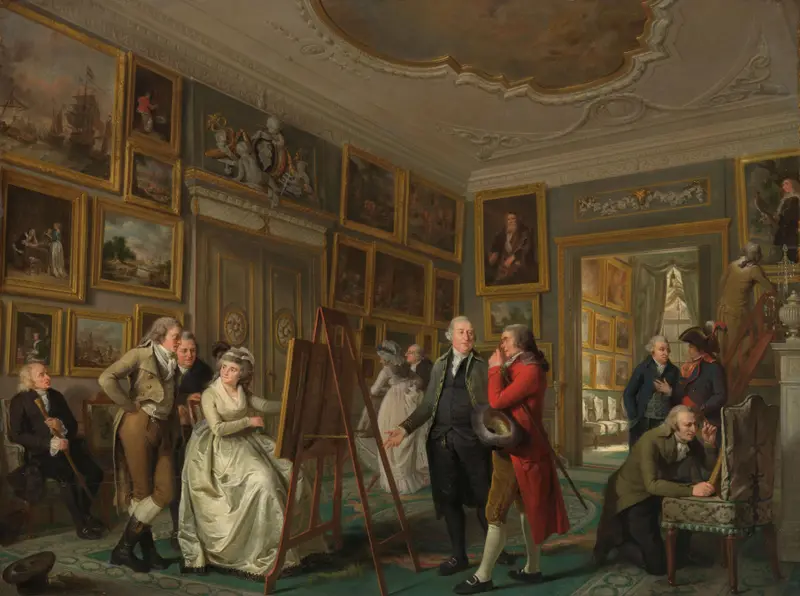
The Art Gallery of Jan Gildemeester Jansz
Adriaan de Lelie
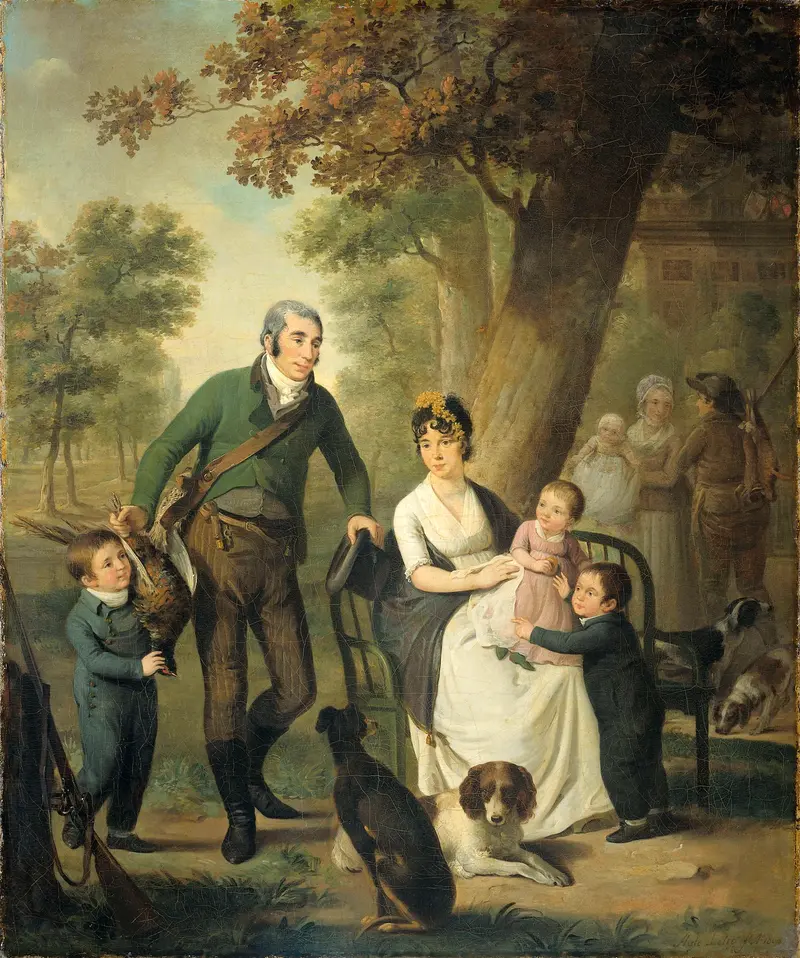
Jonkheer Gysbert Carel Rutger Reinier van Brienen van Ramerus(1771-1821), with his Wife and four of their Children
Adriaan de Lelie
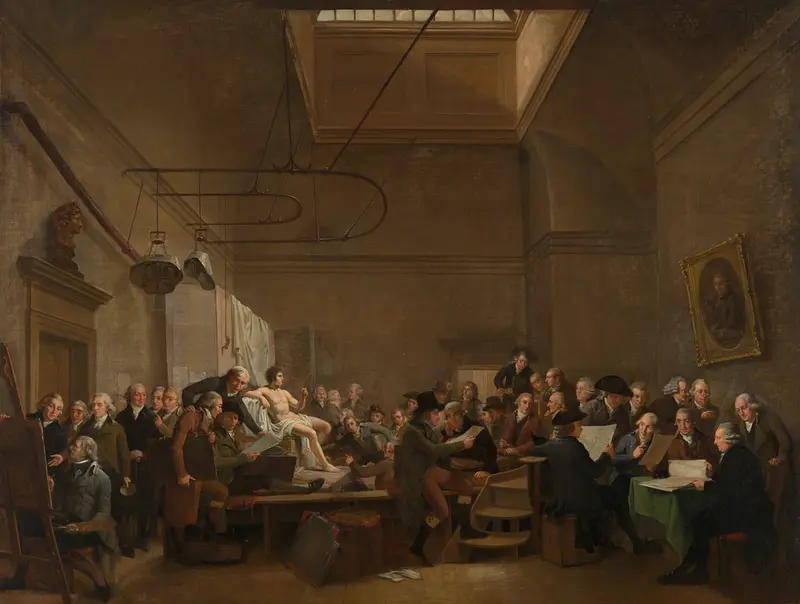
The Drawing Gallery of the Felix Meritis Society
Adriaan de Lelie
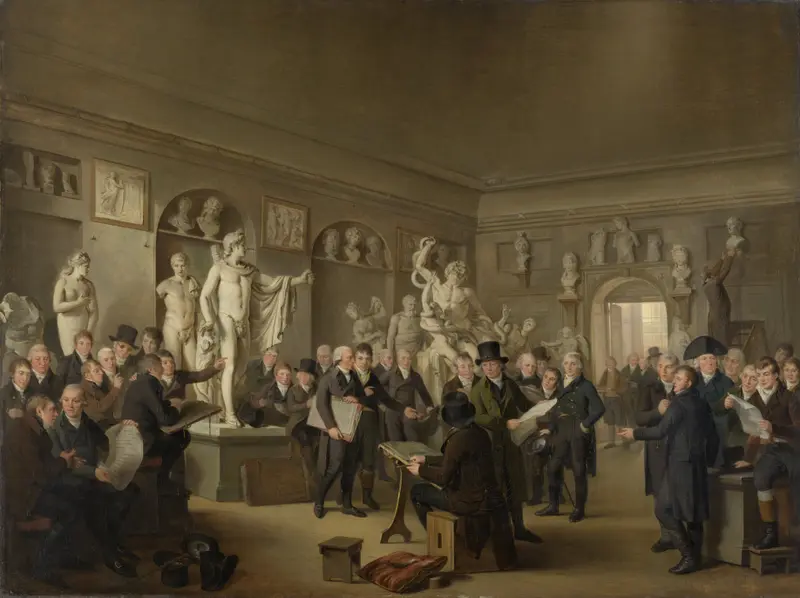
The Sculpture Gallery of the Felix Meritis Society
Adriaan de Lelie
Cornelis Sebille Roos (1754-1820), Amsterdam Art Dealer and Keeper of the Nationale Konst-Gallery in Huis ten Bosch, The Hague
Adriaan de Lelie
Morning Visit
Adriaan de Lelie
Mother and Two Children with Still Life
Adriaan de Lelie
Portrait of Jan Nieuwenhuyzen
Adriaan de Lelie
Portrait of Cornelis Sebille Roos, Art Dealer in Amsterdam and Inspector of the National Konst-Gallery and the Huis ten Bosch in The Hague
Adriaan de Lelie
Musical family
Adriaan de Lelie





