
Thermae of Caracalla — History & Facts
Could a single brushstroke hold eternity? In Thermae of Caracalla, a world of serene ruins unfolds, inviting viewers to contemplate the passage of time and the lingering whispers of history. Look to the expansive canvas, where gentle hues of muted greens and ochres blend seamlessly to depict the majestic remnants of ancient architecture. Notice how the light falls delicately upon the crumbling stone, illuminating the soft textures created by Cameron's deft hand. The composition leads the eye through a harmonious interplay of shadow and light, drawing attention first to the grand arches and then to the intricate details that hint at what once was. Within this tranquil scene lies a juxtaposition of magnificence and decay.
The towering columns evoke a sense of grandeur, while their weathered surfaces speak of the relentless march of time. The lingering silence of the space suggests the ghosts of bathers long gone, their joys echoing faintly in the air. Such contrasts provoke deep reflections on impermanence, challenging the viewer to consider the beauty found in both glory and ruin. David Young Cameron painted Thermae of Caracalla in 1923, amidst a post-war Europe grappling with change and disillusionment.
At this time, the artist was exploring themes of memory and the past, driven by an affinity for the grandeur of ancient sites. His work reflects a burgeoning interest in impressionism and its ability to capture the emotional resonance of a moment, offering a serene refuge amid the chaos of modern life.
More Artworks by David Young Cameron
Browse all →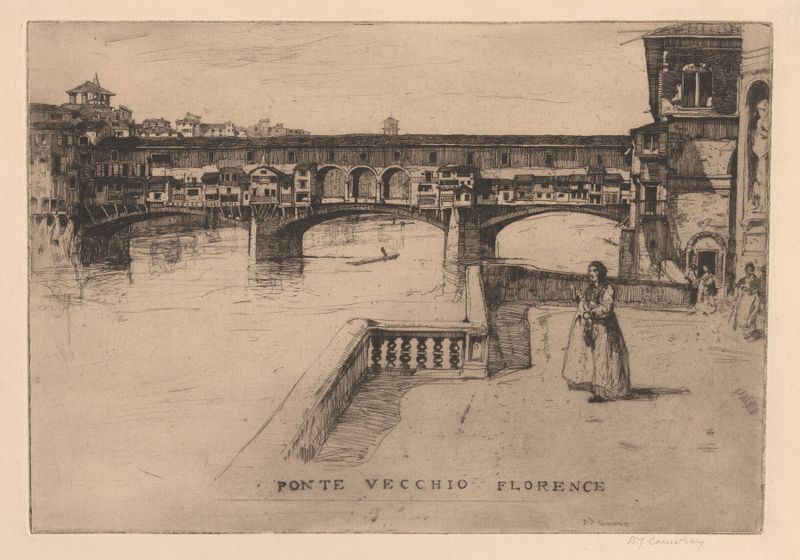
Ponte Vecchio
David Young Cameron

The Deanery, Winchester
David Young Cameron
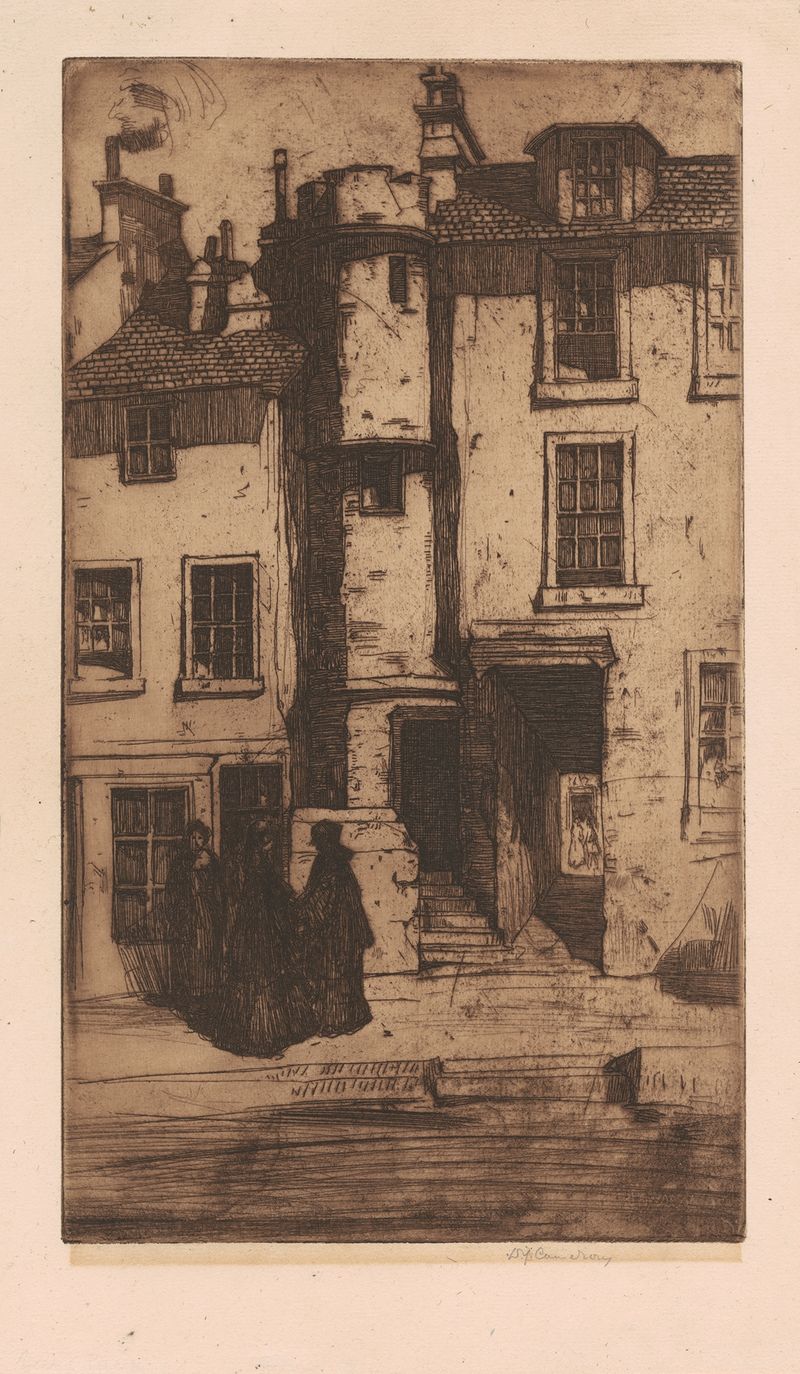
Old Houses, Stirling
David Young Cameron
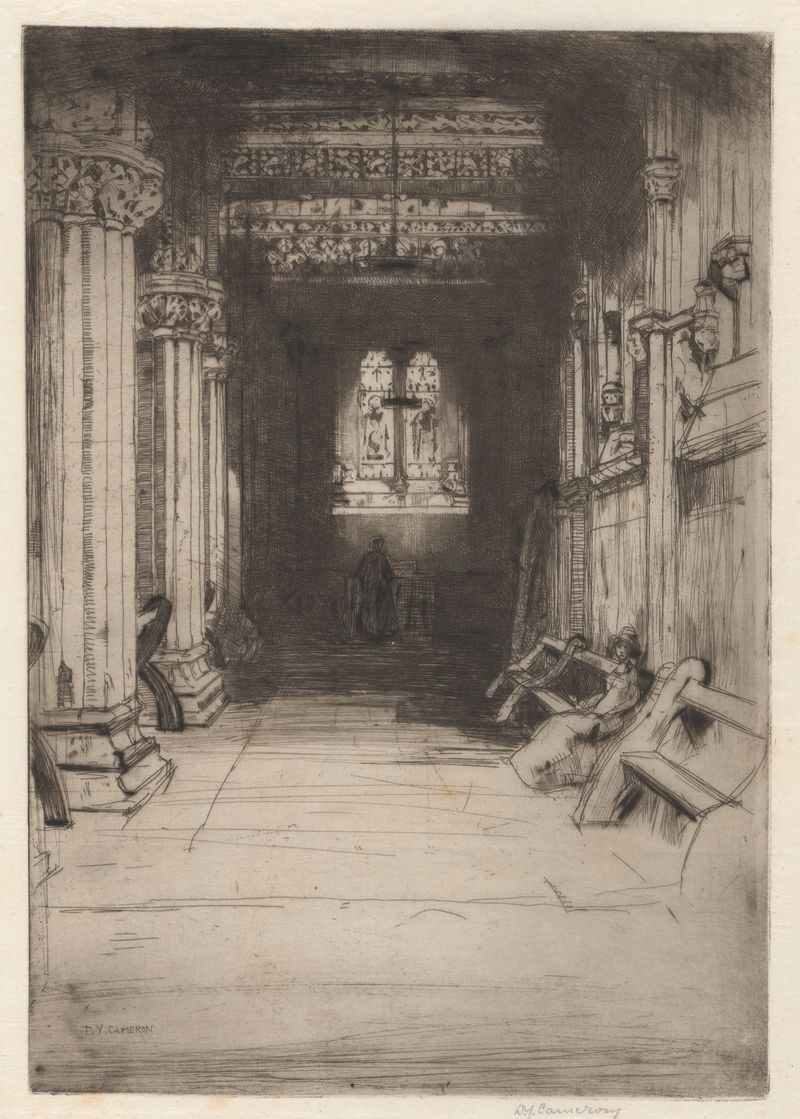
Rosslyn Chapel
David Young Cameron

The Old Museum, Beauvais
David Young Cameron
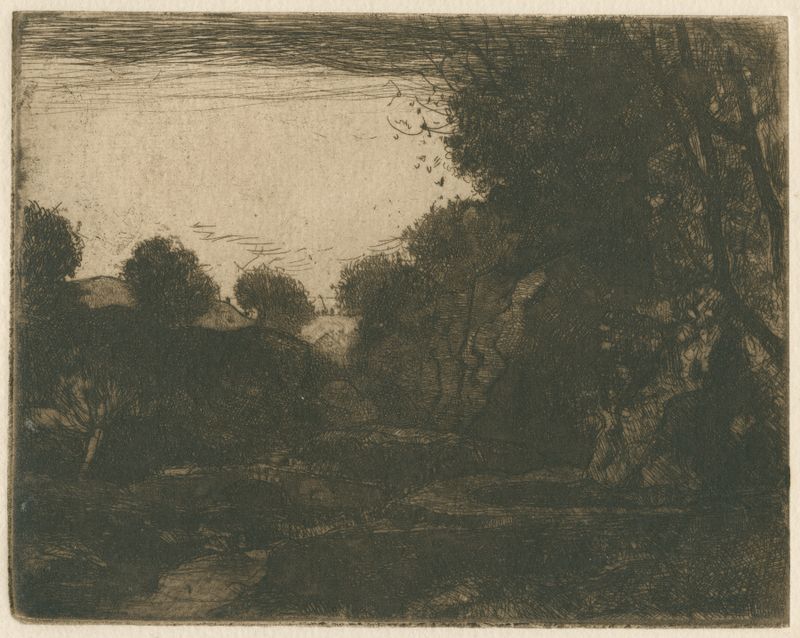
On the Bradford
David Young Cameron

The Smithy
David Young Cameron
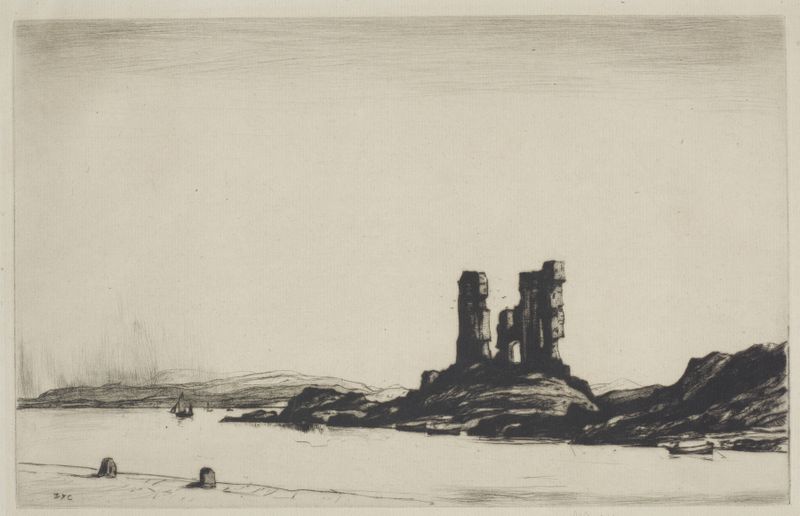
Castle Moyle
David Young Cameron
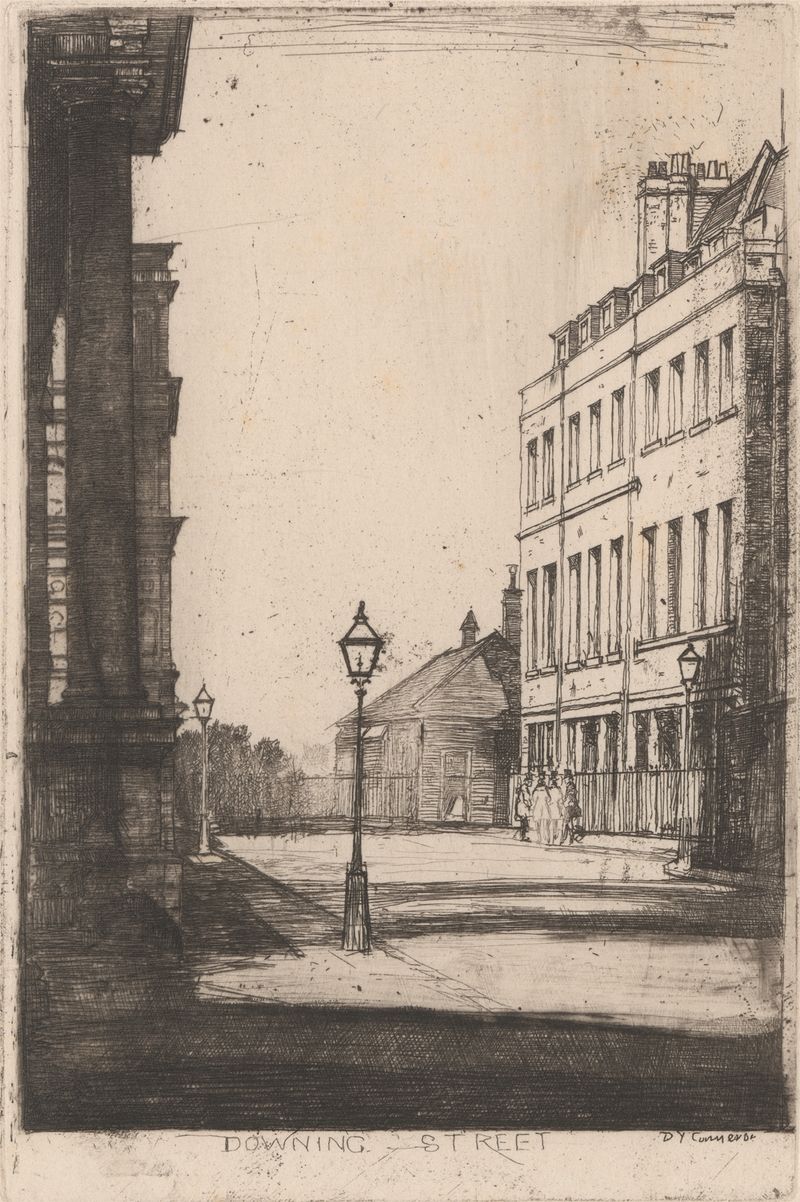
Downing Street
David Young Cameron

Glasgow Cathedral
David Young Cameron





