
Three Girls and River — History & Facts
When did color learn to lie? In a world where light dances and shadows whisper, the interplay of hues tells untold stories, begging us to listen more intently. Focus first on the vibrant trio gathered at the riverbank, their figures painted in soft pastels that evoke innocence and joy. Notice how the light cascades over their delicate forms, illuminating their carefree laughter while casting subtle hints of shadow beneath them. The flowing water glistens with a sheen of blues and greens, mirroring the swirling energy of the girls.
Every brushstroke breathes life into their camaraderie, while the serene backdrop of nature wraps them in a tender embrace. Yet, beneath this idyllic surface lies a deeper complexity. The juxtaposition of the girls’ bright attire against the tranquil river reflects the tension between childhood bliss and the inevitable passage of time. The fluidity of the water symbolizes change and the fleeting nature of innocence, as each wave carries echoes of laughter into the unknown.
The shimmering light may appear joyful, but it reveals the fragility of such moments, hinting at the bittersweet reality of growing up. In 1907, Louis Michel Eilshemius painted this work during a period marked by personal introspection and evolving artistic movements. He was navigating the complexities of his own identity as a painter amidst the burgeoning modernist landscape. This piece encapsulates his unique perspective, fusing elements of realism and impressionism, while reflecting a world that struggled to balance nostalgia with the rapid changes of the early 20th century.
More Artworks by Louis Michel Eilshemius
Browse all →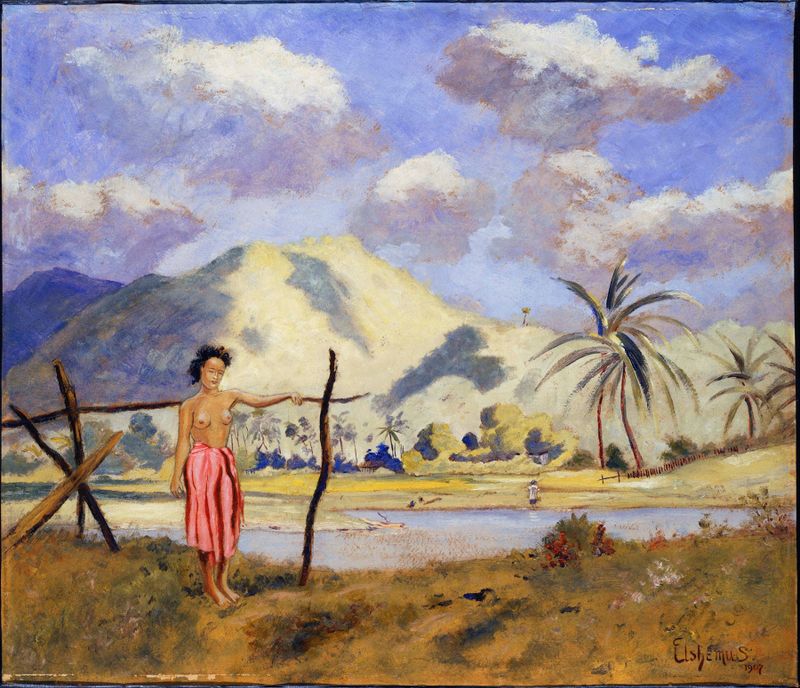
Samoa
Louis Michel Eilshemius
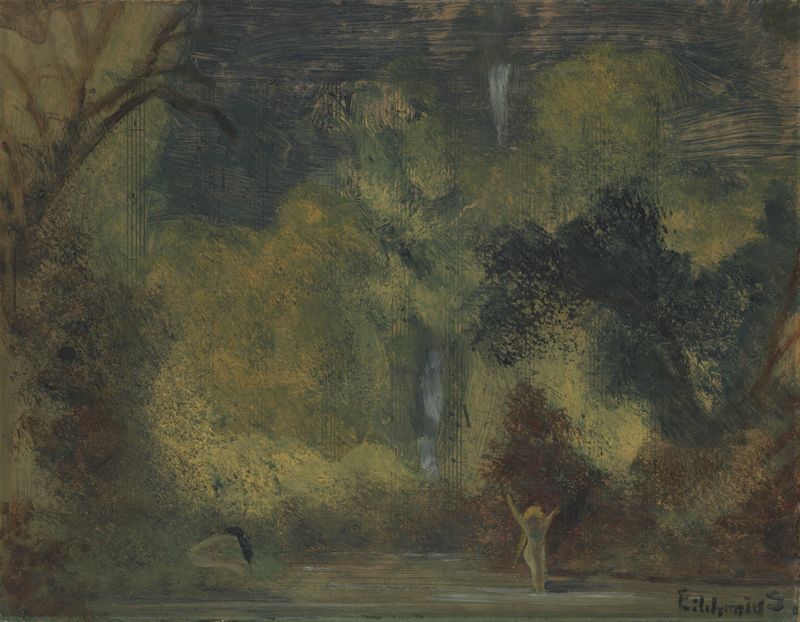
The Pool
Louis Michel Eilshemius

Overhanging Branches
Louis Michel Eilshemius

Fifty-Seventh Street
Louis Michel Eilshemius

Approaching Storm
Louis Michel Eilshemius
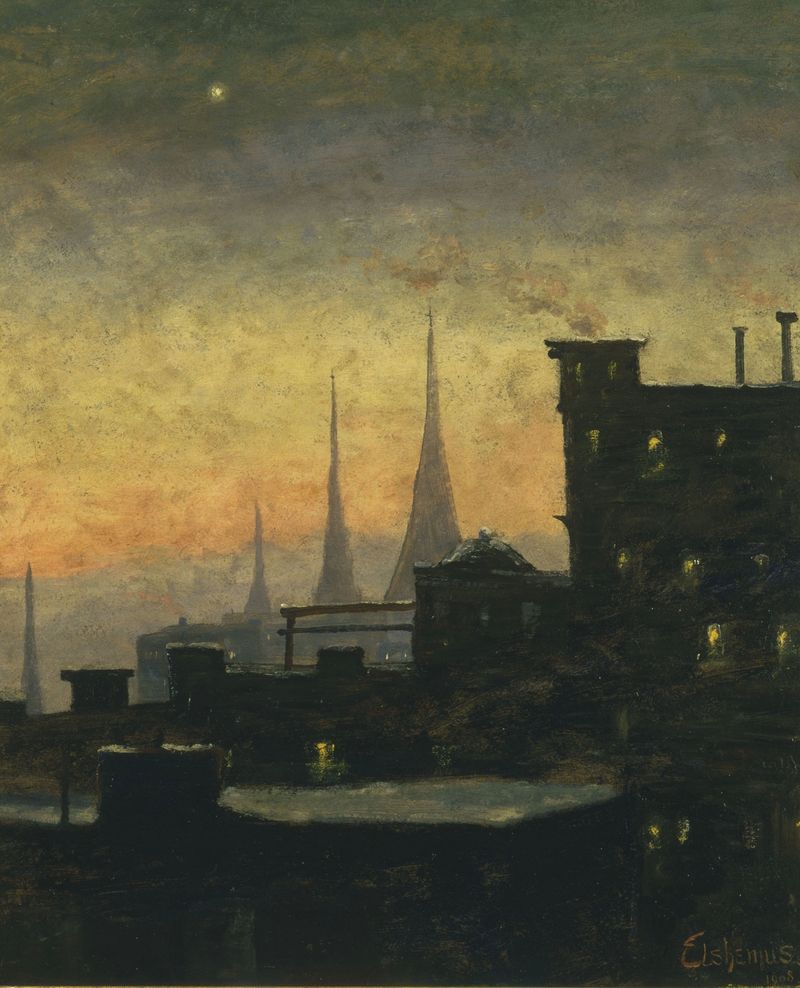
New York Roof Tops
Louis Michel Eilshemius
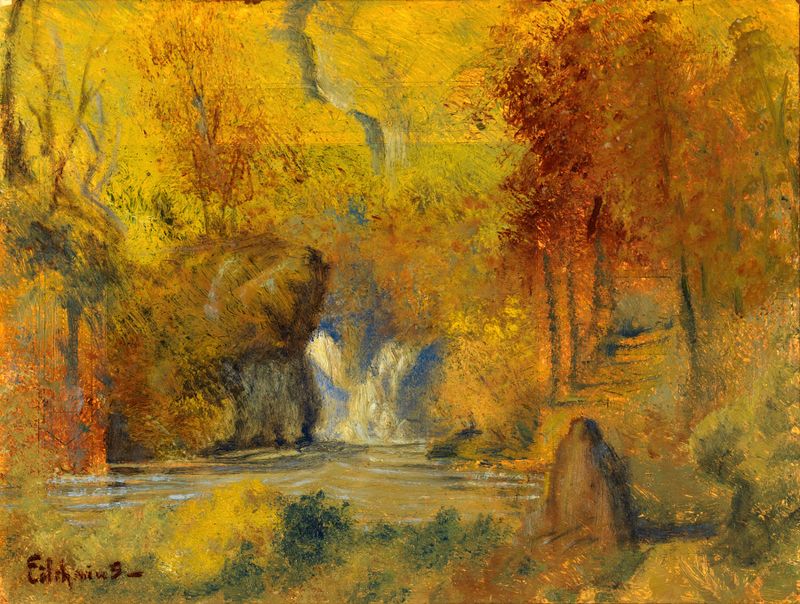
Autumn Landscape
Louis Michel Eilshemius

Sunset with Man Standing on Shore
Louis Michel Eilshemius

New York at Night
Louis Michel Eilshemius

Delaware Water Gap Village
Louis Michel Eilshemius





