
Tōkaidō kanaya no fuji — History & Facts
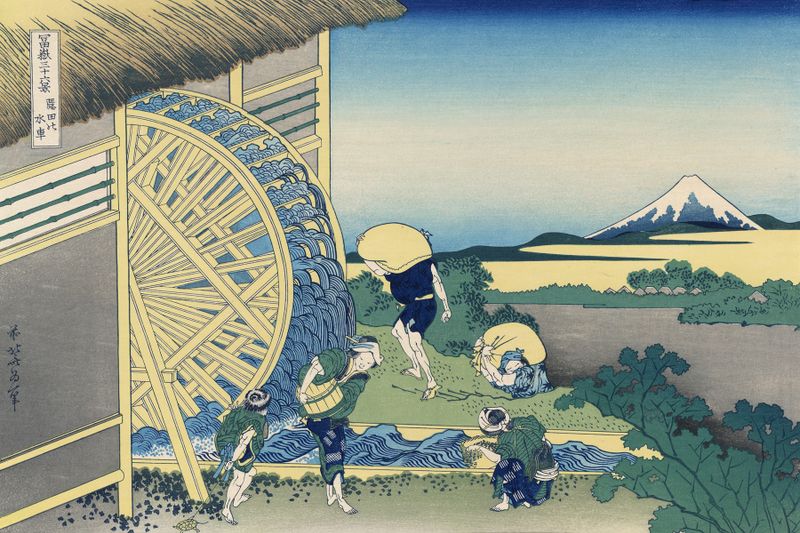
What secret hides in the quiet of the canvas? In the stillness of Hokusai's work, time unfurls like a gentle wave, inviting contemplation and reflection. Look to the center where Mount Fuji stands majestically, its silhouette a symbol of enduring presence against the delicate gradient of dawn. The hues of blue and gray in the sky meld seamlessly, while soft touches of pink hint at the awakening day. Notice how the artist employs woodblock printing techniques to layer colors, creating depth that draws your eye toward the serene peak, a calm amid the bustling activity on the banks below. A closer examination reveals the interplay between nature and human endeavor.
In the foreground, tiny figures engage in their daily lives, seemingly insignificant against the grandeur of Fuji. This contrast evokes a profound sense of scale and perspective—man versus nature, the fleeting against the eternal. The quietude of the landscape emphasizes the relentless passage of time, suggesting that while humanity toils, the mountain remains a steadfast witness, embodying both beauty and permanence. During the late Edo period in Japan, Hokusai created this piece amidst a flourishing of ukiyo-e art, characterized by its vibrant colors and intricate details.
Living in a time when traditional Japanese culture was encountering Western influences, he sought to capture the essence of his homeland through both innovative techniques and timeless subjects. The artist's focus on landscapes during this period reflected a deep respect for nature, offering a glimpse into a world that valued both the fleeting and the eternal.
More Artworks by Katsushika Hokusai
Browse all →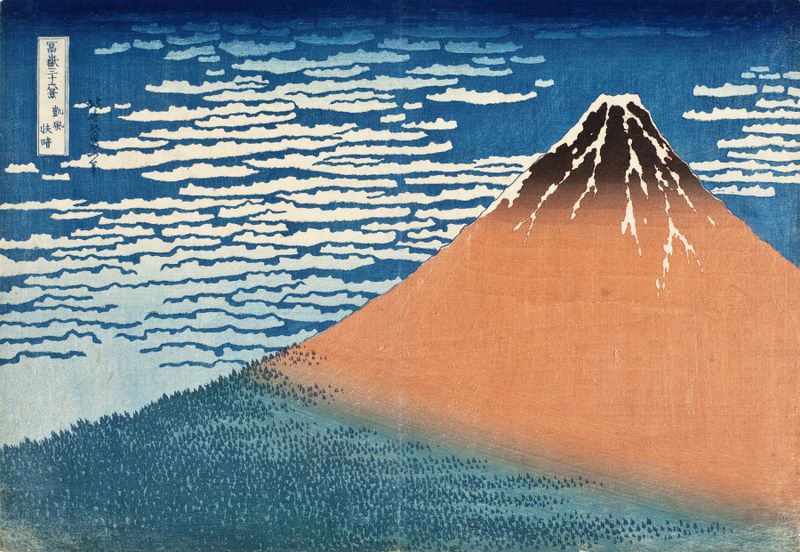
South Wind, Clear Dawn
Katsushika Hokusai

South Wind, Clear Weather
Katsushika Hokusai

Clear Weather with a Southerly Wind
Katsushika Hokusai
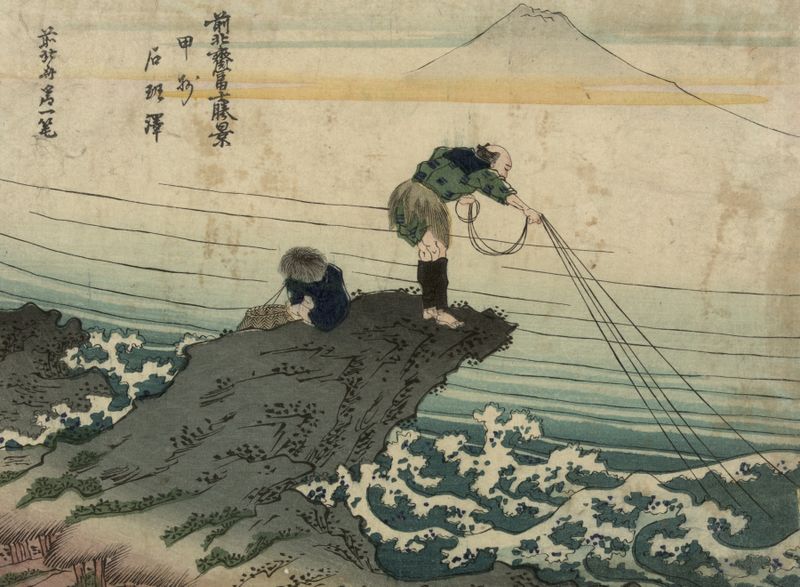
Kōshū kajikazawa
Katsushika Hokusai

Rainstorm beneath the Summit (Sanka Haku-u)
Katsushika Hokusai

Kōshū kajikazawa 2
Katsushika Hokusai
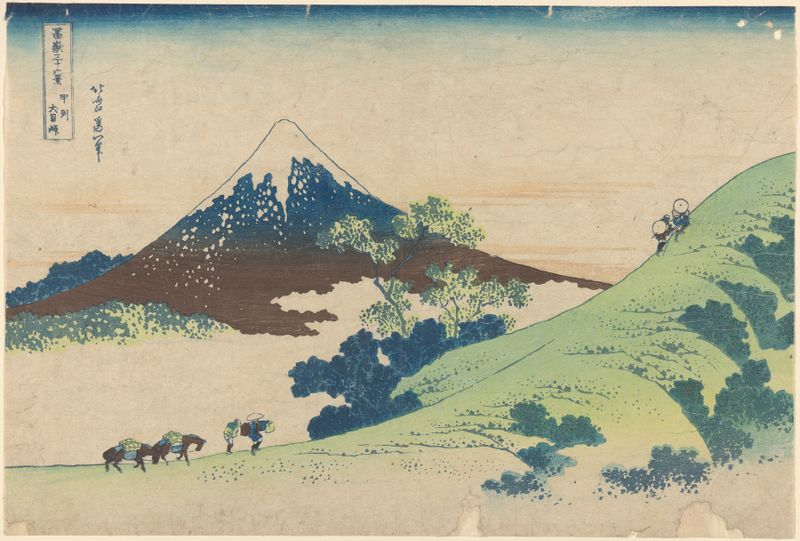
Inume Pass in Kai Province (Kôshû inume-tôge)
Katsushika Hokusai

Yoro Falls in Mino Province (Mino no Yoro no taki), from the series "A Tour of Waterfalls in Various Provinces (Shokoku taki meguri)"
Katsushika Hokusai
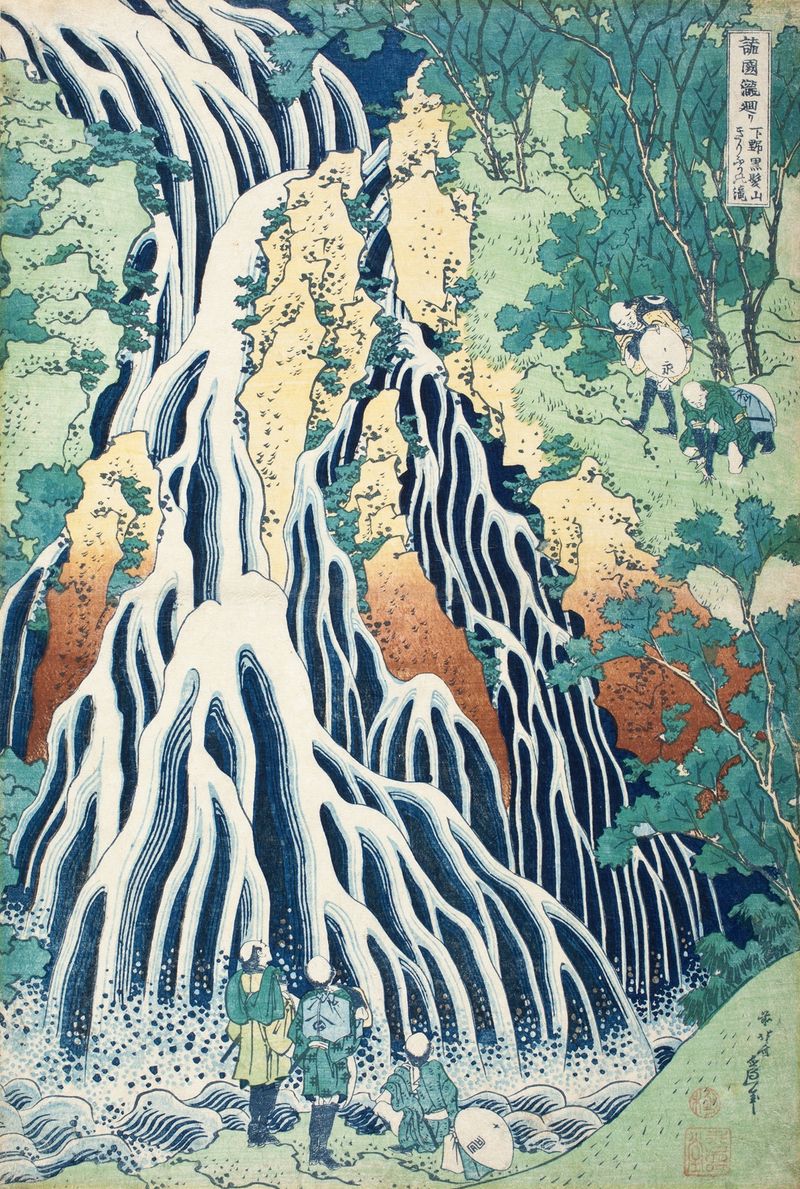
Falls of Kirifuri at Mt. Kurokami, Shimotsuke Province
Katsushika Hokusai
Onden no suisha
Katsushika Hokusai





