
Tontine Building, Glasgow — History & Facts
In the glow of a moment, we stand at a crossroads of history, where destiny intertwines with the everyday. Look to the left at the robust façade of the Tontine Building, its intricate stonework capturing the essence of Glasgow's architectural pride. The artist employs a rich palette of browns and deep greens, evoking the weight of tradition and the passage of time. Notice how the light accentuates the building's finely carved details, drawing your gaze upwards toward the ornate cornices.
Each brushstroke serves not just as a representation but as an echo of the past, immortalizing a structure that holds stories within its walls. The painting invites reflection on the transient nature of urban landscapes. The stillness of the scene contrasts sharply with the frenetic energy of the city, hinting at aspirations that may yet rise or fall with the tides of time. The subtle play of shadows suggests the inevitability of change, as if the building itself stands sentinel over the dreams and destinies of its inhabitants.
Here, time is both a friend and an adversary, a reminder of what was and what remains to be discovered. In 1891, while crafting this work, Cameron was deeply engaged with the burgeoning art scene in Scotland, exploring Japanese influences and the burgeoning style of Impressionism. Living in a time of great change, he sought to immortalize the character of his city, reflecting the dualities of stability and transformation amidst the industrial revolution. His brush captured more than just a structure; it encapsulated the heartbeat of a place and its people, forever entwined in the flow of destiny.
More Artworks by David Young Cameron
Browse all →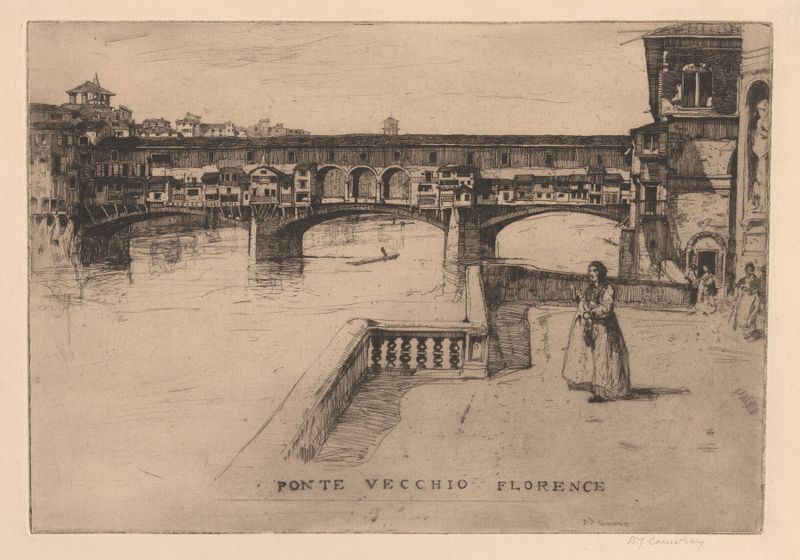
Ponte Vecchio
David Young Cameron

The Deanery, Winchester
David Young Cameron
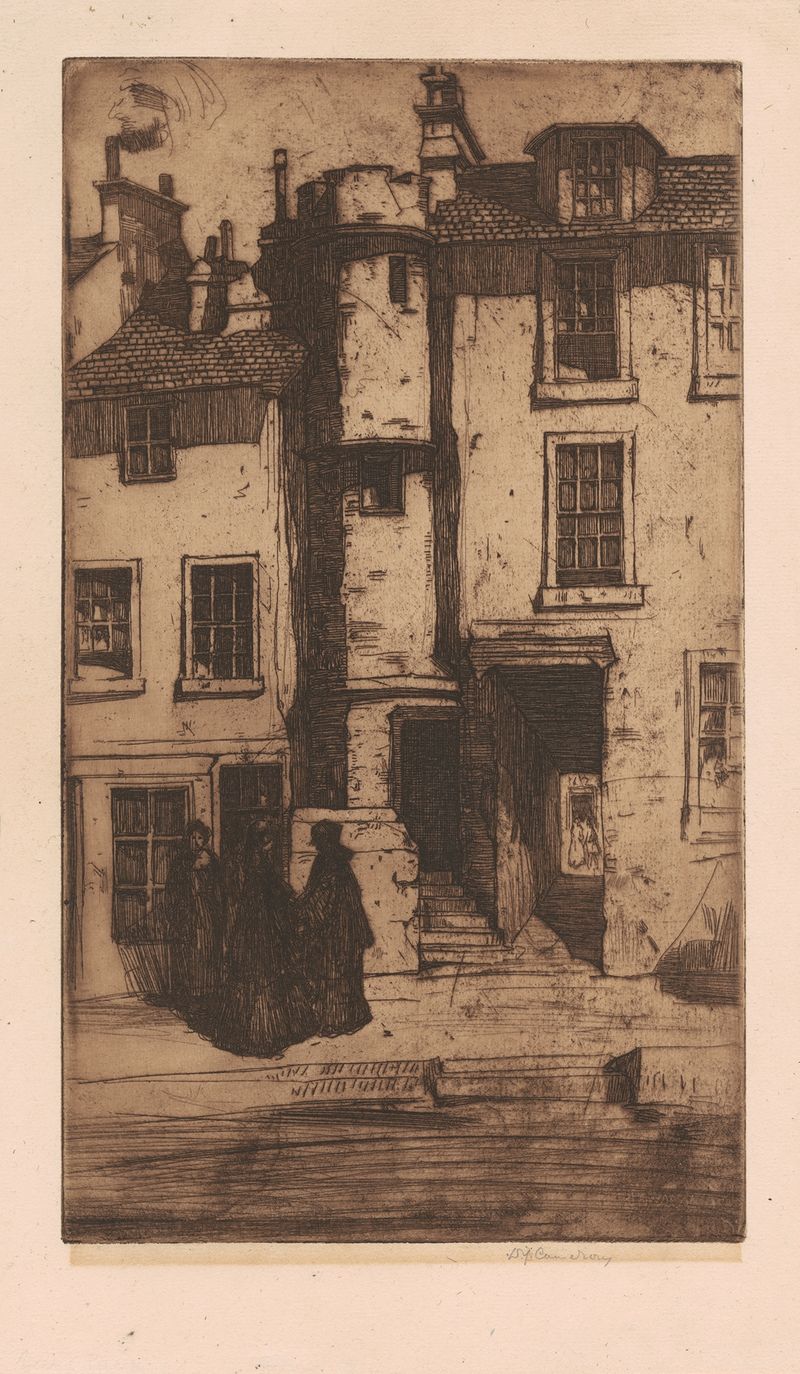
Old Houses, Stirling
David Young Cameron
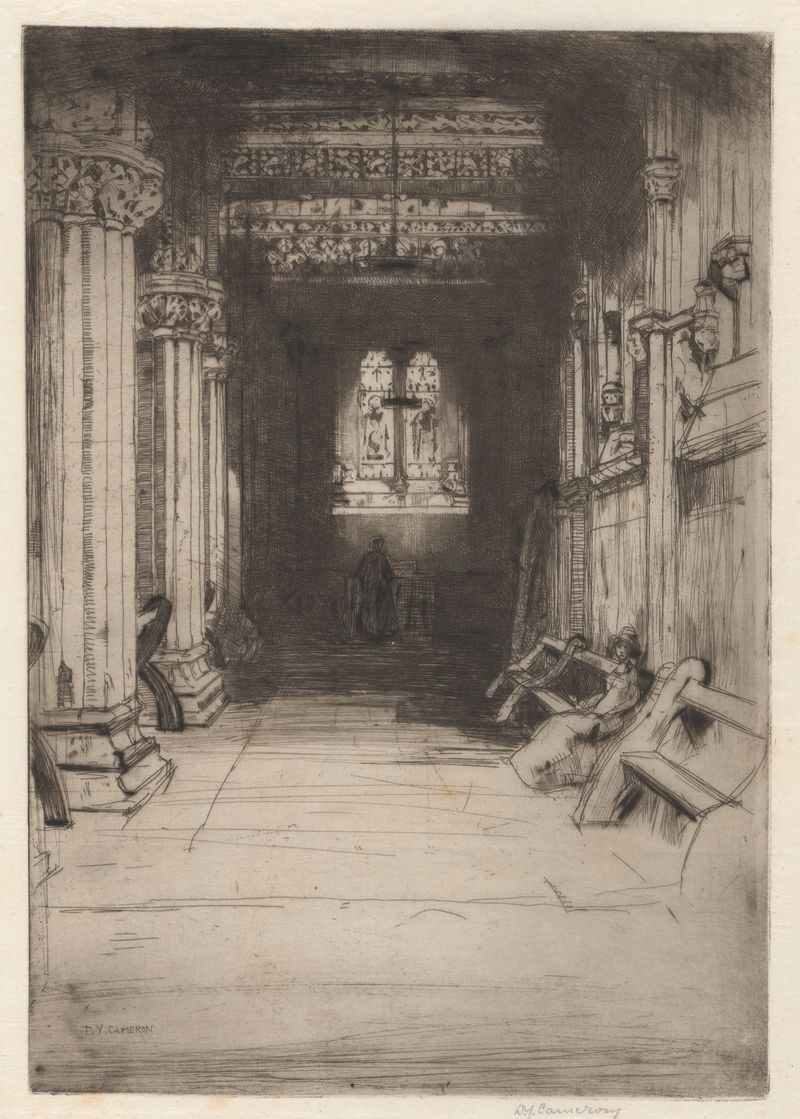
Rosslyn Chapel
David Young Cameron

The Old Museum, Beauvais
David Young Cameron
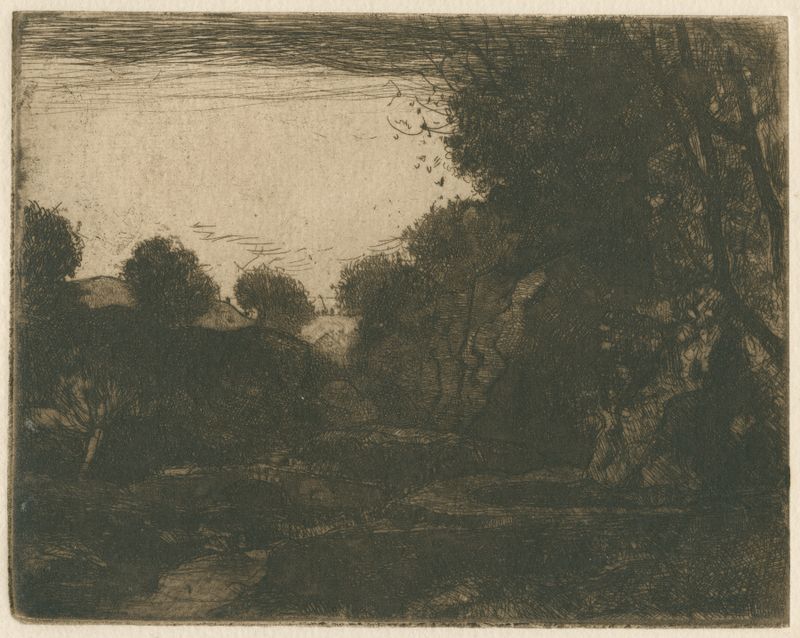
On the Bradford
David Young Cameron

The Smithy
David Young Cameron
Castle Moyle
David Young Cameron
Downing Street
David Young Cameron

Glasgow Cathedral
David Young Cameron
More Architecture Art
Browse all →
The statue of Liberty
Frédéric Auguste Bartholdi

View of Houses in Delft, Known as ‘The Little Street’
Johannes Vermeer

View of Houses in Delft, Known as ‘The Little Street’
Johannes Vermeer

The Cathedral in Rouen. The portal, Grey Weather
Claude Monet

The yellow house
Vincent van Gogh

The Church in Auvers-sur-Oise, View from the Chevet
Vincent van Gogh