
Torero met sombrero zwaaiend — History & Facts
In this stillness, we confront the unsettling emotions lurking beneath vibrant hues and dynamic forms. Fear, cloaked in bravado and spectacle, plays out as a silent narrative, urging us to look closer. Focus on the figure at the center, a torero clad in resplendent colors, his sombrero elegantly poised. Notice how the light dances across the fabric, illuminating the intricate patterns that seem to pulse with life.
The artist’s brushwork breathes vitality into the scene, drawing the eye to the tension in the torero's pose — a blend of confidence and trepidation, a moment caught before confronting the bull. Surrounding him, the muted tones of the background frame his bravado, invoking a sense of vulnerability amidst grandeur. Deeper meanings unfold within the contrast of the torero's flamboyant attire and the shadowy edges of the canvas. The vibrant reds and golds symbolize both the thrill and the peril of the bullfight, encapsulating the volatile dance between courage and fear.
The sombrero, raised high, could signify triumph or a desperate call for luck, hinting at the inherent risks of the arena. Each detail weaves a rich tapestry of human emotion — a celebration that masks an underlying dread. Created during a time of artistic transformation in the late 18th century, Torero met sombrero zwaaiend emerged from Hubert Robert's brush between 1754 and 1808. Living in Paris, he experienced the shifting tides of neoclassicism and romanticism, where themes of heroism and fear began to intertwine.
Amidst the excitement of the burgeoning art scene, Robert's work reflects a society fascinated by courage tested in the face of danger.
More Artworks by Hubert Robert
Browse all →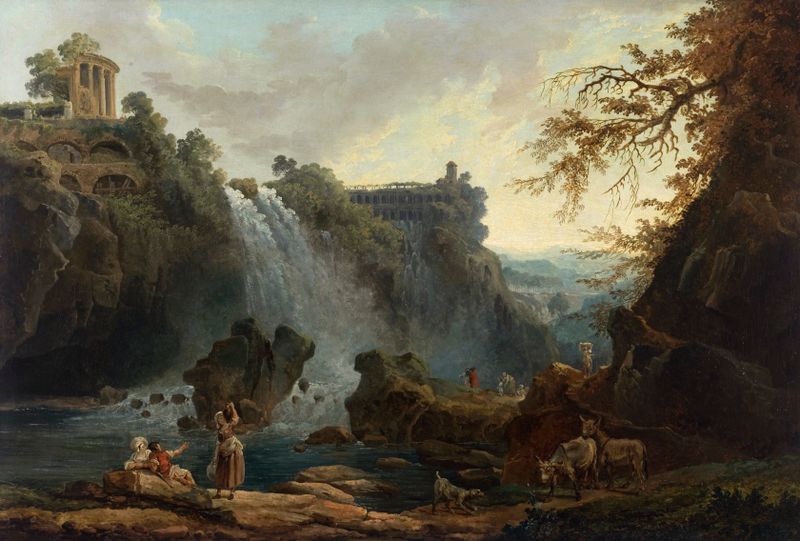
Les Cascatelles de Tivoli
Hubert Robert
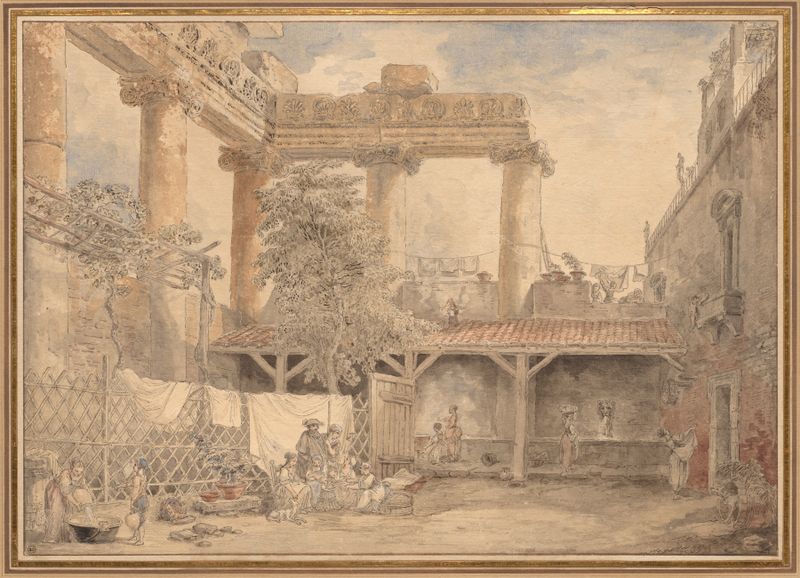
Roman Ruins, Villa Pamfili
Hubert Robert

The Rustic Bridge, Château de Méréville, France
Hubert Robert

The Portico of a Country Mansion
Hubert Robert

Architectural Capriccio
Hubert Robert

The Obelisk
Hubert Robert
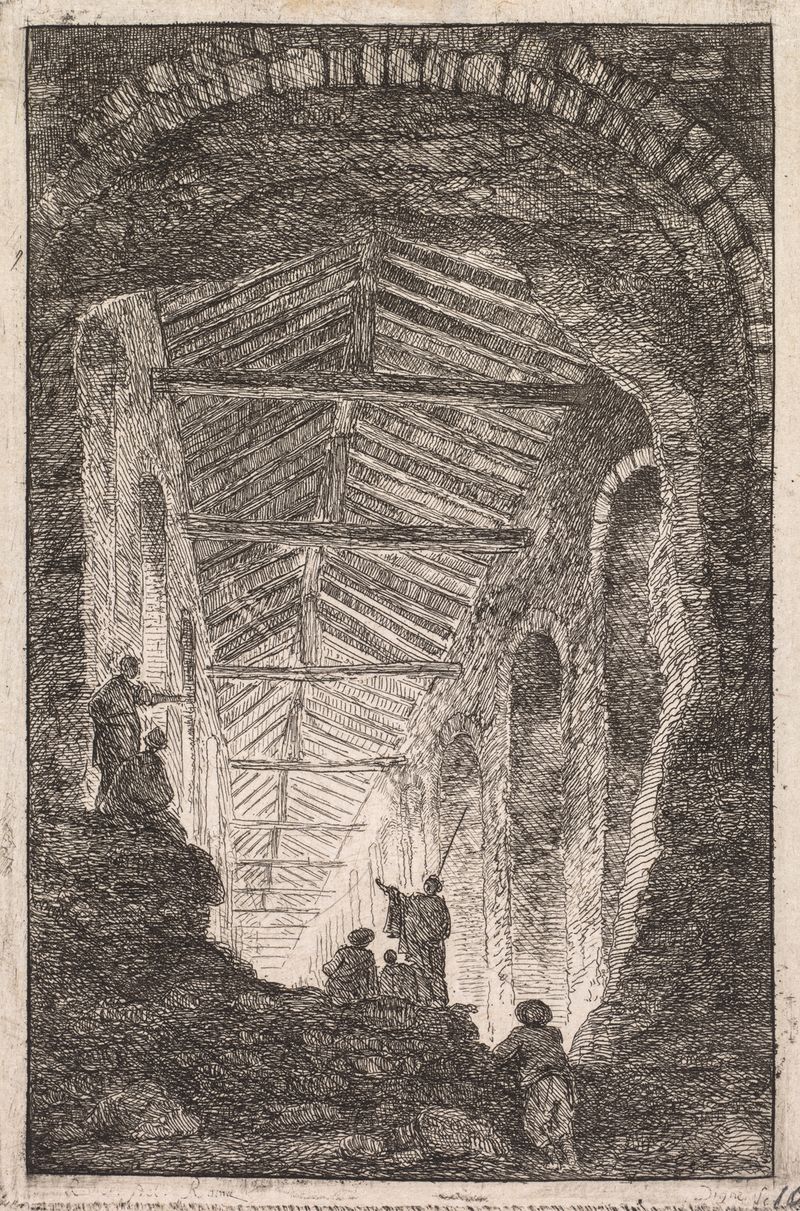
The Antique Gallery
Hubert Robert

L’incendie de l’Opéra, vu des jardins du Palais-Royal, le 8 juin 1781
Hubert Robert
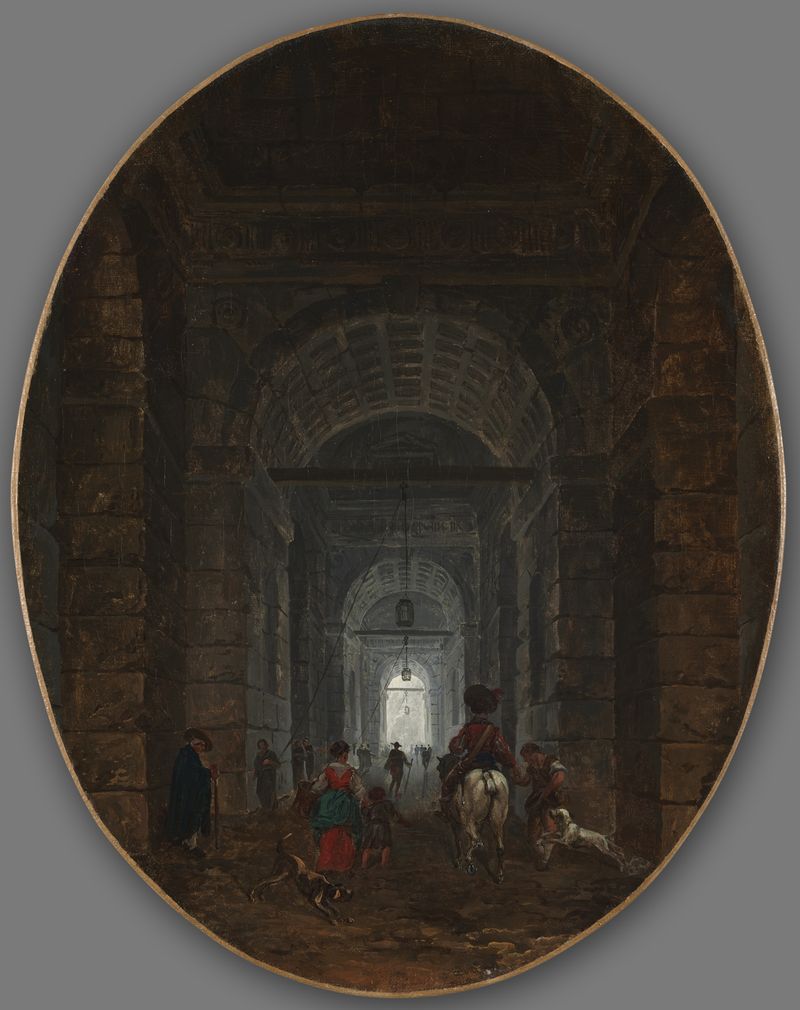
The Grotto of Posillipo
Hubert Robert

Architectural Capriccio with ruins of the Temple of Saturn and the Colosseum in the background
Hubert Robert





