Travellers among Roman Ruins — History & Facts
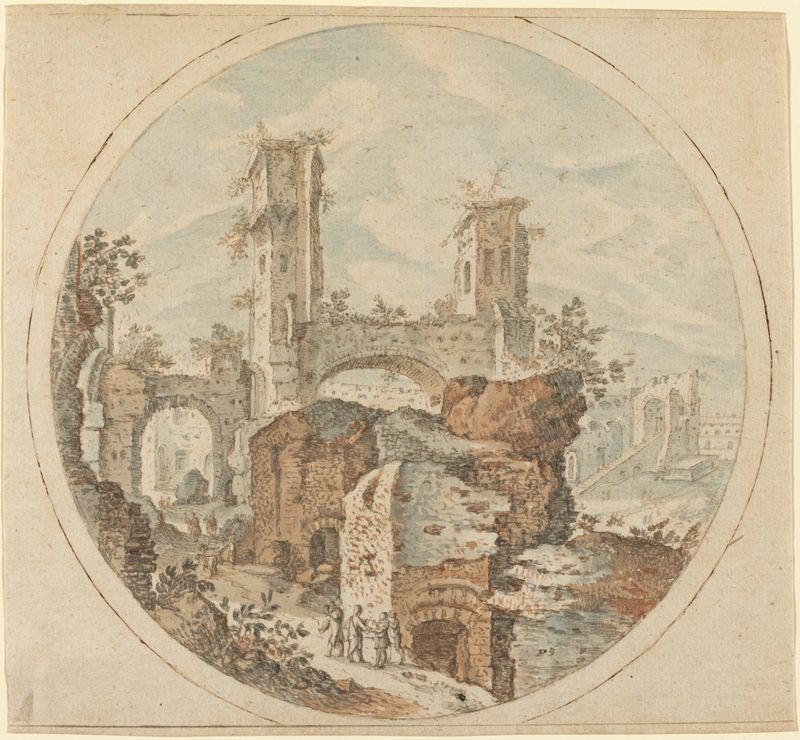
Where does light end, and longing begin? This question weaves itself through the very fabric of Travellers among Roman Ruins, inviting viewers into a dialogue with shadow and nostalgia. Look to the center, where the figures meander among crumbling columns—two silhouettes framed against a backdrop of ancient grandeur. The light casts elongated shadows, suggesting an ethereal connection between the past and the present. The warm hues of ochre and earth tones juxtapose with the cool blues of twilight, creating an emotional interplay that evokes both reverence and melancholy.
Notice how the sun filters through the ruins, illuminating the textures of the weathered stone and the fabric of the travelers’ clothing, enhancing the sense of time and history. As you explore further, consider the layered meanings entwined in the scene. The presence of the ruins signifies the weight of history, while the figures symbolize the timeless journey of humanity searching for meaning amid decay. Their hesitant gestures and slight distance from one another hint at a deeper yearning—perhaps for connection, understanding, or a lost era.
The shadows cast by the ancient architecture enhance this emotional tension, representing both the burdens of the past and the fleeting nature of existence. During a time when Romanticism flourished, the artist created this piece in an undated moment that aligns with the early 19th century. At that time, Stevens was immersed in the exploration of themes related to nature, antiquity, and the sublime, often reflecting the cultural longing for a connection to this rich historical landscape. The ruins serve as a metaphor for the passage of time, encapsulating both beauty and the inevitable decay that accompanies it.