Woodland Scenery with Hermitage — History & Facts
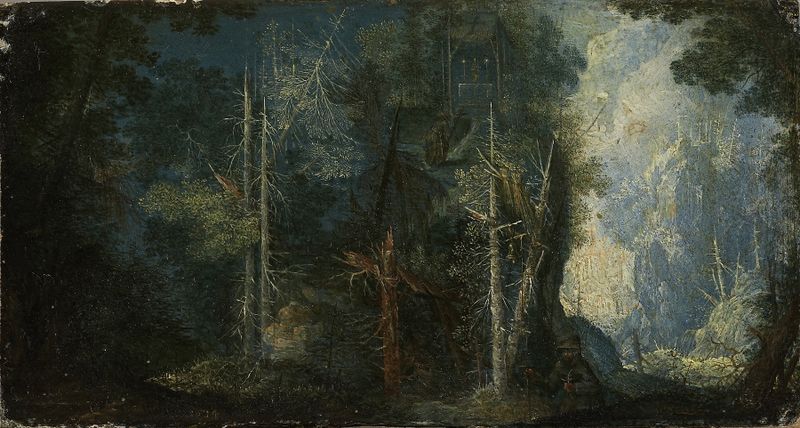
What remains of the past entwines with the present in the delicate strokes of this captivating work. Transformation lies at the heart of the scene—an invitation to ponder how nature and human creation intertwine, offering solace and reflection amidst the passage of time. Look to the left, where the trees stand tall, their emerald leaves a vibrant contrast to the earthy tones of the forest floor. Notice the gentle play of light filtering through the canopy, casting dappled shadows that dance across the serene landscape.
The hermitage, nestled within this tranquil setting, evokes a sense of mystery and seclusion, its soft contours echoing the natural curves of the surroundings. Each brushstroke seems to breathe life into the scene, as rich textures invite the viewer to explore the depths of this woodland sanctuary. Yet, beneath the surface of this idyllic tableau lies an exploration of contrast. The unity of the hermitage with its woodland surroundings suggests a harmonious coexistence, yet its very presence speaks to human ambition and the desire to impose order upon nature.
The interplay between light and shadow mirrors the tension between memory and oblivion, embodying the transient nature of existence. This painting is not merely a depiction of a scene; it captures the essence of transformation—the eternal cycle of decay and rebirth. Pieter Stevens created this piece in 1614, during a time when landscape painting was evolving significantly in Europe. Working in the heart of Flanders, he was influenced by the growing appreciation for naturalism and detail in art.
This period saw artists increasingly reflecting on their relationship with the environment, making Stevens' serene woodland scene a poignant contribution to the ongoing dialogue surrounding nature and humanity in the art world.