
Trento — History & Facts
In the heart of the canvas lies an emotional resonance that speaks to the depths of longing and reflection. It invites the viewer to ponder the delicate balance between beauty and sorrow, reminding us of the profound experiences that shape our human journey. Look to the left at the swirling hues of deep blues and melancholic grays, where the brushstrokes form a bridge between tumult and tranquility. The artist’s deft hand captures the essence of a landscape, yet it transcends mere depiction, evoking a sense of an inner world bursting forth.
Notice how the trees, their branches arching gracefully, seem to whisper secrets to the wind, while the sky above radiates a fading light, hinting at an approaching twilight. The composition is purposefully disjointed, mirroring the emotional turbulence of the moment. In the intricate play between light and shadow, we find hidden meanings. The stark contrast of colors reflects the tension between joy and despair, urging the viewer to confront their own feelings of melancholy.
Each element, from the flowing water to the distant horizon, serves as a metaphor for the passage of time and the inevitability of change, inviting contemplation on our transient existence. The work resonates deeply, nudging us to confront the fragility of beauty amidst the chaos of life. Created in 1853, this piece emerged during a time of artistic exploration for its creator, who was immersed in a landscape of Romanticism. As Bamberger painted in his studio, the art world was undergoing a transformation, grappling with new ideas of expression and emotion.
The mid-19th century was marked by a burgeoning need to escape the industrial age’s harsh realities, leading artists like him to find solace in nature and introspection, leaving behind a legacy of profound emotional depth.
More Artworks by Fritz Bamberger
Browse all →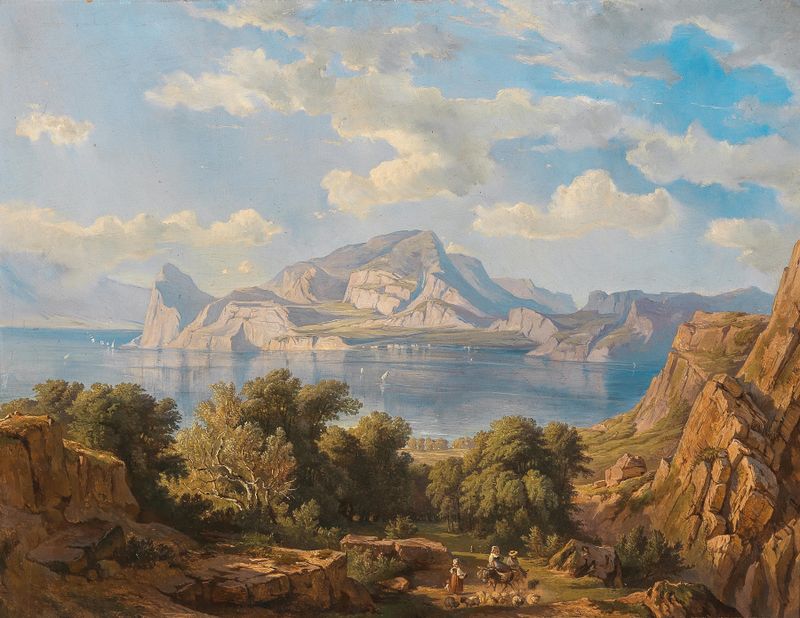
A View of Capo Miseno with Vesuvius in the Background
Fritz Bamberger

Spanische Küstenlandschaft zwischen Murcia und Almeria
Fritz Bamberger
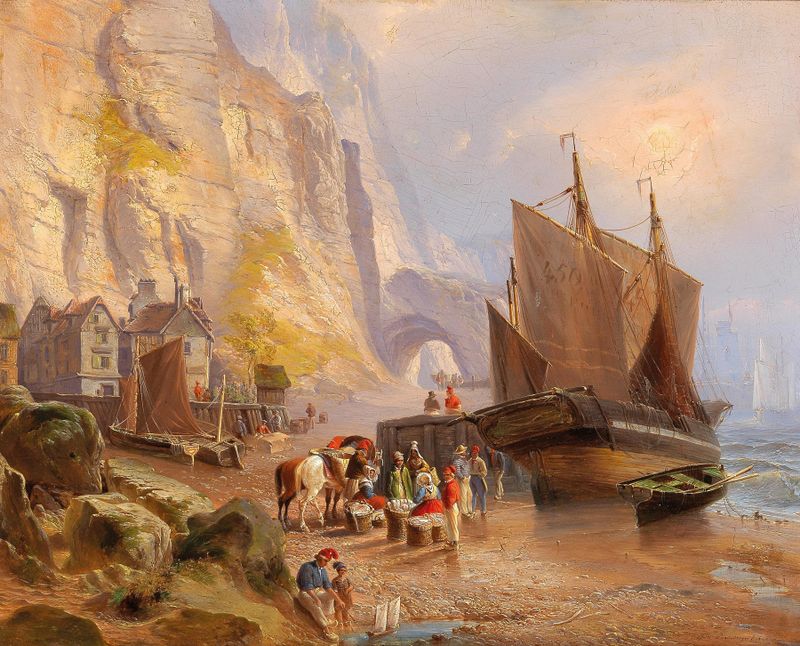
Fishermen on the Beach
Fritz Bamberger
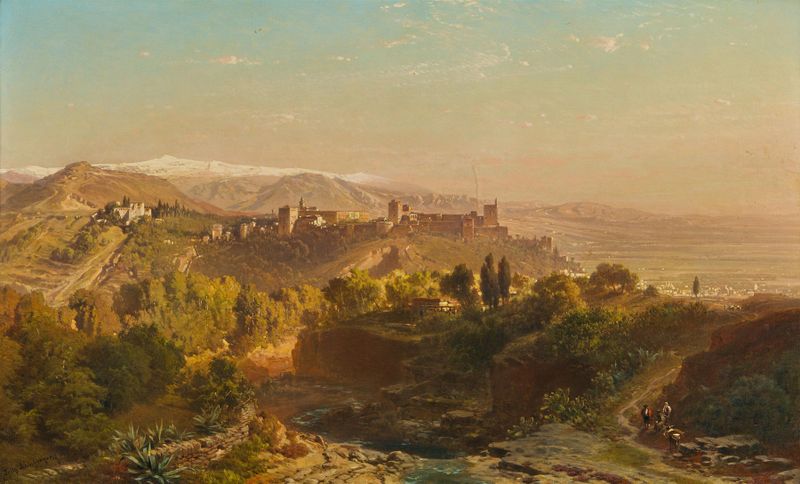
Spanische Landschaft mit Blick auf die Alhambra
Fritz Bamberger
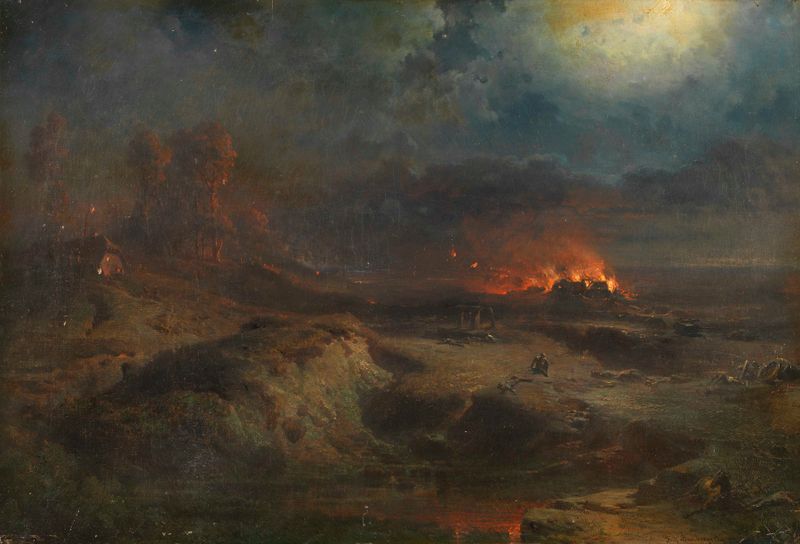
Nächtliche Szene mit brennendem Gehöft
Fritz Bamberger
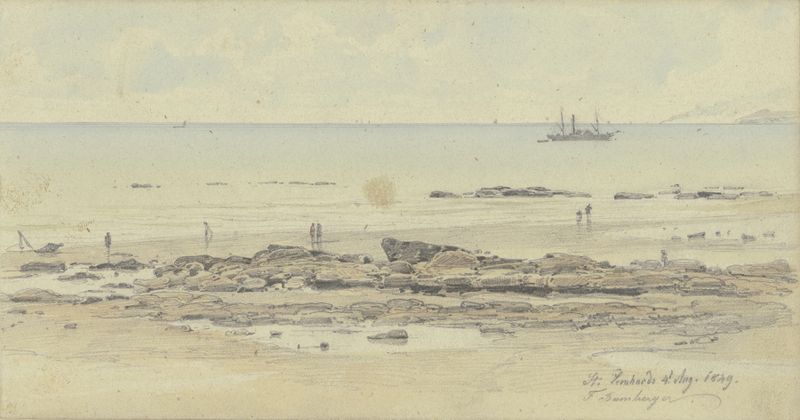
Küste bei Saint Leonards-on-Sea
Fritz Bamberger

Weite Hochebene mit See, im Vordergrund Kastell und Aquädukt
Fritz Bamberger
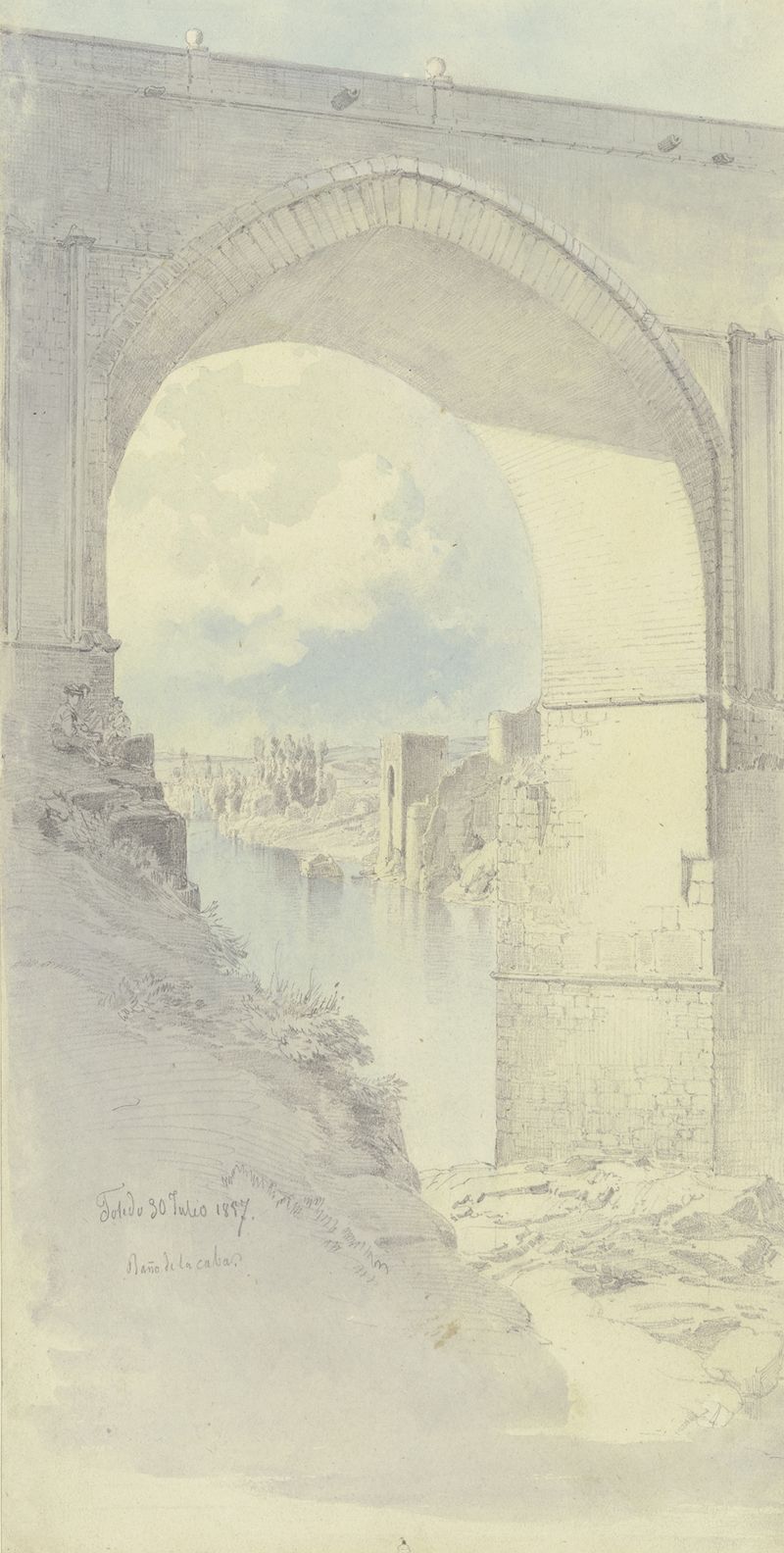
Durchblick durch den Bogen einer Brücke in Toledo
Fritz Bamberger
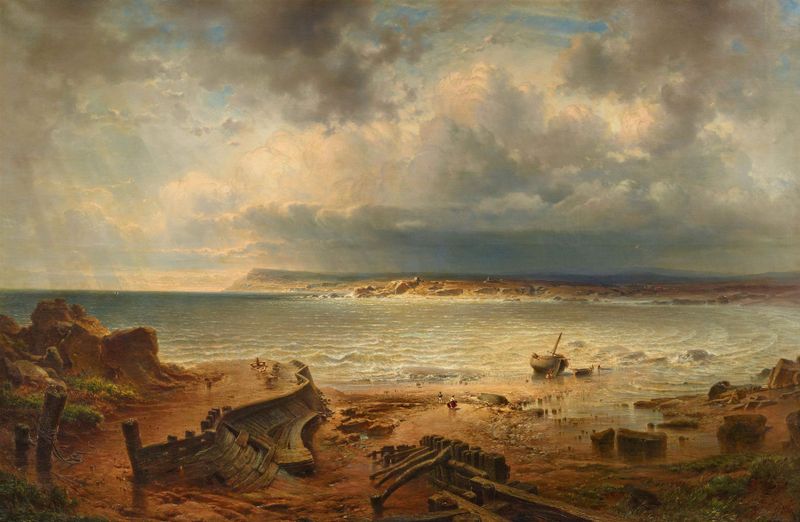
Englische Küste zwischen Hastings und Brighton
Fritz Bamberger
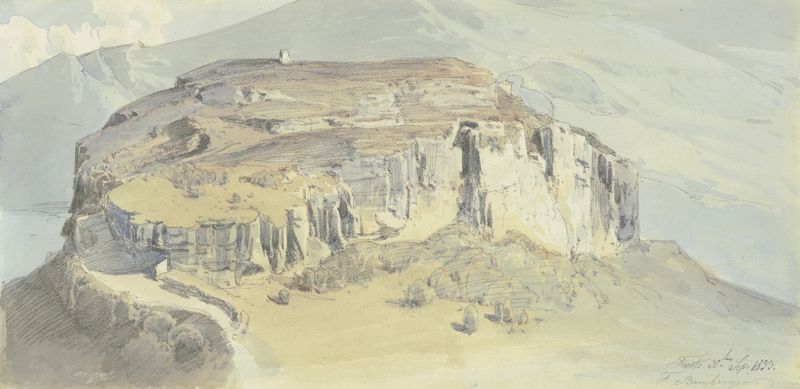
Trento
Fritz Bamberger





