
Twilight — History & Facts
Could a single brushstroke hold eternity? In Twilight, the ethereal interplay of light and shadow evokes a sense of infinite wonder, inviting viewers to pause and reflect on the transient beauty of the world around them. Focus on the gradient of colors that washes across the canvas, a mesmerizing blend of deep purples and soft oranges. Look closely at the horizon line, where the sun dips below the edge of the world, casting a gentle glow that illuminates the sky. The delicate strokes capture the fleeting moment of dusk, creating a sense of depth that pulls you into the scene, while the soft texture suggests an atmospheric softness, making the viewer feel enveloped by twilight itself. Hidden within this tranquility lies an emotional tension—between day and night, certainty and mystery.
The contrasting colors represent the duality of existence, hinting at the inevitable transition we all face. Each brushstroke conveys a quiet reverence for the natural world, urging one to contemplate the fleeting nature of life and the beauty that can be found in its impermanence. Guillaume Vogels was active during the late 19th century, a time when Impressionism was gaining prominence in Europe. While the exact date of this piece is unknown, it reflects the artist's fascination with light and atmosphere, aligning with the prevailing artistic movements that sought to capture the ephemeral qualities of nature.
Vogels, based in Belgium, created this work amidst a vibrant artistic community that embraced the exploration of color and form, seeking to evoke emotion through a deep connection with the natural world.
More Artworks by Guillaume Vogels
Browse all →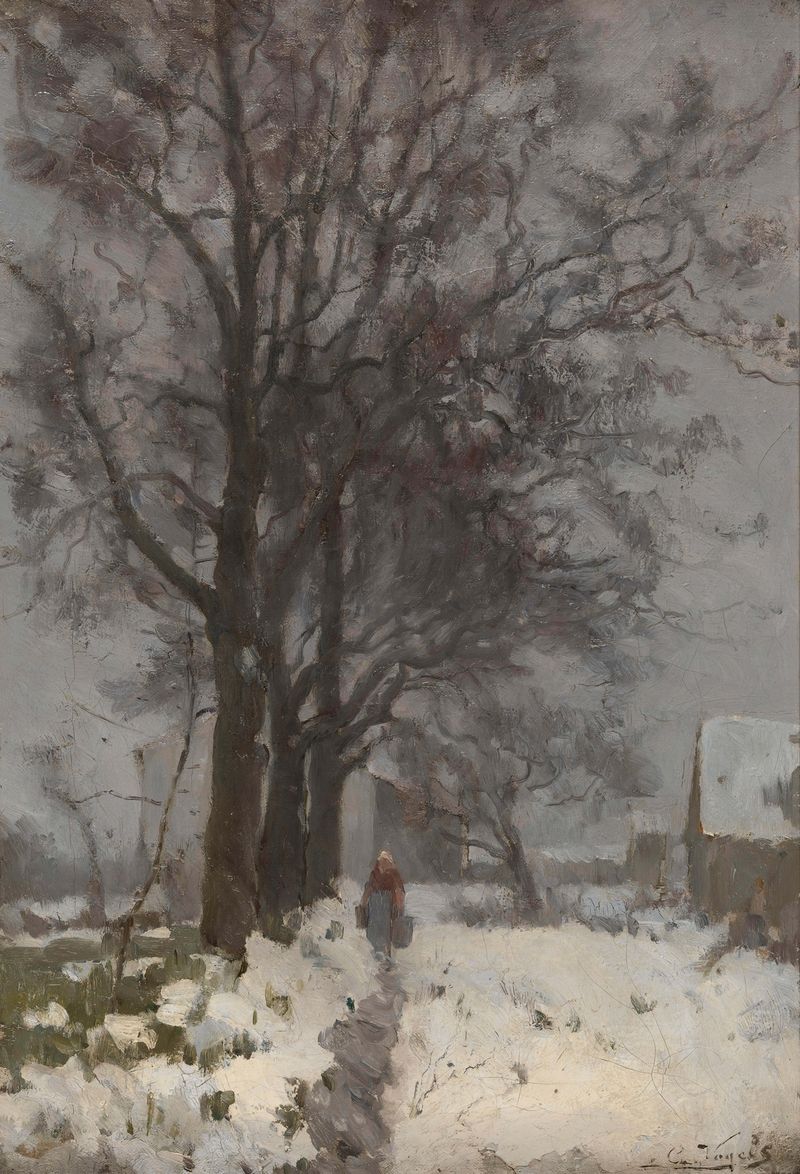
Snow-Covered Landscape
Guillaume Vogels
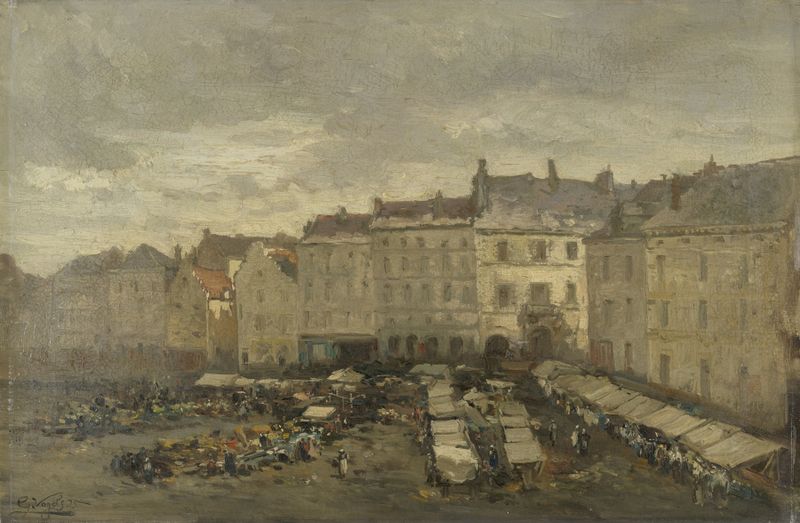
The Grote Zavel (Grand Sablon), Brussels
Guillaume Vogels

A View of Temse
Guillaume Vogels
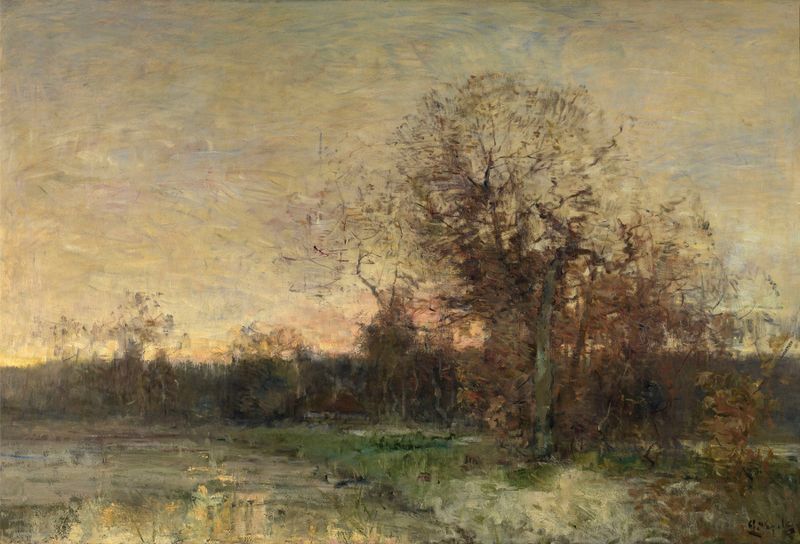
The Pond in Ixelles
Guillaume Vogels
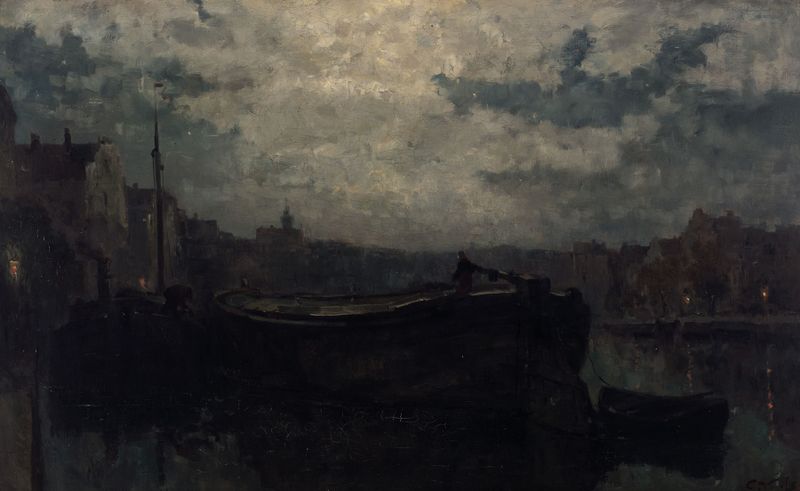
Dutch Canal at Night A
Guillaume Vogels

Wapenplein in Ostend
Guillaume Vogels

Beach View
Guillaume Vogels
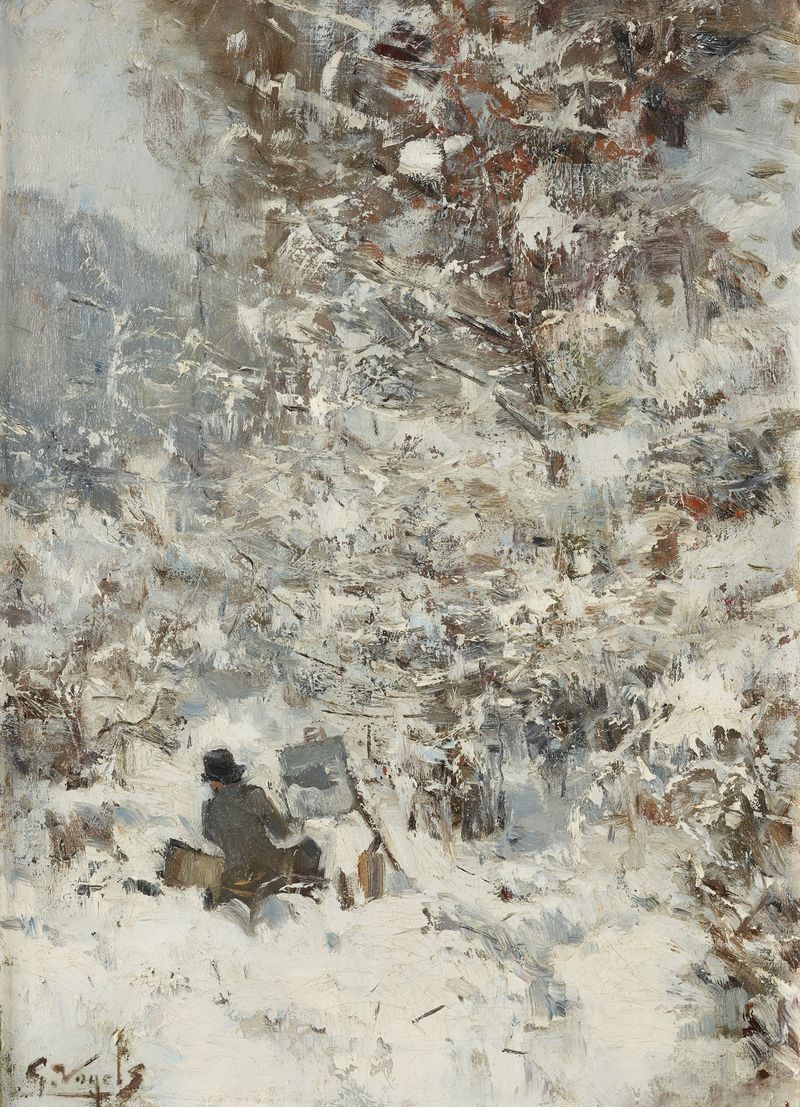
Pantazis in de sneeuw
Guillaume Vogels
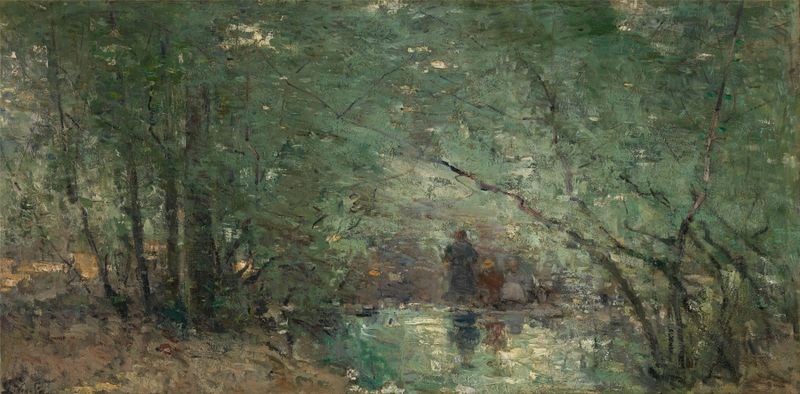
Marsh in the Sunlight
Guillaume Vogels
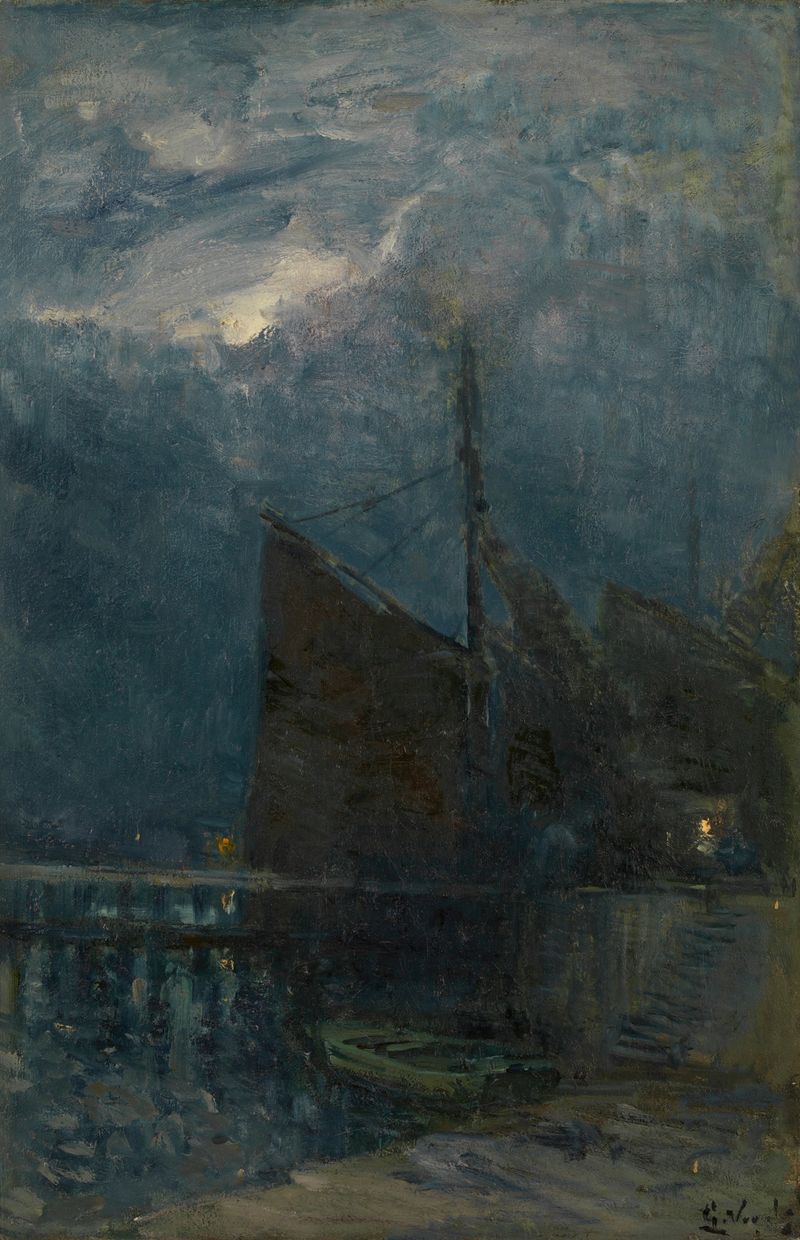
Entrance of a Harbour by Night
Guillaume Vogels





