
Dutch Canal at Night A — History & Facts
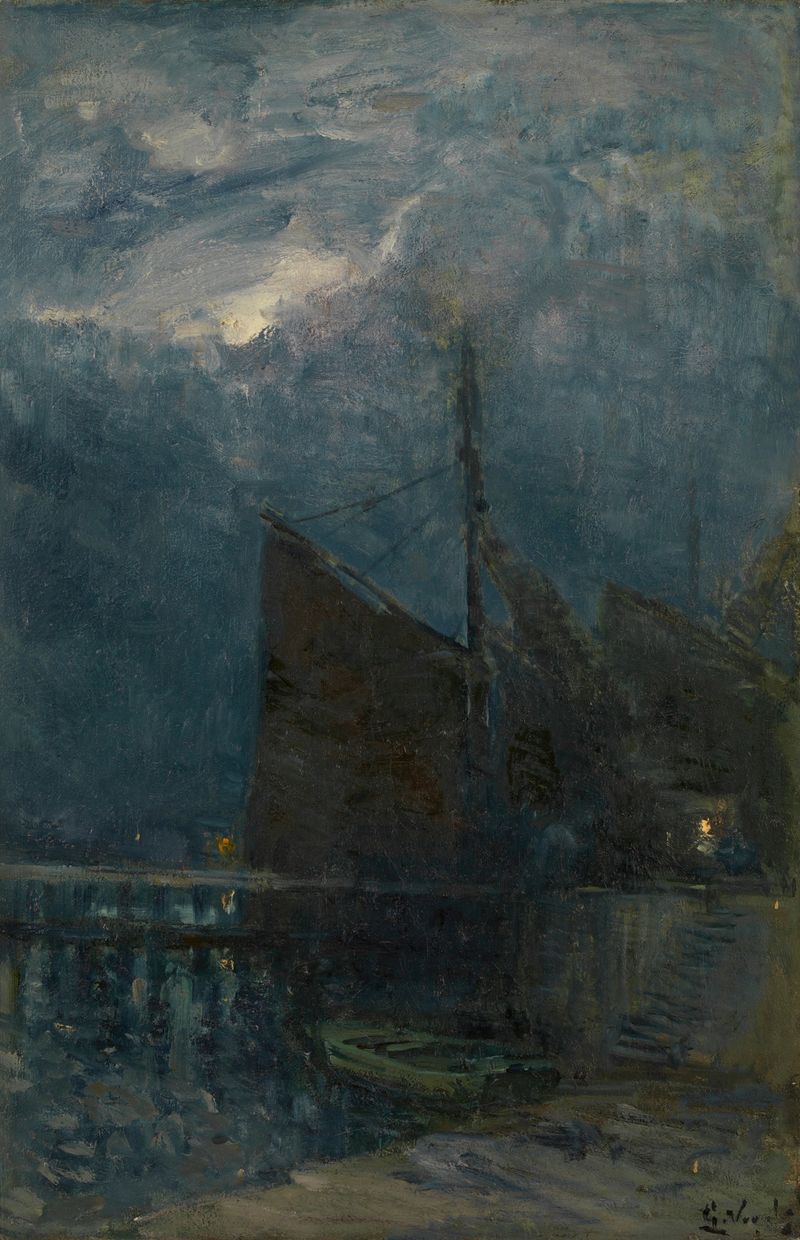
What if silence could speak through light? In Dutch Canal at Night A, the canvas whispers an ecstatic dialogue between darkness and illumination, inviting us to explore the interplay of serene stillness and vibrant energy. Begin by looking to the left, where moonlight dances on the water’s surface, casting a silvery glow that beckons your gaze. Notice the gentle ripples that shimmer with life, reflecting the stars above and the faint outlines of swaying trees along the banks. The muted palette of blues and grays creates a tranquil yet dynamic atmosphere, while the soft brushwork brings an almost dreamlike quality to the scene.
Here, the artist captures a moment that transcends time, urging us to immerse ourselves in its ethereal beauty. Beneath the surface lies a tension between solitude and ecstasy, embodied in the contrast of the still water and the lively sparkle of light. The quiet of the night is palpable, yet the play of light suggests a hidden vibrancy, evoking a sense of wonder and introspection. Each element carries emotional weight, from the glowing reflections that seem to pulse with life to the shadowy depths that hint at secrets waiting to be uncovered.
This delicate balance of visible and invisible invites viewers to find their own meanings within the stillness. Guillaume Vogels painted Dutch Canal at Night A in 1879, a period when he was deeply engaged with capturing atmospheric effects in his landscapes. Working in the Netherlands, he was influenced by the Impressionist movement, which emphasized light and color over detailed representation. This painting reflects a moment of personal exploration for the artist, as well as a growing interest in capturing the ephemeral quality of nature amidst the backdrop of rapidly changing urban life.
More Artworks by Guillaume Vogels
Browse all →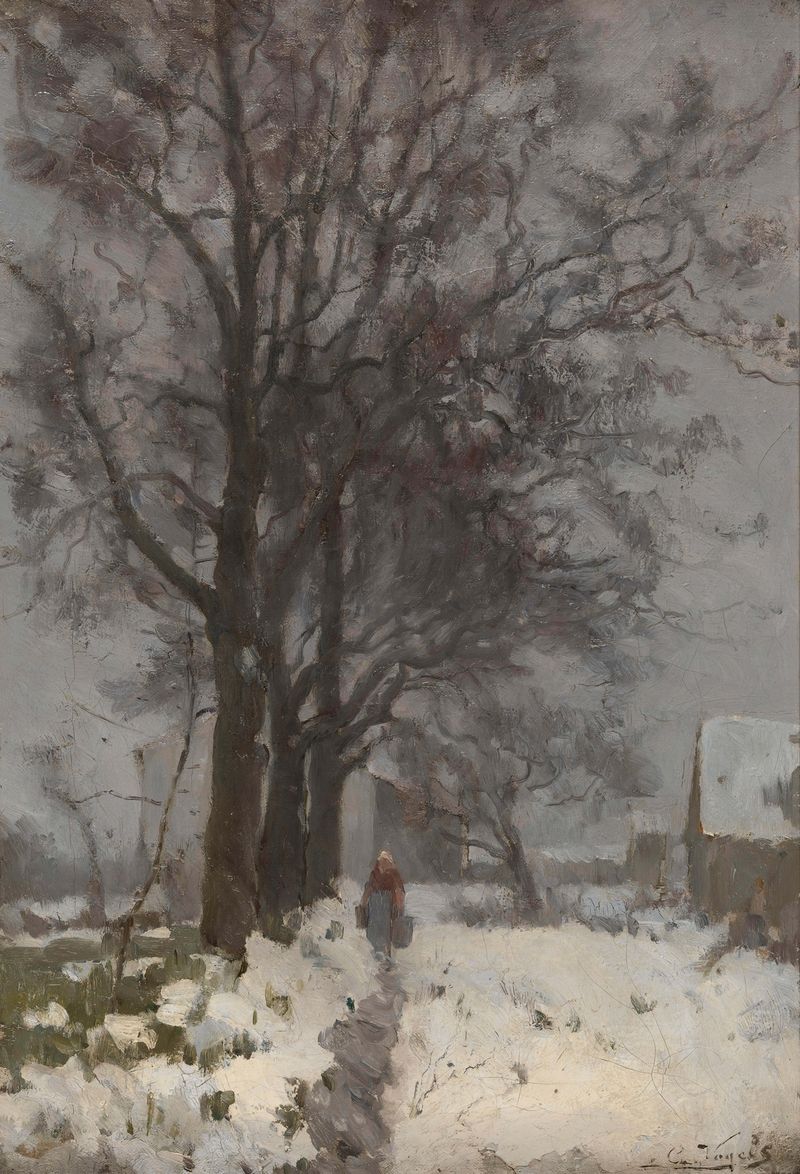
Snow-Covered Landscape
Guillaume Vogels

Twilight
Guillaume Vogels
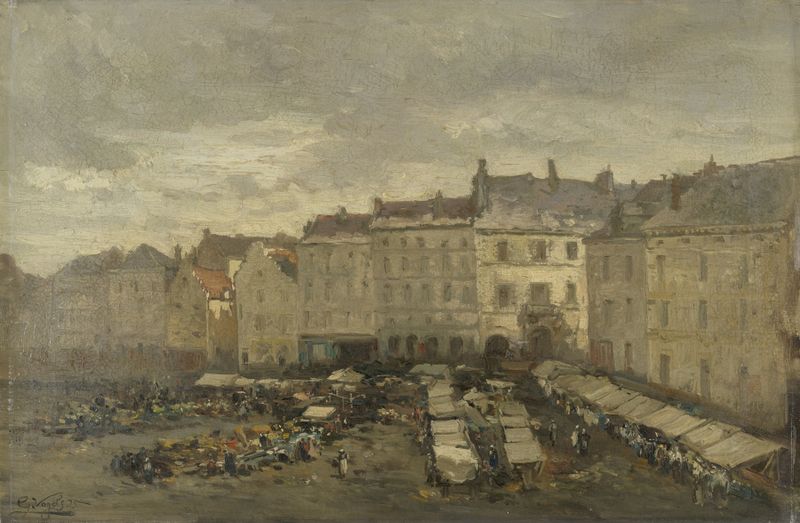
The Grote Zavel (Grand Sablon), Brussels
Guillaume Vogels

A View of Temse
Guillaume Vogels
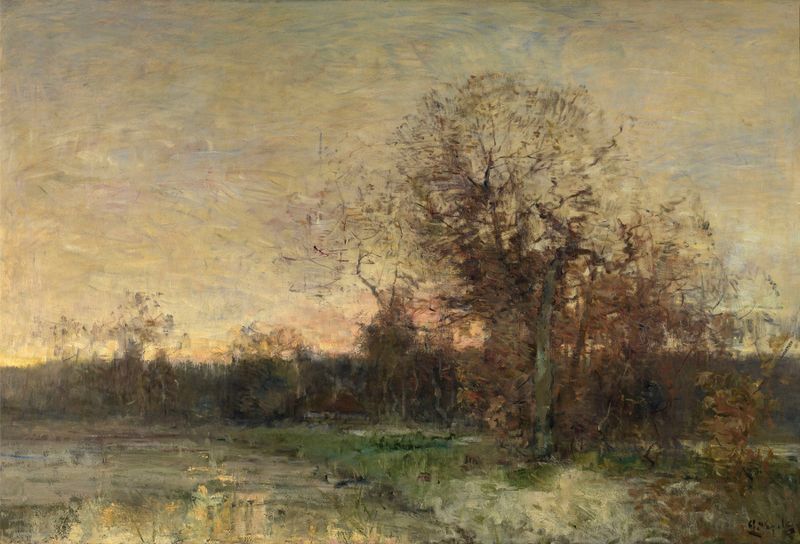
The Pond in Ixelles
Guillaume Vogels

Wapenplein in Ostend
Guillaume Vogels

Beach View
Guillaume Vogels
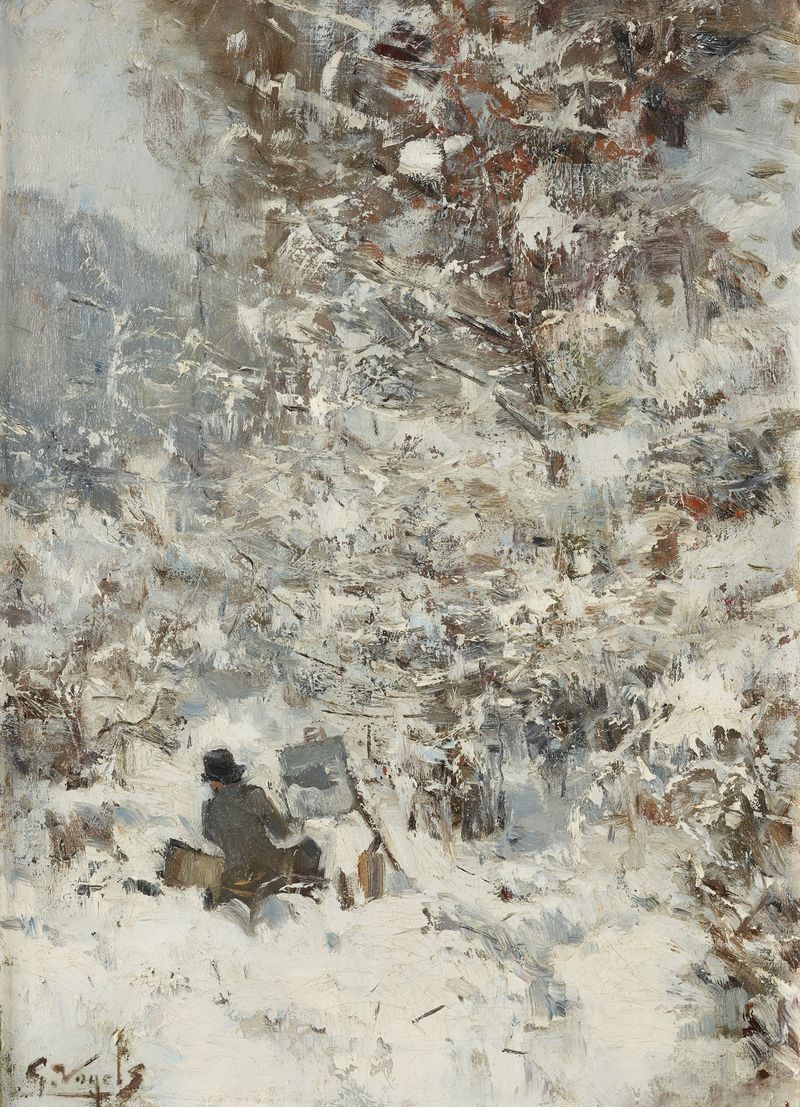
Pantazis in de sneeuw
Guillaume Vogels
Marsh in the Sunlight
Guillaume Vogels
Entrance of a Harbour by Night
Guillaume Vogels





