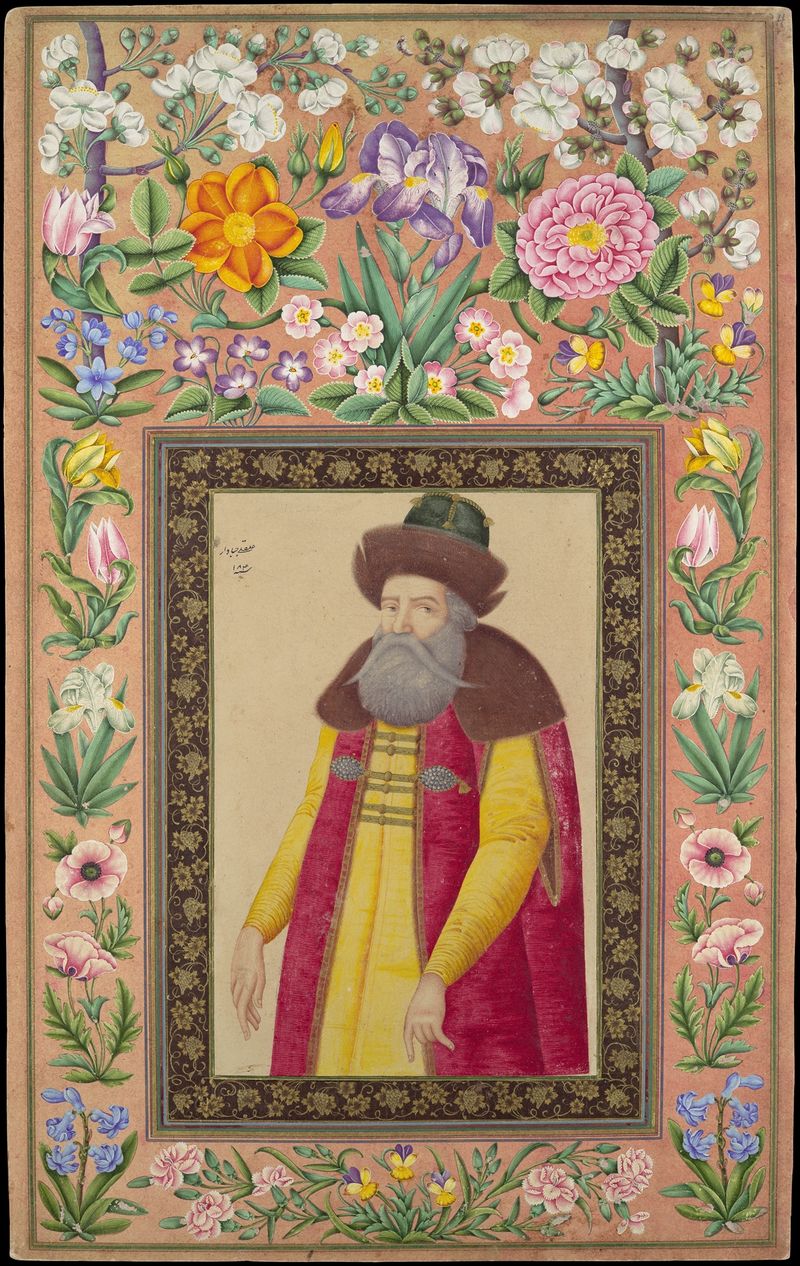
"Two Old Men in Discussion Outside a Hut", Folio from the Davis Album — History & Facts
What if beauty was never meant to be finished? In the delicate interplay of colors and forms, we find a moment frozen in time, capturing the essence of life's quiet conversations and the destinies they weave. Focus on the intricate details of the two figures seated outside a modest hut. Notice how the soft, muted tones of the earth and sky envelop them, creating a cocoon of intimacy. The artist’s meticulous brushwork reveals the textures of their garments, drawing the eye to their expressive faces, each wrinkle a testament to a life well-lived.
The interplay of light reflects their wisdom, illuminating their features with a gentle glow that suggests both the warmth of camaraderie and the weight of unspoken thoughts. As you delve deeper, consider the symbolic significance of their discussion. The positioning of their bodies — slightly turned towards one another yet separated by the hut’s threshold — hints at the complexities of connection and distance in human relationships. The hut, a simple structure, embodies a shared history, while the surrounding landscape speaks of the vast, unpredictable journeys of their lives.
This contrast between the intimate and the expansive evokes an emotional tension that resonates through generations. Created in 1674–75, this work was a product of a vibrant period in Mughal art, where intricate details and narrative depth flourished under the patronage of emperors. Ali Quli Jabbadar, deeply embedded in this artistic milieu, crafted pieces that captured not just scenes, but the very essence of human experience, reflecting the broader conversations taking place within his society. As he painted, the world around him was steeped in cultural richness and historical transformation, shaping his vision and technique.