
Ulvegjelskogen, Mandal — History & Facts
Could beauty survive in a century of chaos? Ulvegjelskogen, Mandal invites us to ponder this as it unveils a serene forest awakening, a testament to nature’s resilience amidst turmoil. Focus first on the vibrant green foliage at the forefront, where delicate leaves catch the light filtering softly through the trees. Notice how the painter captures the intricate play of shadows and luminescence, creating a sense of depth that draws you into the heart of the forest. The gentle brushstrokes evoke a lush tranquility, while the palette of soft greens and earthy browns envelops the viewer in a harmonious embrace. Delve deeper, and you may spot the subtle tension between the wild, untamed forest and the encroaching shadows that hint at unseen dangers.
This duality reflects the complexities of life itself, where beauty and peril often coexist. The interplay of light and dark encourages contemplation of the transient nature of innocence and the inevitable encroachments of time and chaos. In 1863, Amaldus Nielsen was establishing his voice within the Norwegian art scene, influenced by the Romantic movement's reverence for nature. Painting during a period of societal shifts and artistic exploration, he sought to convey the sublime beauty of his homeland, even as industrial changes loomed on the horizon.
This work stands as both a reflection of that time and an enduring reminder of nature’s capacity for renewal.
More Artworks by Amaldus Nielsen
Browse all →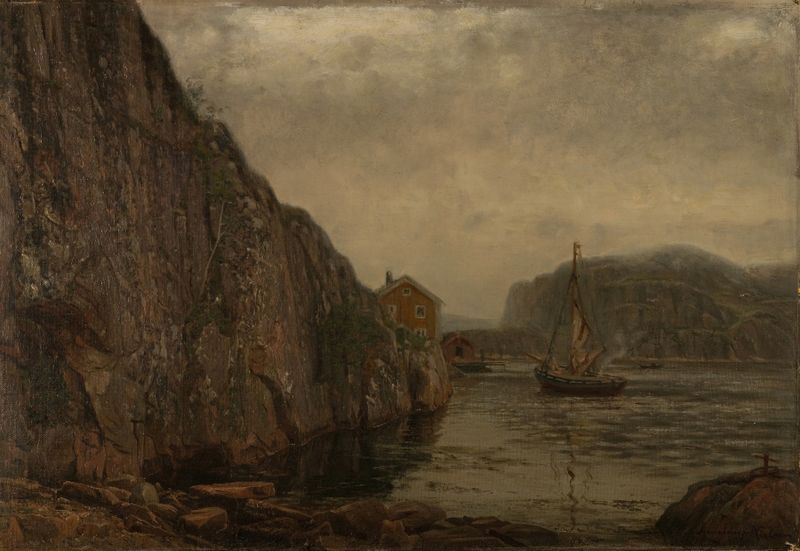
Skjærgård, Ny-Hellesund
Amaldus Nielsen
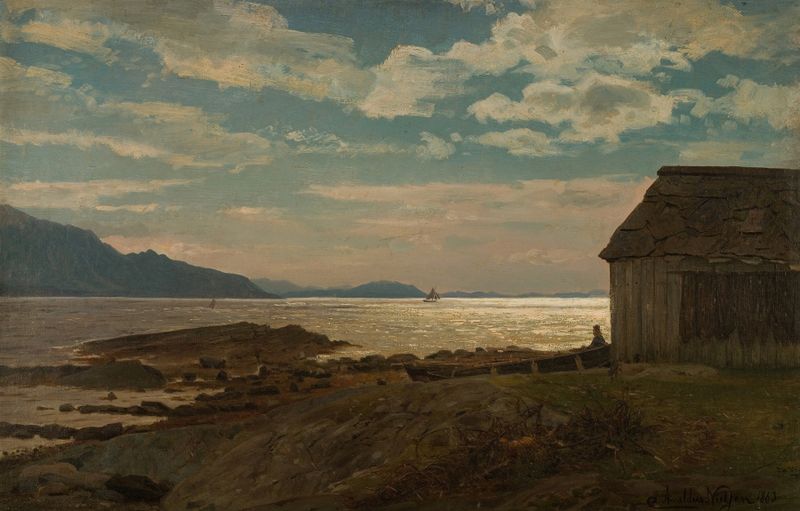
Fra Ølvestranden, Hardanger
Amaldus Nielsen
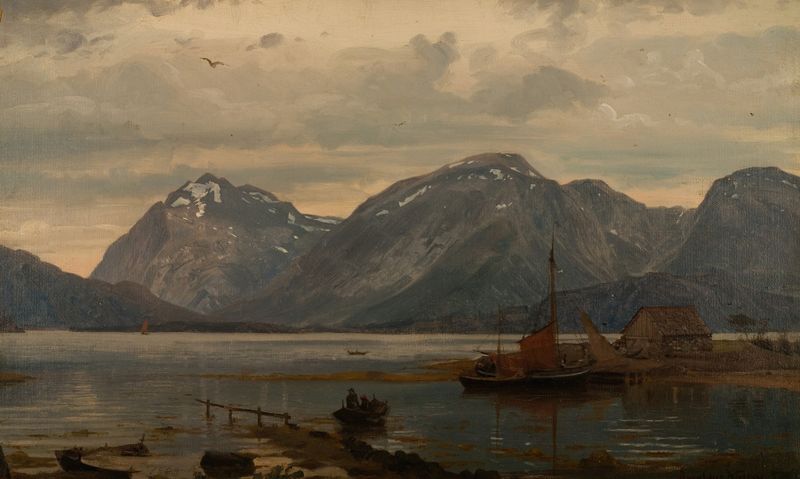
Fra Englafjellene, Hardanger
Amaldus Nielsen
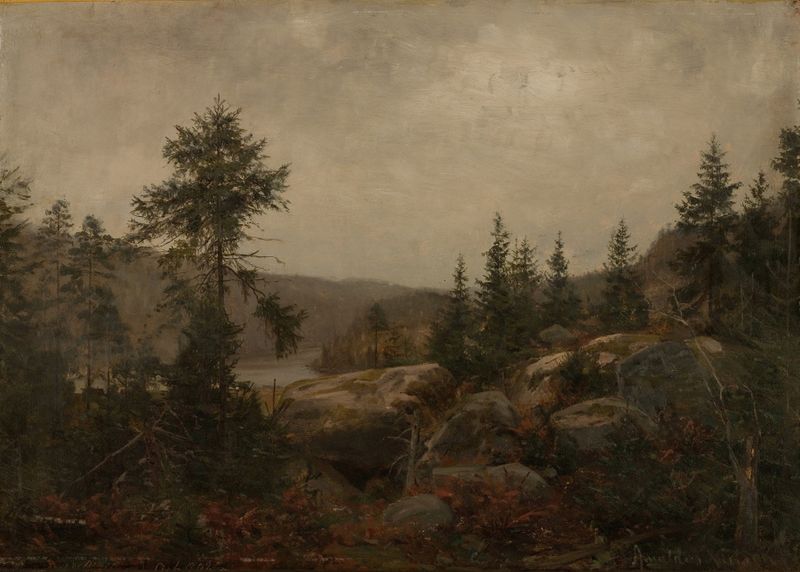
Duskregn . Gården Foss, Mandalselven
Amaldus Nielsen
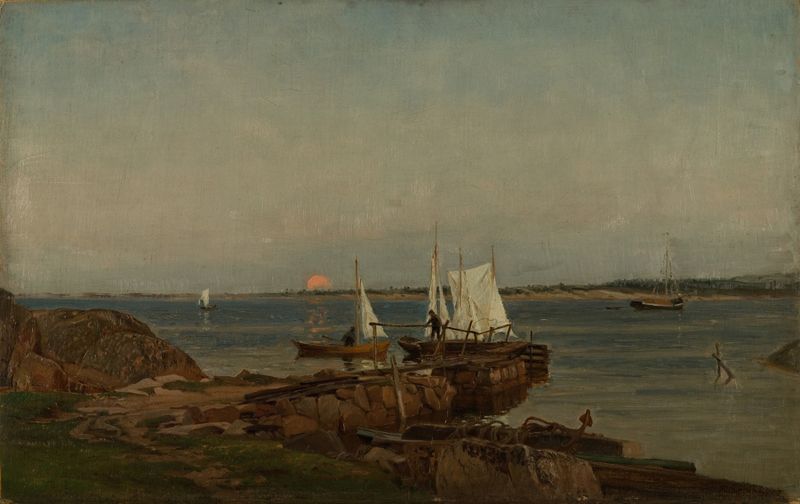
Sommernatt, Hvaler
Amaldus Nielsen
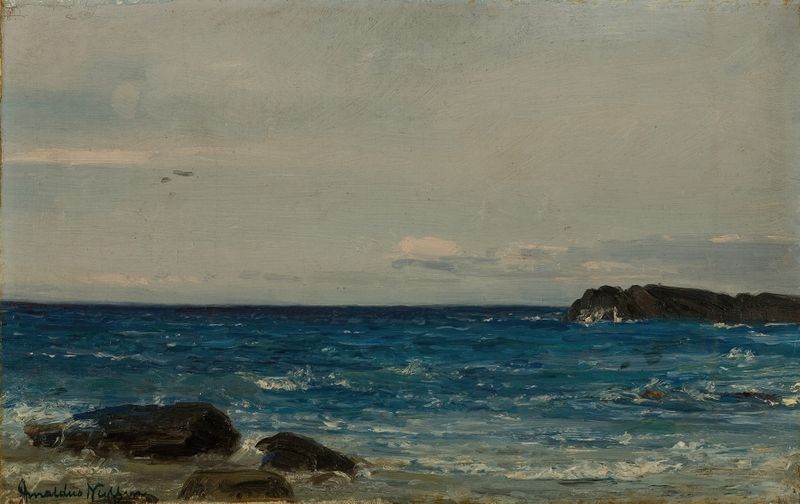
Fra Jæren
Amaldus Nielsen
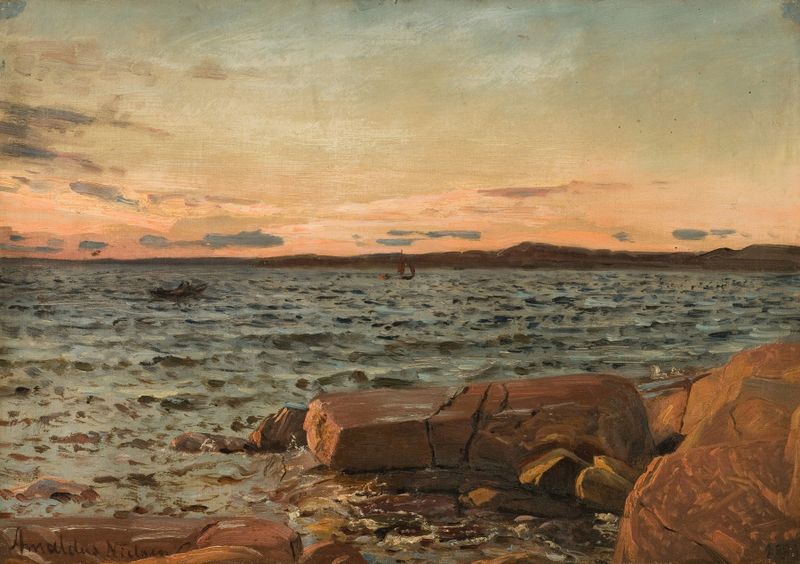
Solgangsvind, Hvaløene
Amaldus Nielsen
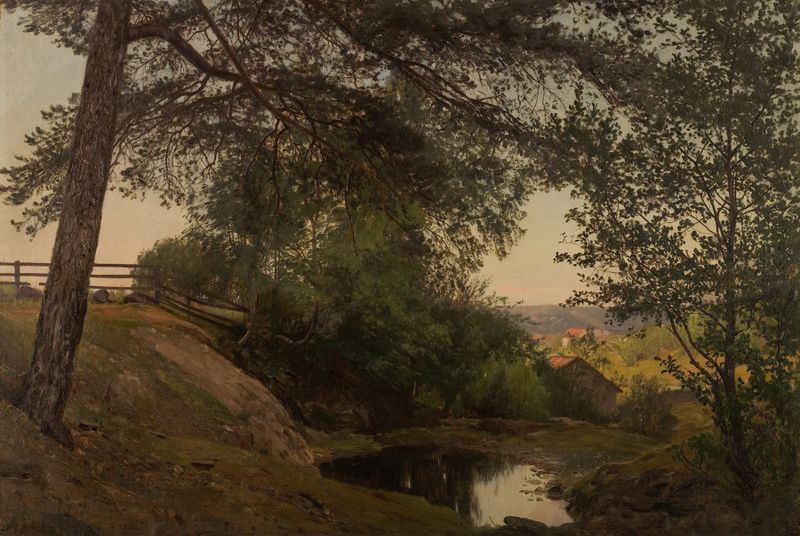
Mellom trærne. Lervik, Stord
Amaldus Nielsen

Båtbyggeri, Lillesand
Amaldus Nielsen
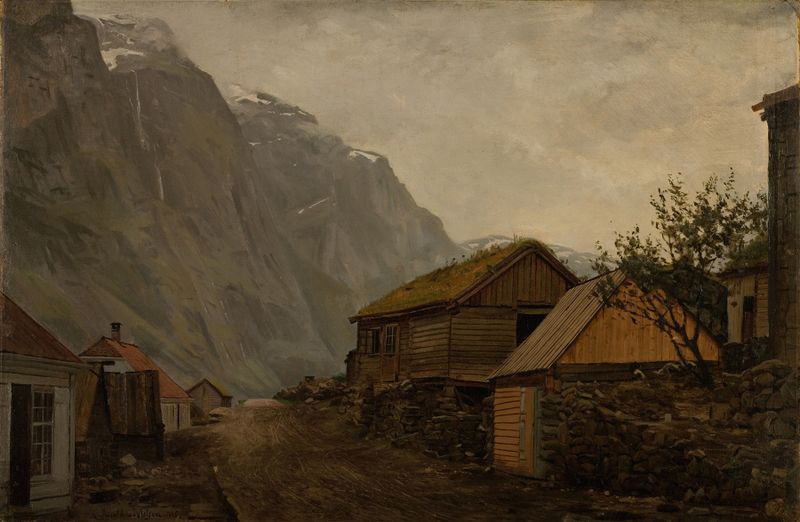
Regnstemning, Gudvangen
Amaldus Nielsen





