Un Coin de Jardin — History & Facts
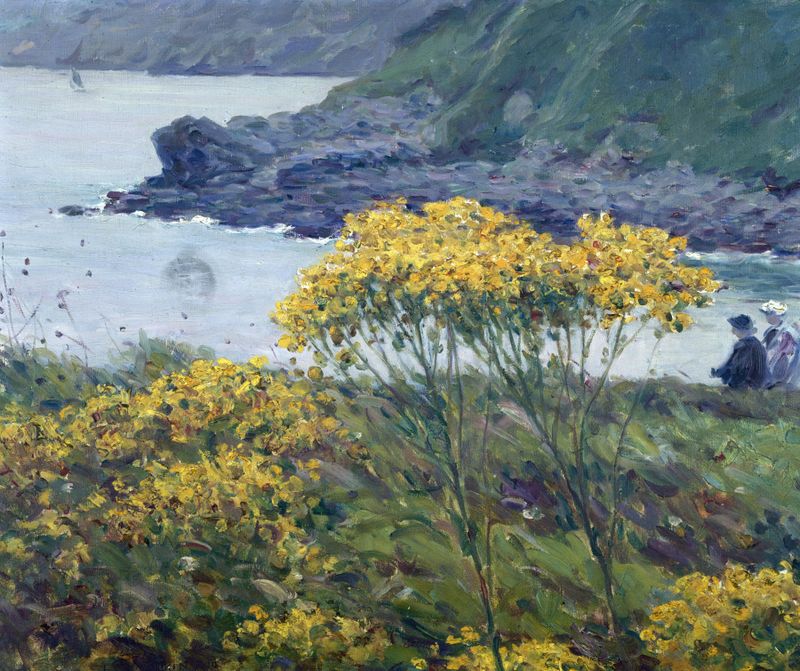
In a world where each moment slips quietly away, the act of capturing beauty becomes a poignant defiance against mortality. Focus first on the lush greenery that envelops the canvas, a verdant embrace that invites you into the intimate garden scene. Notice how the dappled sunlight dances across the leaves, creating a play of light and shadow that gives life to the foliage. The artist’s brushwork is delicate yet deliberate, employing a palette of soft greens and earthy browns that evoke a serene, almost hypnotic atmosphere.
Every stroke reveals the texture of petals and the intricate patterns of the plants, guiding the viewer’s eye deeper into this hidden paradise. Yet, amidst this vibrant display of nature’s bounty, a subtle tension emerges. The garden may be flourishing, but the quiet solitude hints at an underlying melancholy — a moment frozen in time, yet destined to fade. The juxtaposition of blooming life and the inevitable passage of time creates an emotional resonance, inviting reflections on beauty, transience, and the cycle of life itself.
Hidden details, like a wilting flower or an empty bench, serve as gentle reminders of what is fleeting, encouraging viewers to ponder their own connections to this landscape of memories. In 1899, during the height of his artistry, Hawkins painted this piece while residing in Paris, a pivotal moment in the late 19th-century art movement. The turn of the century was marked by rapid change and a burgeoning interest in Impressionism, yet Hawkins’s work captured a contemplative spirit that diverged from the frenetic pace of modern life. This painting serves not only as a testament to his technical skill but also as a reflection of his contemplation of existence in a world that continues to evolve.