
Untitled — History & Facts
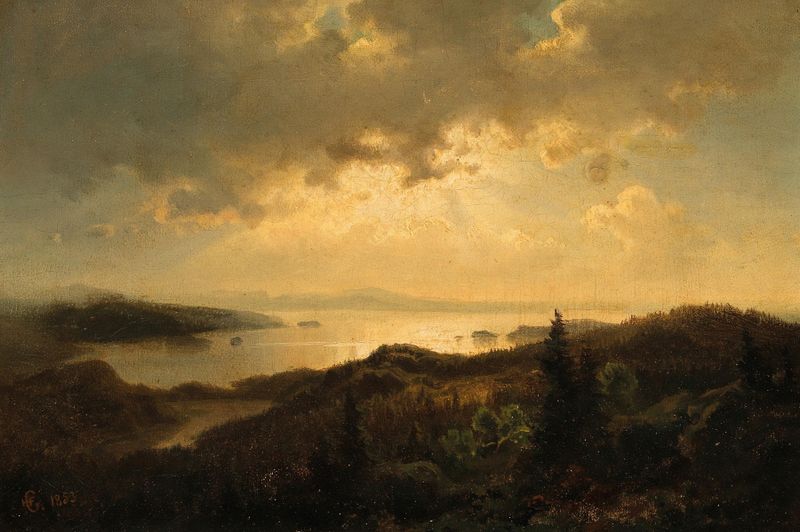
Can beauty exist without sorrow? In the delicate interplay of nature and emotion, the answer often lies hidden in the shadows. Look to the center of the canvas where a serene landscape unfolds—gentle hills, a placid body of water, and a sky painted with soft, melancholic hues. The muted greens and greys invite the viewer’s gaze to linger, revealing the artist's expert use of light that dances on the water's surface, creating ripples of reflection. Notice how the trees sway slightly, their branches whispering secrets that suggest both tranquility and an underlying tension, as if the landscape breathes in harmony with distant, unspoken sorrow. In the foreground, the subtle contrast between the serene scenery and the darkening clouds above speaks to the duality of existence.
The quiet beauty hints at the fragility of happiness, while elements like the beckoning silhouettes of leafless trees evoke a sense of longing. This emotional depth suggests that nature is a mirror reflecting our own experiences—tranquil moments tinged with the awareness of inevitable change. Hans Gude painted this work in 1843 during a period when he was establishing his reputation in the art world, particularly in Norway. The Romantic movement was flourishing, emphasizing emotion and individualism.
Gude’s background as a landscape painter allowed him to explore the interplay of light and atmosphere, capturing the profound beauty of nature while expressing the melancholic nuances of the human experience. This painting exemplifies his dedication to portraying landscapes that resonate deeply with viewers, weaving together beauty and sorrow in a singular moment.
More Artworks by Hans Gude
Browse all →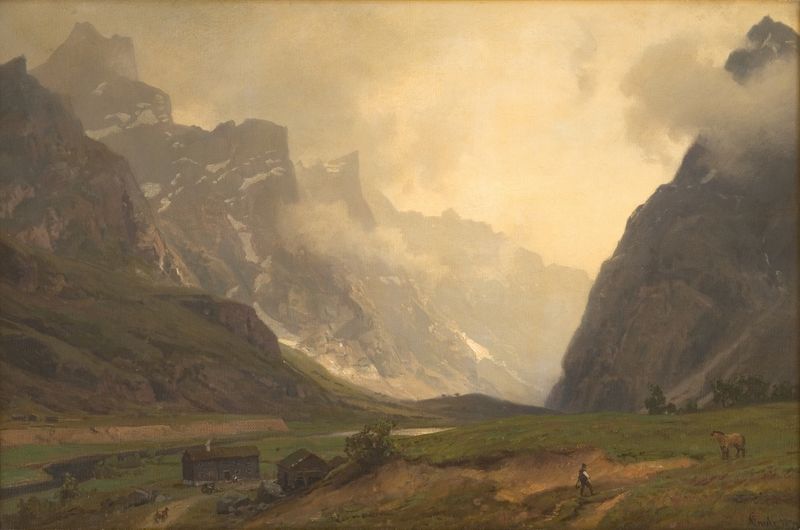
The Troll Peaks in Romsdalen, The Foot of Romsdalshorn to the Right
Hans Gude
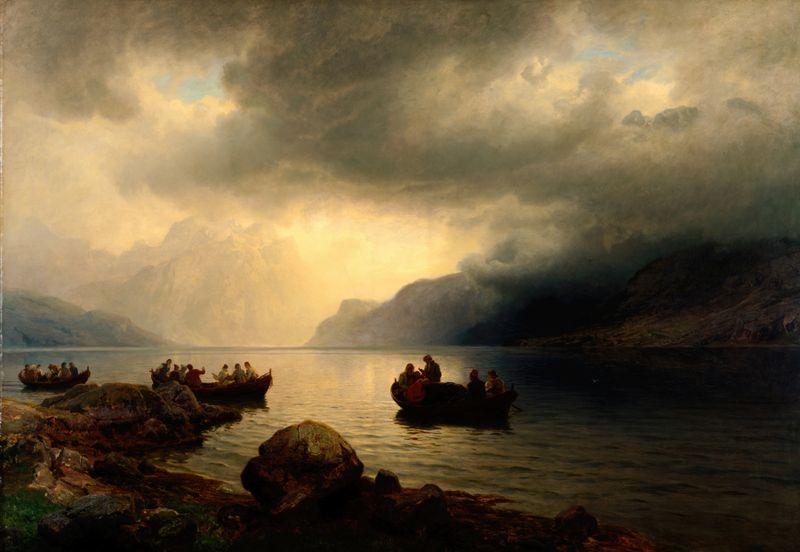
Funeral Procession on the Sogne Fjord
Hans Gude
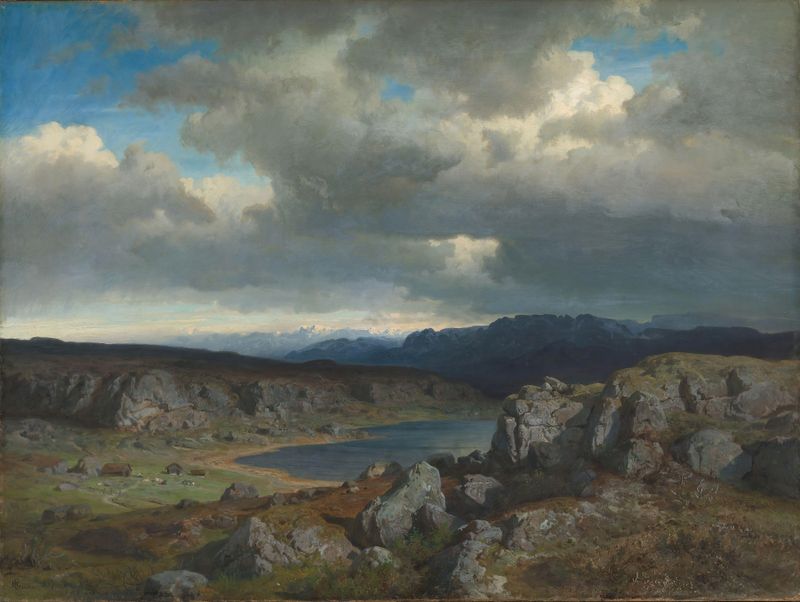
Norwegian Highlands
Hans Gude
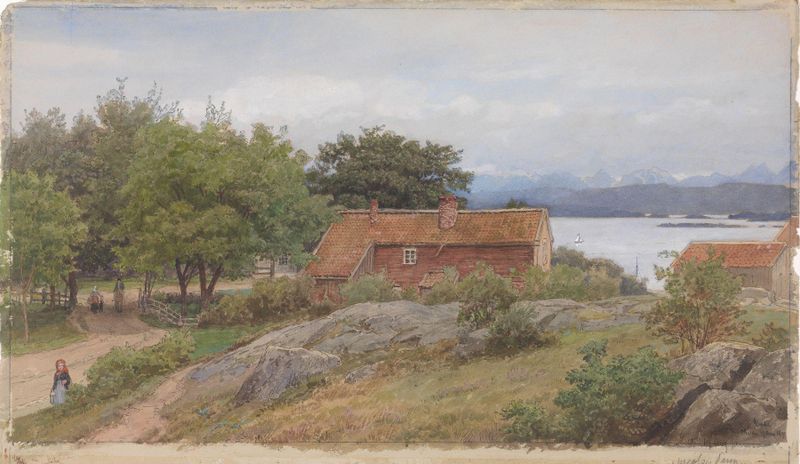
Landskap med bondegård ved Molde
Hans Gude
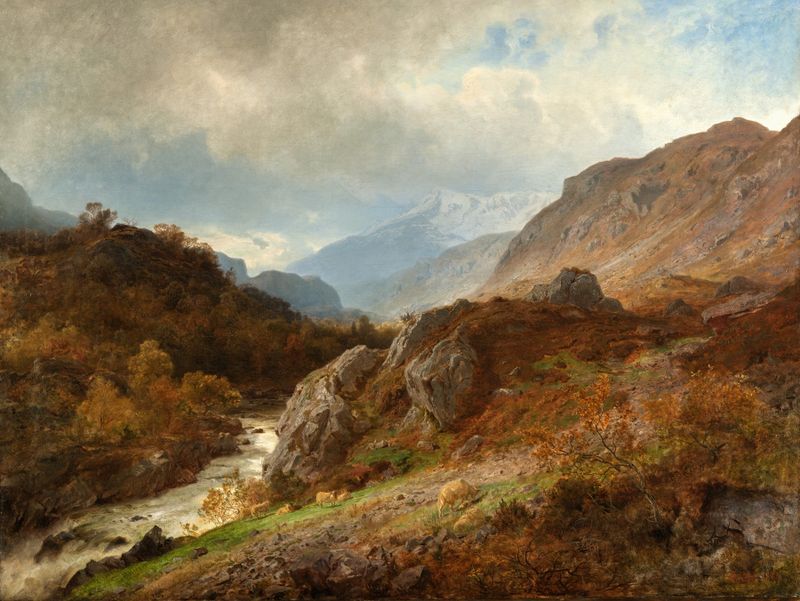
Mountain Landscape
Hans Gude
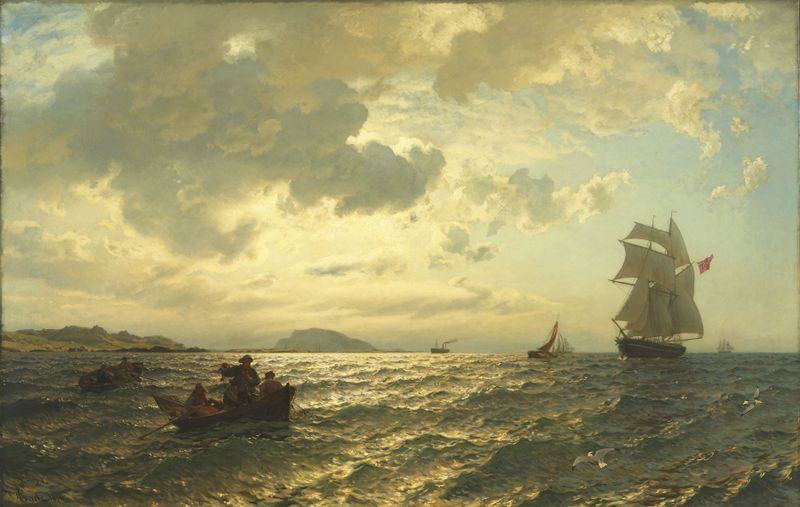
Fresh Breeze on the Norwegian Coast
Hans Gude
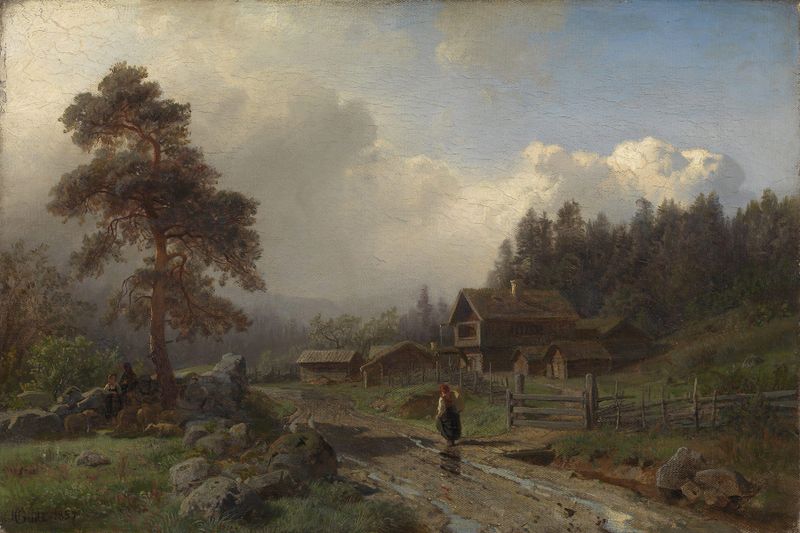
Norwegian Landscape in Rain
Hans Gude
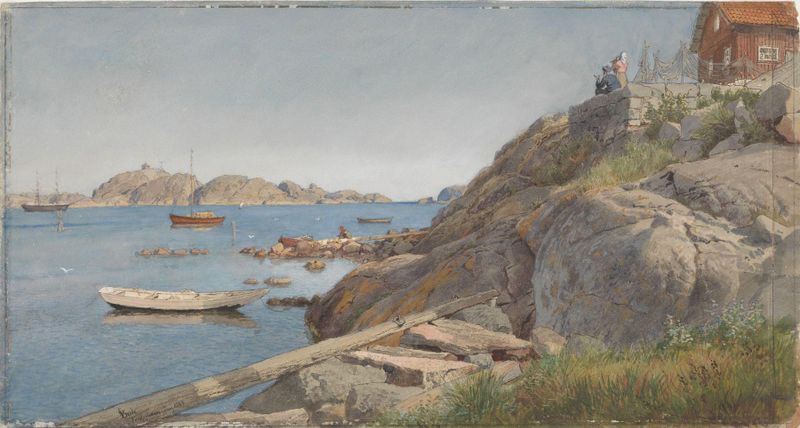
Landscape by Stavern
Hans Gude
Norwegian Highlands in Sunrise
Hans Gude
A Scene at Dusk in Norway
Hans Gude





