Vallée de Calamine. Automne — History & Facts
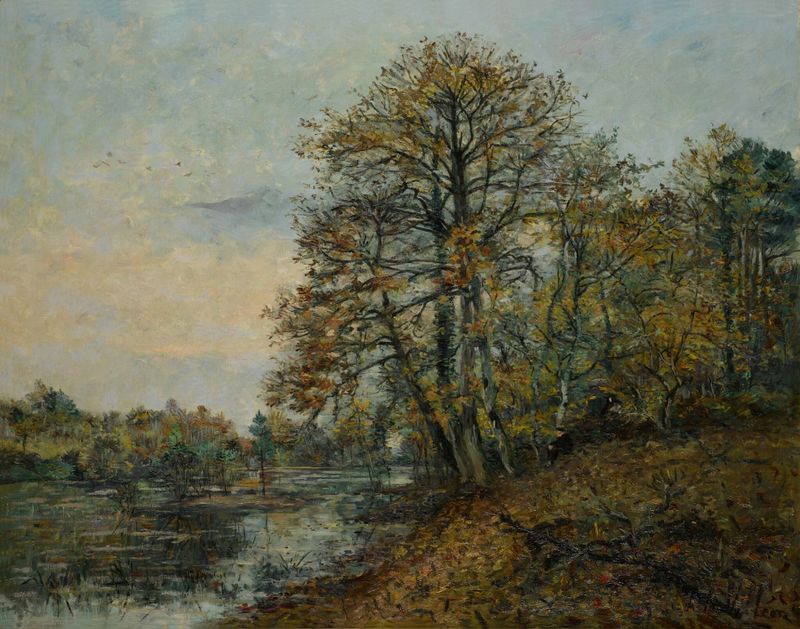
In the hands of a master, nature's tumult transforms into a symphony of color and form, evoking a deep-seated faith in artistry. This evocative scene, a landscape captured at the cusp of autumn, invites contemplation of both beauty and transience. Look to the foreground where the rich, earthy hues of the foliage seem to dance under a gentle breeze. The artist's brushwork creates a textured tapestry of leaves, each stroke adding depth and life.
Notice how the light filters through the branches, casting a warm, golden glow that enhances the vibrant oranges and reds, while shadows cool the scene with hints of blue and green. This interplay of light and color draws the viewer's gaze toward the horizon, where the undulating hills cradle the sky. Beneath the surface, a dialogue unfolds between chaos and serenity. The wild brushstrokes convey a sense of movement, yet the overall composition remains harmonious—a testament to the artist's belief in order within nature's disorder.
Each color choice, from the warm to the cool, reflects the ebb and flow of the seasons, promising renewal even in decline. Here lies faith—not just in nature’s cycles, but in the transformative power of art itself. In 1899, Emmanuel de La Villéon was immersed in the Post-Impressionist movement, painting in France during a time when artists were exploring innovative approaches to color and light. The landscape surrounding him inspired a deep connection to the essence of the French countryside, as he sought to capture not just a scene but the very soul of the land in its ever-changing beauty.