Le Bord d’étang à l’automne — History & Facts
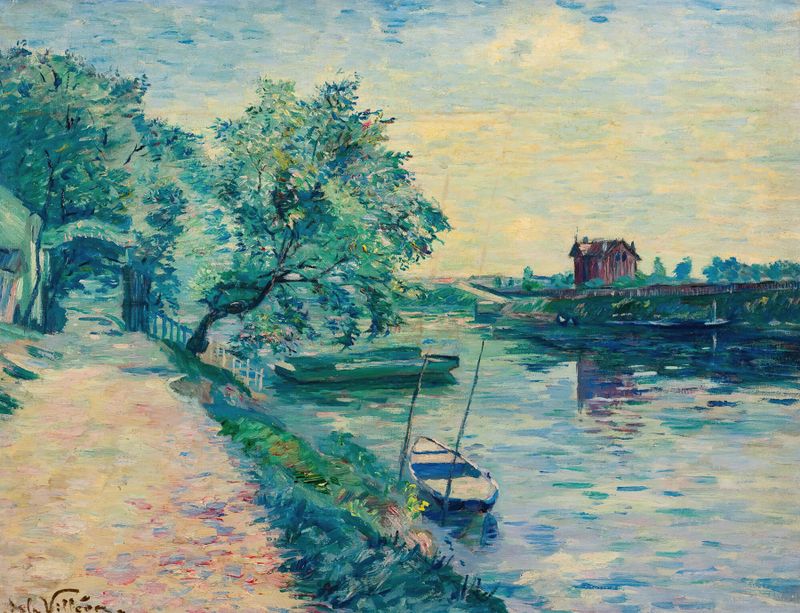
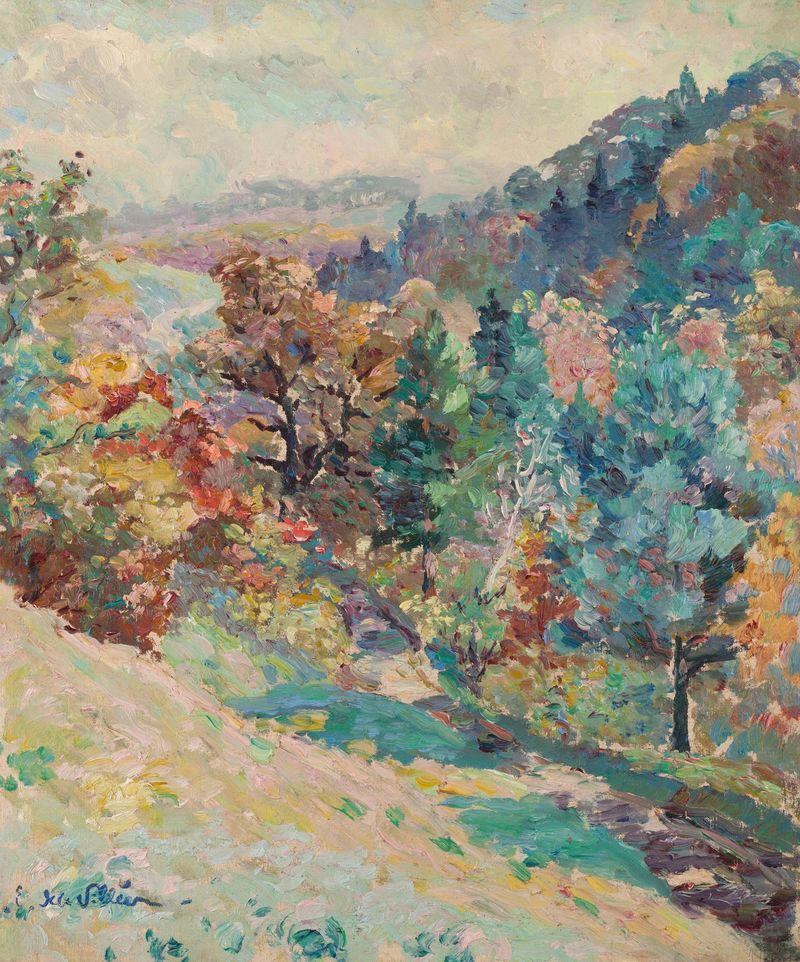
Who listens when art speaks of silence? In Le Bord d’étang à l’automne, the stillness of a serene pond sets the stage for an autumnal dialogue, where the whispers of rustling leaves and the gentle ripple of water create a symphony of movement, hinting at the transition between seasons. Look to the center of the canvas, where the pond’s surface glistens under a soft, diffused light. The muted palette of greens, yellows, and browns draws your gaze, evoking the warmth of fading daylight. Notice how the artist employs delicate brushstrokes to capture the interplay of light and shadow, reflecting the surrounding trees that stand in quiet attendance.
Each stroke is a testament to the season’s quiet yet powerful transformation, inviting the viewer to engage with the poignant beauty of change. Deeper meanings linger within the stillness, contrasting serenity with an underlying sense of impermanence. The vibrant foliage hints at the life that once thrived, now yielding to the inevitable cycle of decay. The pond, a mirror of the world, reflects not just the landscape, but the ephemeral nature of existence.
This tension between motion and stillness speaks to the heart of autumn itself — a moment of pause before the blank canvas of winter. Emmanuel de La Villéon created this work during a time when the French art scene was experiencing a shift towards Impressionism, embracing color and light as vital elements of expression. Working in the late 19th to early 20th century, he found inspiration in the natural world, capturing fleeting moments with a unique sensitivity. The atmosphere of change in his life and art invites viewers to reflect on their own experiences and the world around them.