
Vanbrugh Castle, Greenwich — History & Facts
In the hands of time, decay becomes a poignant narrative woven into the fabric of artistry, echoing the inevitability of nature reclaiming its dominion. Look to the right at the crumbling stonework of the castle’s façade, each fissure telling stories of years unceremoniously passed. Notice how shades of muted gray and earthy ochre meld together to evoke the somber beauty of neglect, capturing a moment suspended between grandeur and its slow dissolution. The careful interplay of light and shadow reveals the contours of the structure, emphasizing both the majesty of its architecture and the harsh reality of its decay. Amidst the vibrant greenery that encircles the edifice, the contrast between the wild nature and the once-stalwart presence of the castle amplifies the tension of the scene.
The foliage, lush and vibrant, acts as a contrast to the lifeless stone, suggesting that while humanity’s creations may succumb to time, life continues unabated. Delicate details, such as the creeping vines and scattered wildflowers, hint at resilience, urging the viewer to reflect on the relentless march of time and the beauty found within decay. Created in an undefined moment when the world was shifting towards the Age of Enlightenment, the artist was influenced by the Romantic fascination with ruins and the sublime. They expertly captured the fleeting nature of human achievement in Vanbrugh Castle, Greenwich, a work that invites contemplation on both the impermanence of beauty and the cycles of life.
As Grimm observed the Castle's transformation, he painted within an artistic context that valued the emotional weight of landscape and architecture, heralding a new expression of thought in visual art.
More Artworks by Samuel Hieronymus Grimm
Browse all →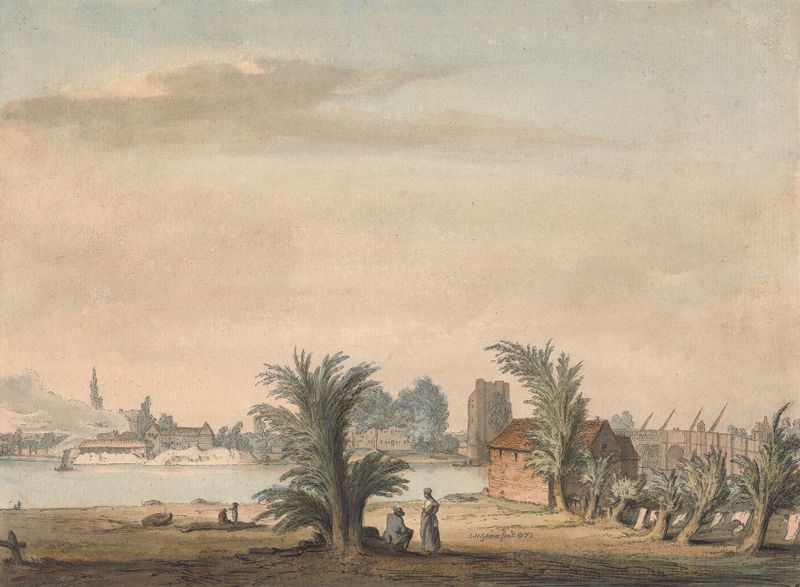
Putney Church and Bridge
Samuel Hieronymus Grimm

Between Chiswick and Brentford
Samuel Hieronymus Grimm
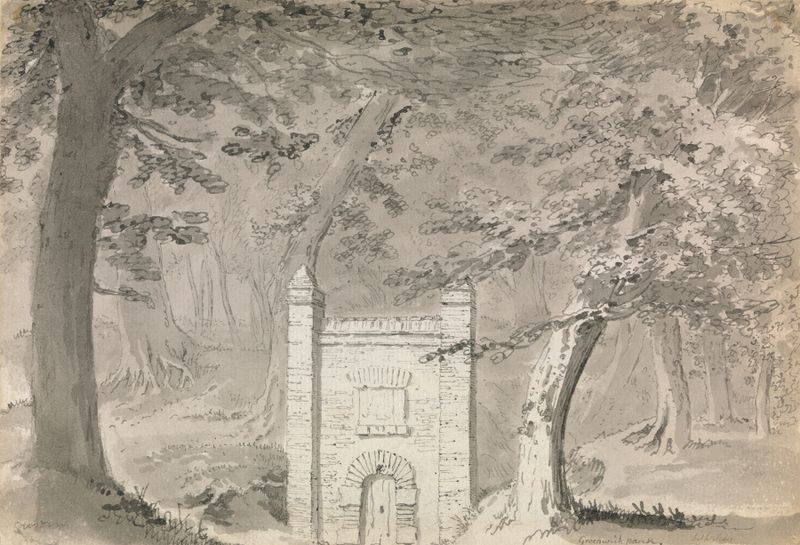
Greenwich Park
Samuel Hieronymus Grimm
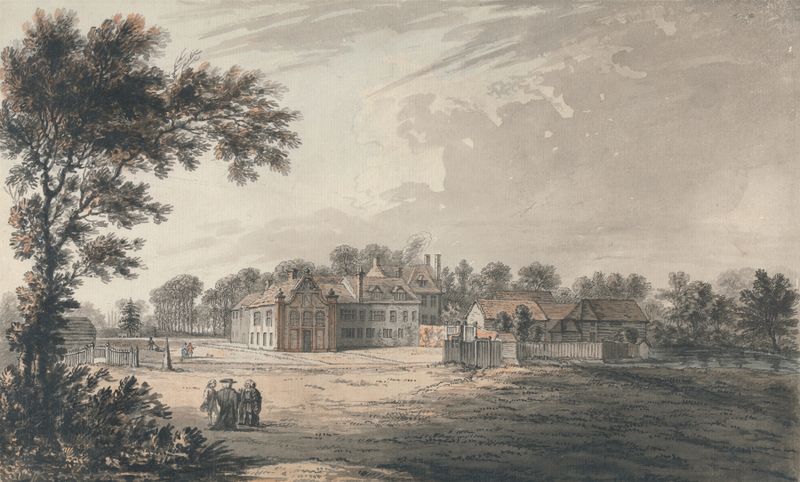
The Bishop’s Palace, Bromley
Samuel Hieronymus Grimm
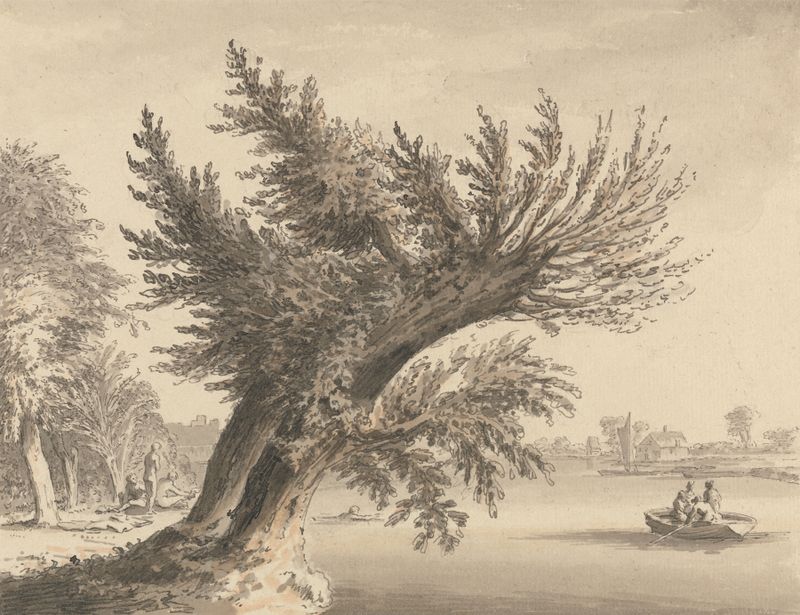
On the Thames at Barnes
Samuel Hieronymus Grimm

View of a Village alongside a River
Samuel Hieronymus Grimm
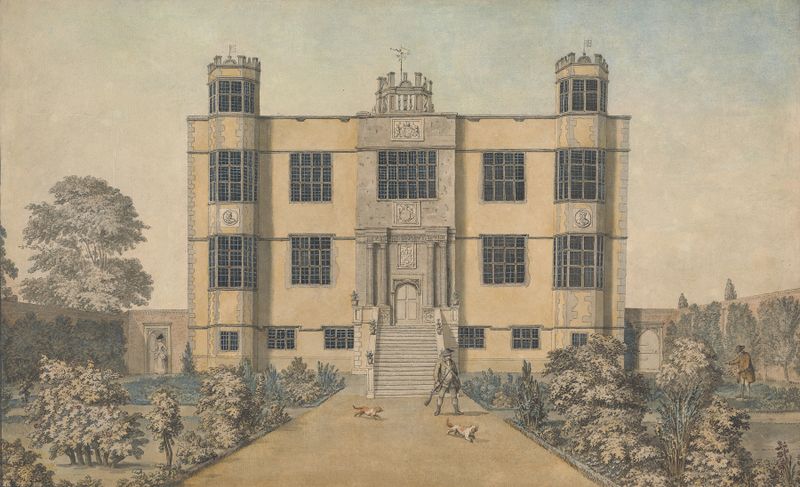
Barlborough Hall, near Chesterfield, Derbyshire; the Main Front of the Hall
Samuel Hieronymus Grimm

Haverfordwest, Pembrokeshire
Samuel Hieronymus Grimm
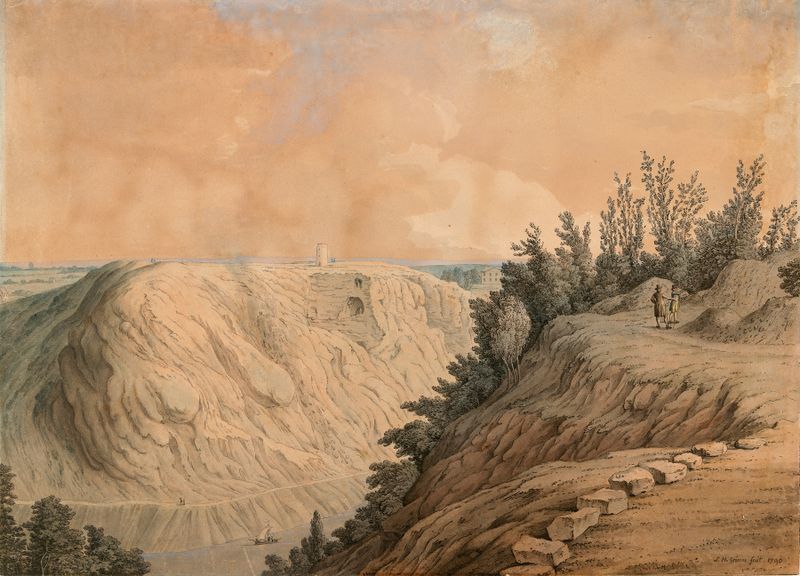
Saint Vincent’s Rock and Cave (The Giant’s Hole) on the River Avon, Somerset
Samuel Hieronymus Grimm

The Gatehouse, Reading Abbey
Samuel Hieronymus Grimm
More Architecture Art
Browse all →
The statue of Liberty
Frédéric Auguste Bartholdi

View of Houses in Delft, Known as ‘The Little Street’
Johannes Vermeer

View of Houses in Delft, Known as ‘The Little Street’
Johannes Vermeer

The Cathedral in Rouen. The portal, Grey Weather
Claude Monet

The yellow house
Vincent van Gogh

The Church in Auvers-sur-Oise, View from the Chevet
Vincent van Gogh