
Variation No. 10 — History & Facts
The first thing that seizes the eye in Variation No. 10 is the boldness of its color: a patchwork of deep greens, sky blues, and urgent reds, each shape pressing against the next as if in conversation. There is no horizon, no clear subject, but a sense of movement and balance—green arcs rise like sentinels, while pools of blue and pink create a gentle, almost musical rhythm across the canvas.
The yellow ovals punctuate the green form, drawing the gaze upward, while the dark, inky marks anchor the composition below. Each brushstroke feels deliberate, as if the artist is orchestrating an internal landscape rather than recording the external world. Painted in 1916, this work belongs to a moment when artists like Alexej von Jawlensky were breaking away from tradition, searching for a new visual language that could convey emotion and spiritual resonance through abstraction alone. In the midst of war and upheaval, painters of the Expressionist movement—Jawlensky among them—turned inward, using color and form to express what words could not.
Variation No. 10, now part of the Albright-Knox Art Gallery’s collection, stands as a testament to this search: a painting that invites viewers to pause, follow the sweep of color, and find their own meaning in the interplay of shapes. Look again, and the painting seems to shift—never quite settling, always inviting a fresh encounter.
More Artworks by Alexej von Jawlensky

Murnau
Alexej von Jawlensky
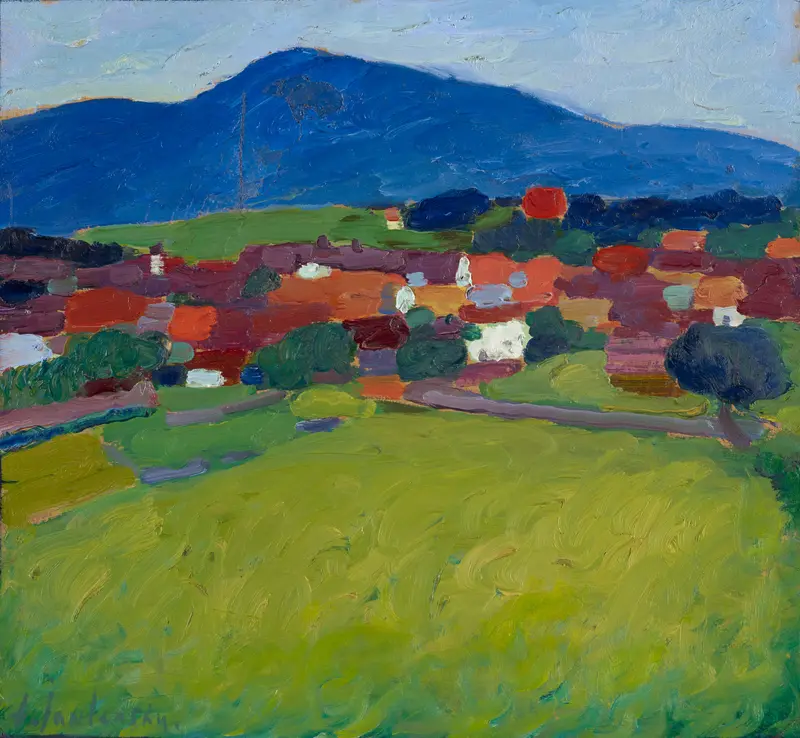
The Village Of Murnau
Alexej von Jawlensky
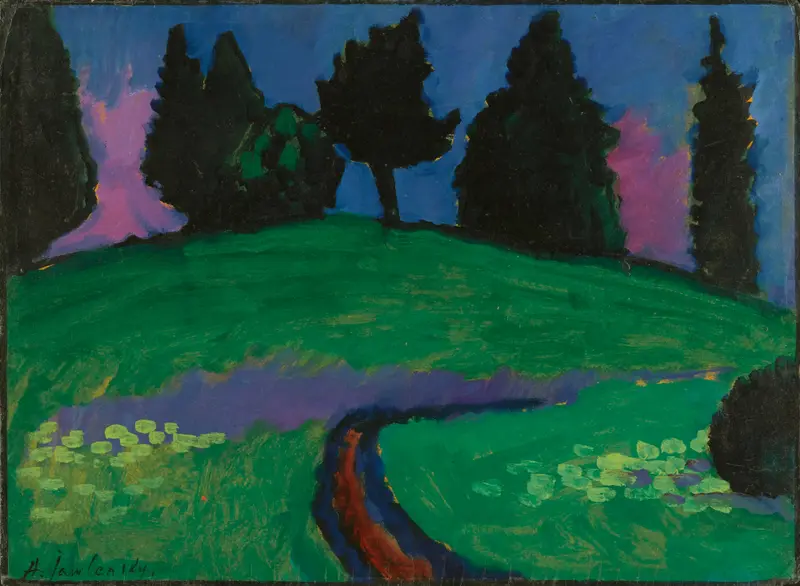
Dunkle Bäume über Grünem Hang (Dark Trees Over Green Slope)
Alexej von Jawlensky
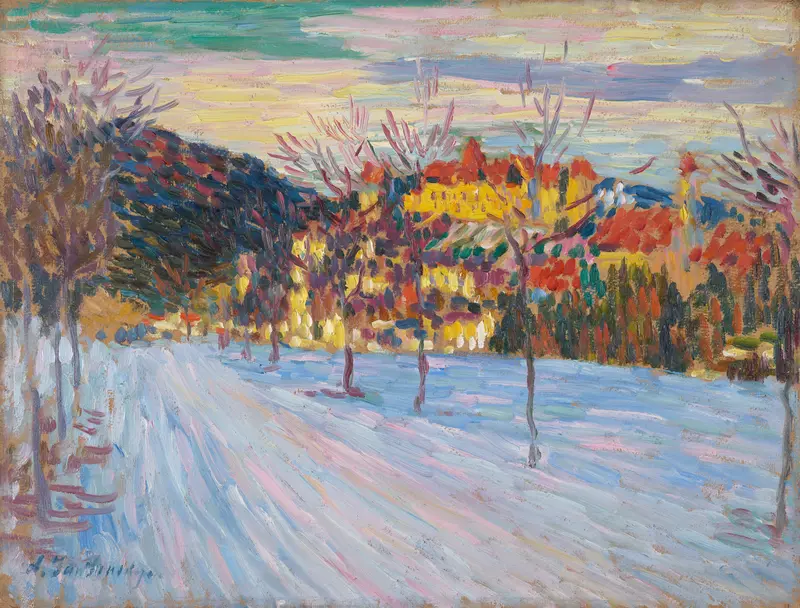
Füssen
Alexej von Jawlensky
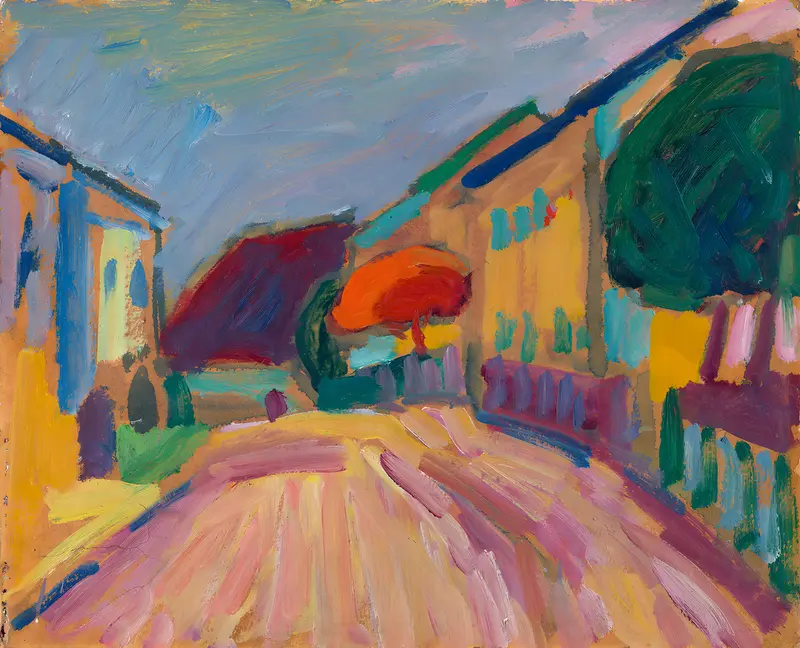
Sketch from Murnau
Alexej von Jawlensky
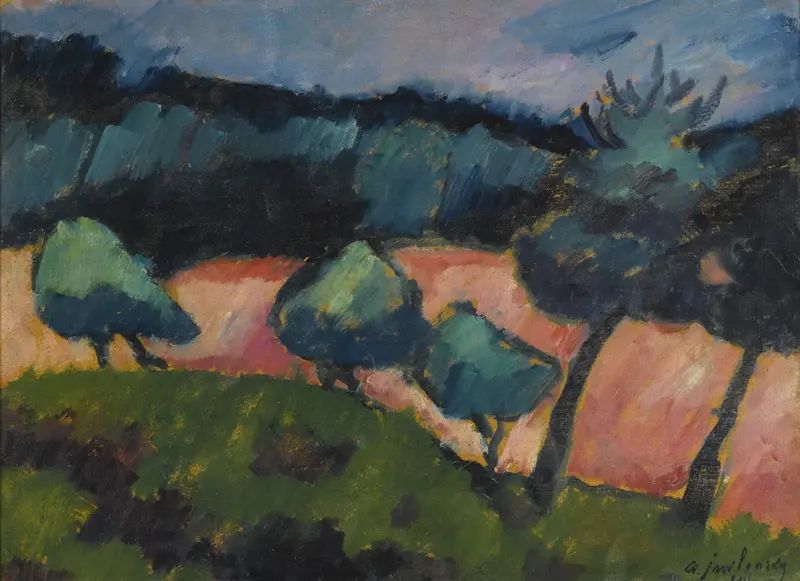
Bäume und Dünen in Prerow (Trees and dunes in Prerow)
Alexej von Jawlensky
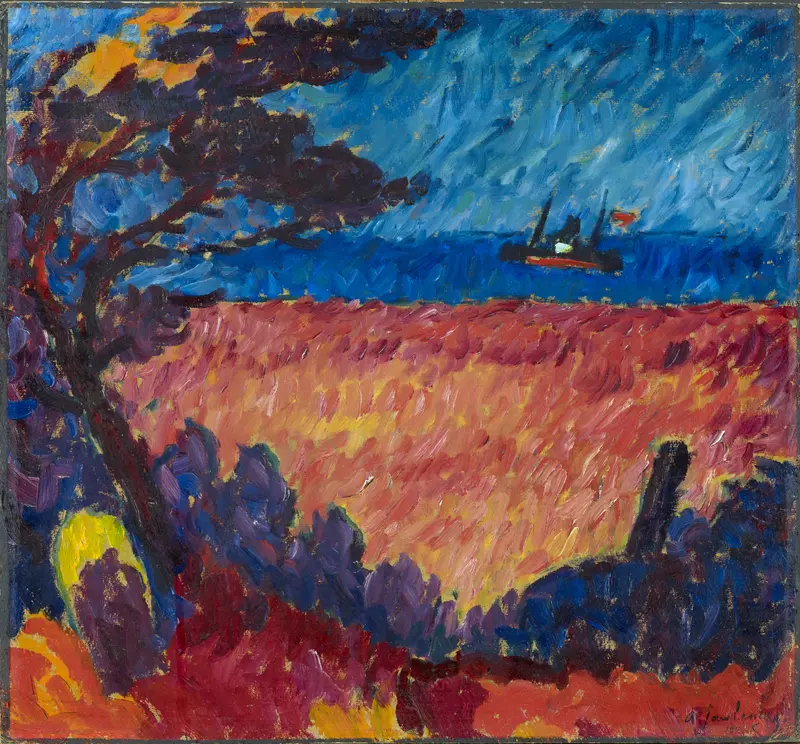
At The Baltic Sea
Alexej von Jawlensky
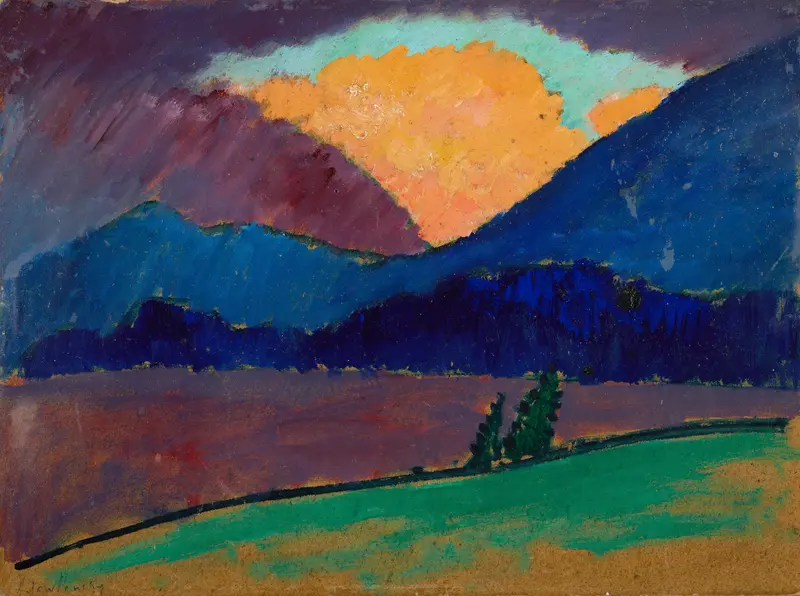
Summer evening in Murnau
Alexej von Jawlensky
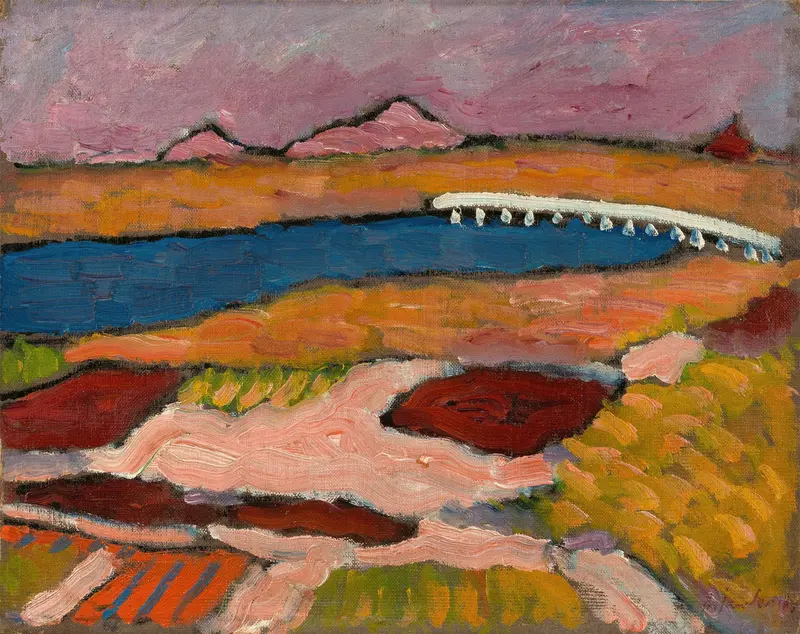
Prerow (Darß), Pommern
Alexej von Jawlensky
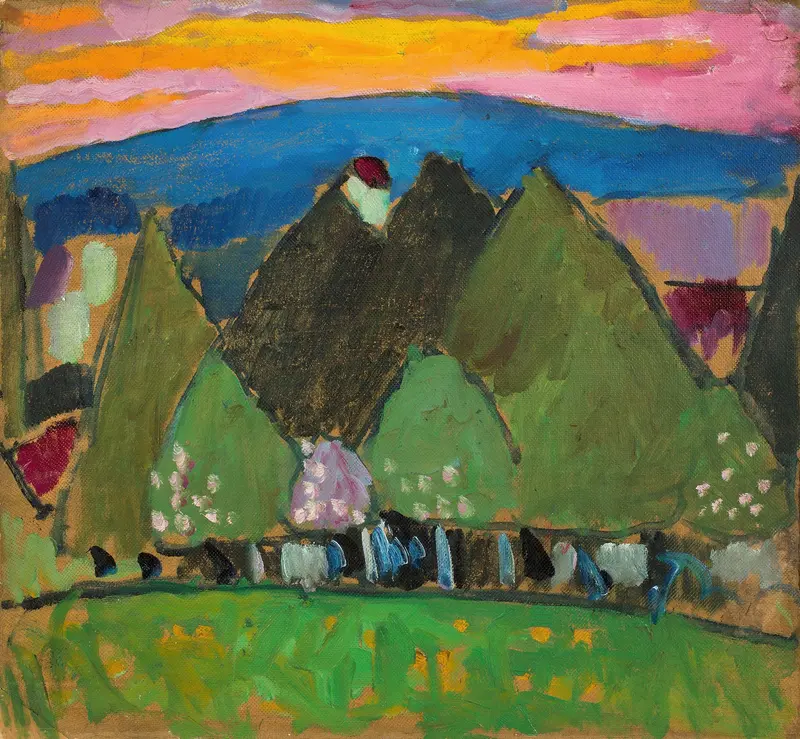
Landschaft mit Bäumen
Alexej von Jawlensky





