
Venetian Convent — History & Facts
Did the painter know this moment would outlive them? In Venetian Convent, the delicate interplay of light and shadow unveils not just a scene, but an obsession with capturing the ephemeral beauty of life itself. Focus on the tranquil waters reflecting the soft hues of dusk, where the convent stands serenely at the water's edge. Notice how the brushstrokes create a velvety texture in the sky, evoking a sense of calmness that envelops the surroundings. The composition is masterfully balanced, guiding the eye toward the convent’s warm, inviting facade, which contrasts with the cooler tones of the water.
This juxtaposition speaks to a harmony that is both grounding and ethereal, inviting viewers to linger in this suspended moment. Yet beneath the surface, a tension exists. The convent, a sanctuary, also hints at isolation, a place where time seems to stand still. The muted palette suggests nostalgia, as if the painter is both present and yearning for something lost.
Each ripple in the water and flicker of light serves as a reminder of the relentless passage of time, capturing an essence that is at once beautiful and haunting—a meditation on permanence and transience. In 1895, when this work emerged, Cameron found himself at a pivotal point in his career. As a member of the Glasgow School, he was navigating the shifting currents of the art world, embracing both tradition and innovation. This period marked a growing fascination with impressionism, and the artist seamlessly wove it into his own distinctive style, reflecting not only his personal evolution but also the broader cultural transformations of the time.
More Artworks by David Young Cameron
Browse all →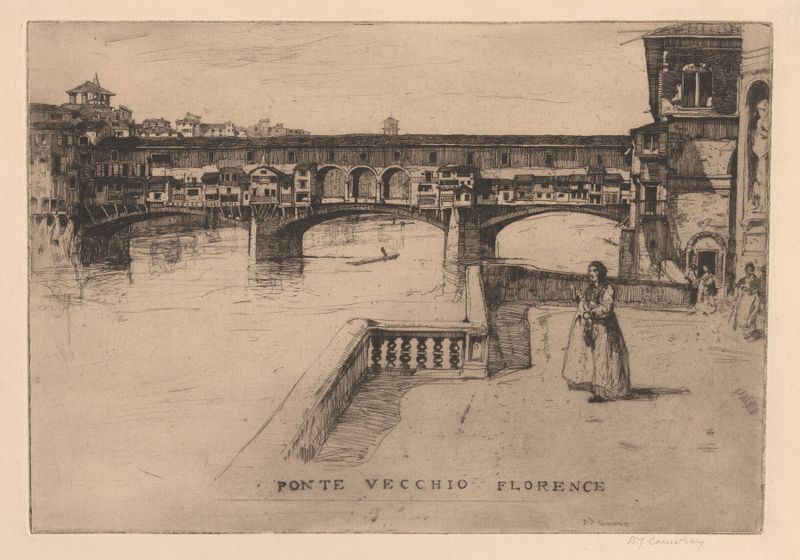
Ponte Vecchio
David Young Cameron

The Deanery, Winchester
David Young Cameron
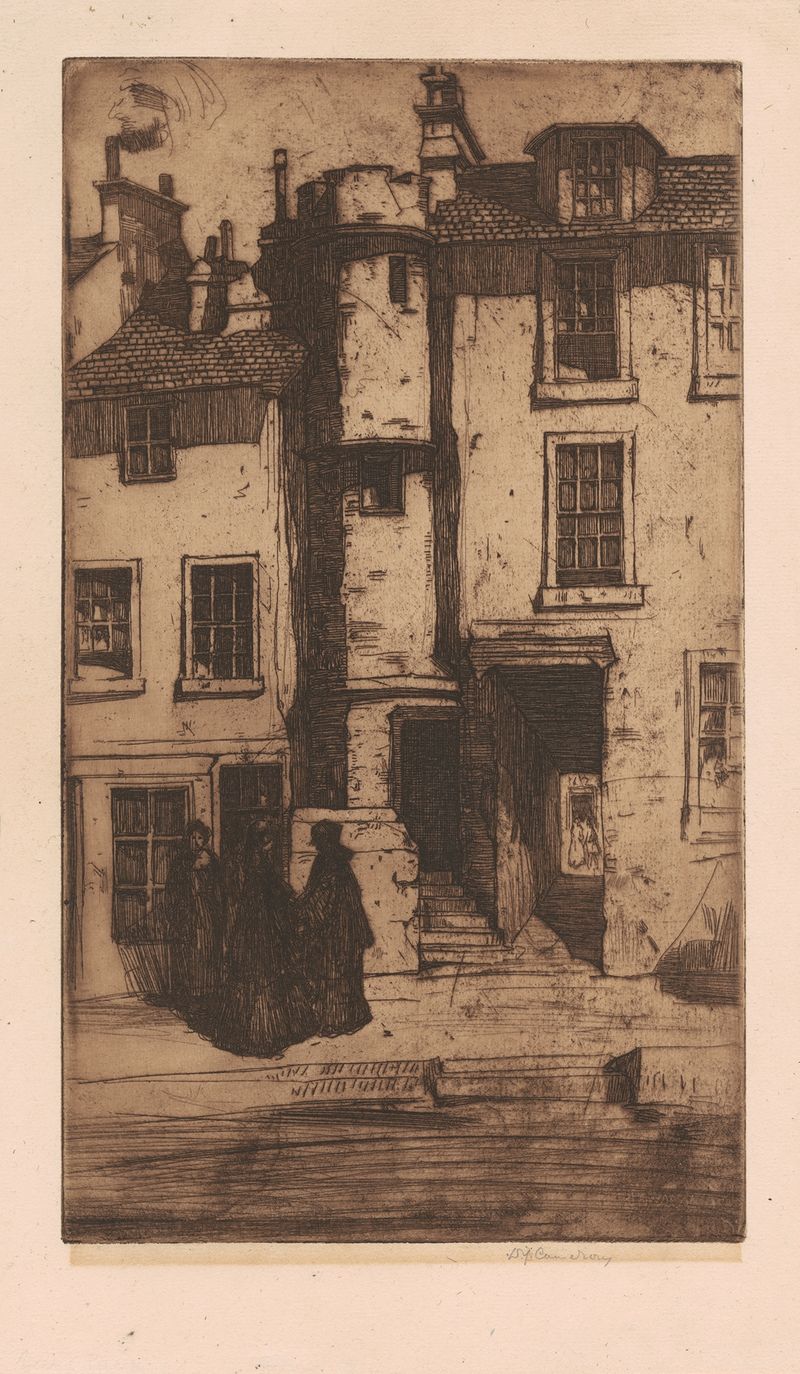
Old Houses, Stirling
David Young Cameron
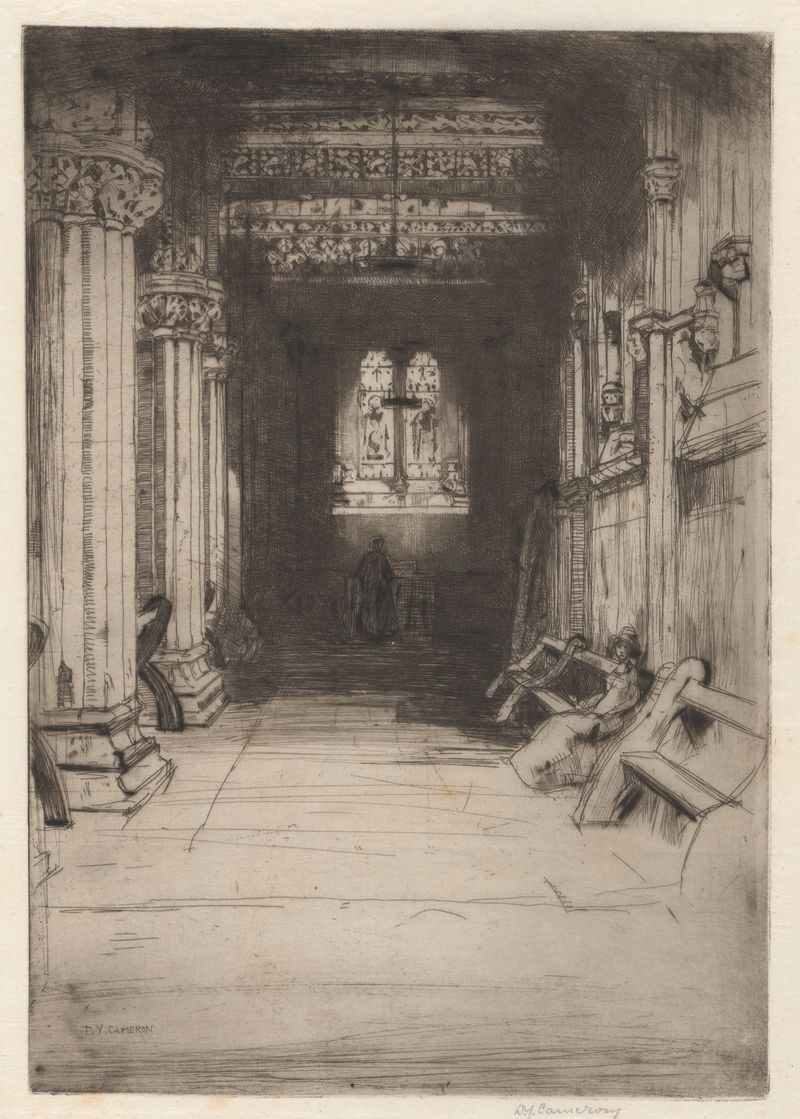
Rosslyn Chapel
David Young Cameron

The Old Museum, Beauvais
David Young Cameron
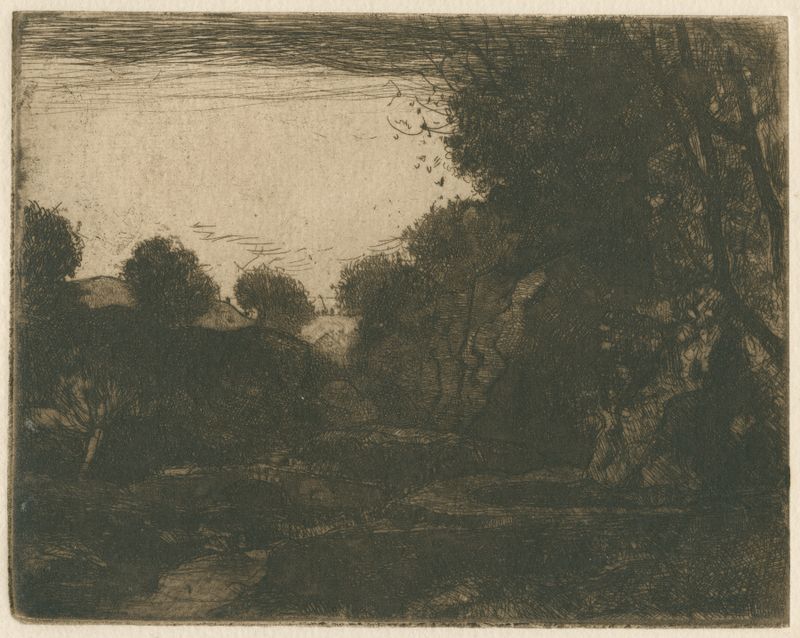
On the Bradford
David Young Cameron

The Smithy
David Young Cameron
Castle Moyle
David Young Cameron
Downing Street
David Young Cameron

Glasgow Cathedral
David Young Cameron





