
Venetian Street — History & Facts
Can beauty exist without sorrow? In the fading light of a Venetian afternoon, the delicate balance between joy and decay takes center stage, inviting a contemplative gaze into the heart of this enchanting city’s streets. Look to the left at the weathered stone archways, their surfaces gently kissed by the glowing warmth of the setting sun. The colors are muted yet rich, with earthy browns and soft golds weaving together to create a tapestry of nostalgia. The careful brushwork reveals a city not just alive with movement but steeped in history, where every corner seems to whisper secrets of a bygone era.
The stillness of the scene contrasts sharply with the vibrant reflections in the canal, urging your eyes to dance across the surface, where the remnants of light hint at both beauty and loss. Hidden within the tranquil façade lies a profound commentary on impermanence. Note the crumbling plaster on the buildings, suggesting the inevitable passage of time, while the serene water reflects a moment that is fleeting yet eternal. This juxtaposition of vibrant life against the backdrop of decay speaks to the fragility of existence and the bittersweet nature of memory—where every glance can evoke both longing and appreciation for what once was. In 1900, the artist found himself deeply immersed in the artistic revival of the Impressionist movement while residing in Scotland.
This period marked a transformative time in Europe, with the echoes of change reverberating through the streets of Venice. Cameron sought to capture the ephemeral beauty of this iconic city, juxtaposing its romantic allure with the shadows of time, a reflection of his own contemplations in a world undergoing rapid transformation.
More Artworks by David Young Cameron
Browse all →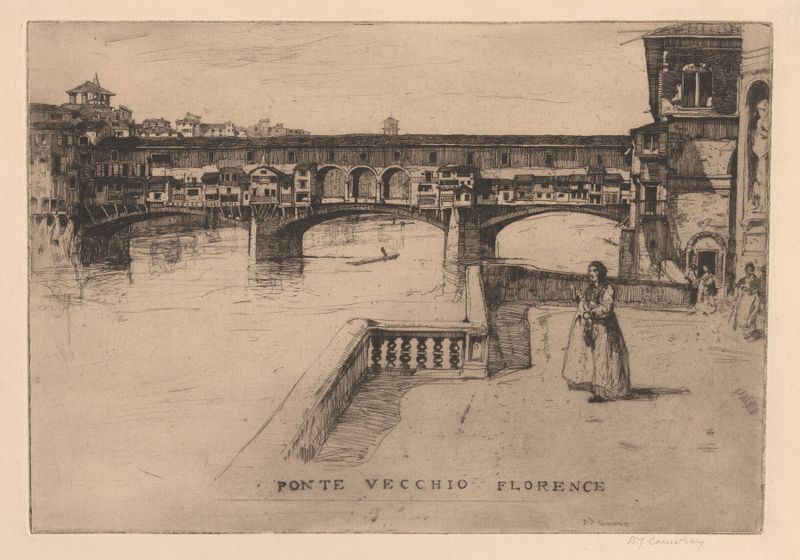
Ponte Vecchio
David Young Cameron

The Deanery, Winchester
David Young Cameron
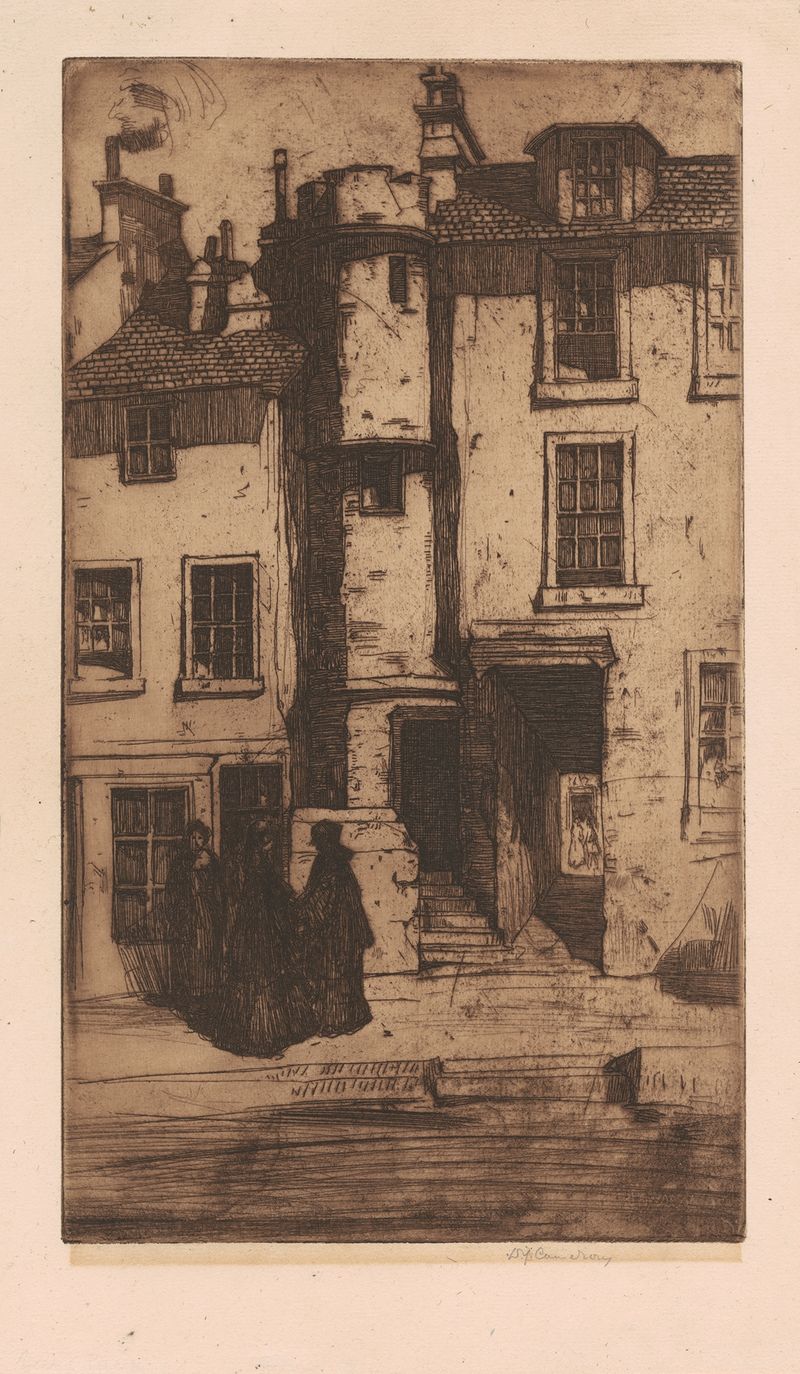
Old Houses, Stirling
David Young Cameron
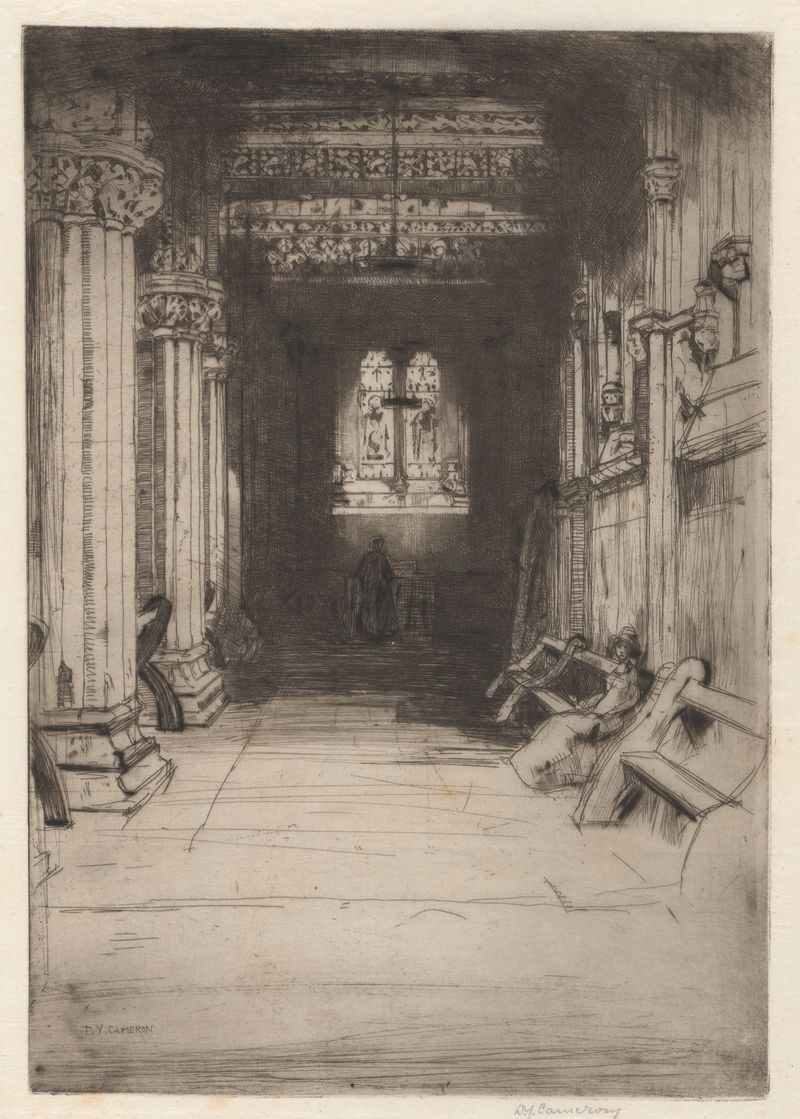
Rosslyn Chapel
David Young Cameron

The Old Museum, Beauvais
David Young Cameron
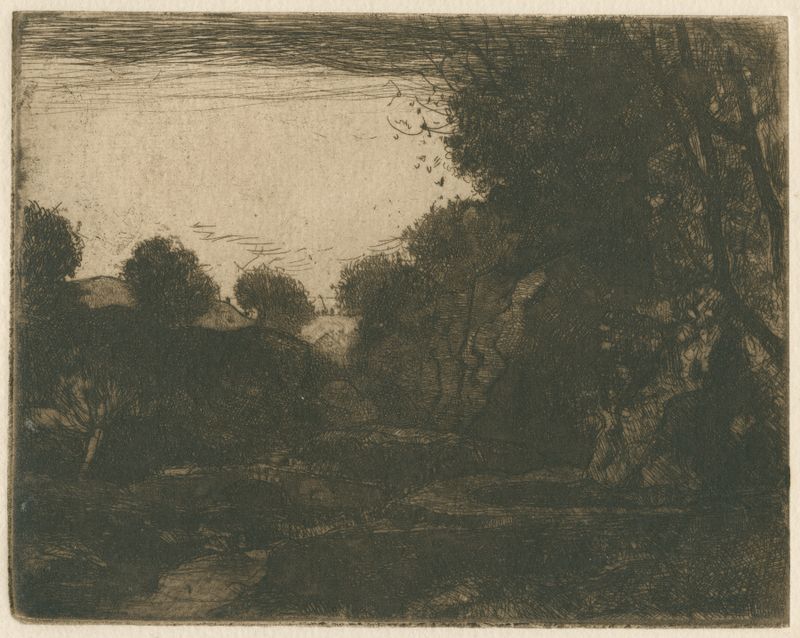
On the Bradford
David Young Cameron

The Smithy
David Young Cameron
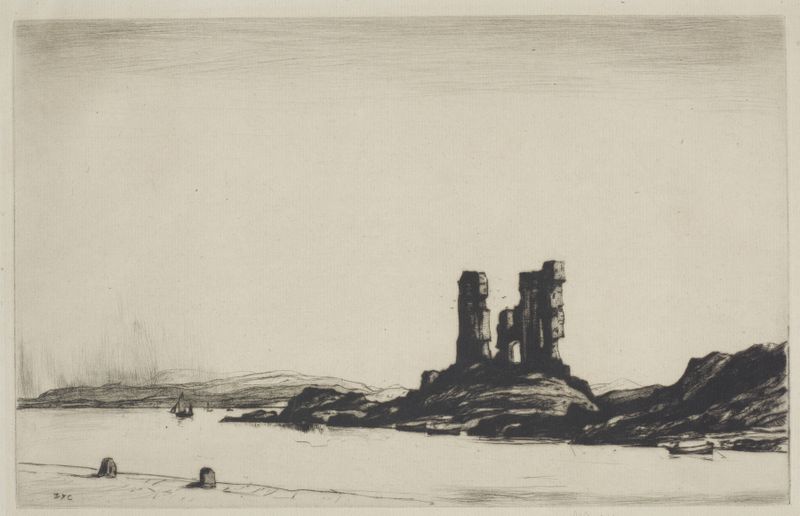
Castle Moyle
David Young Cameron
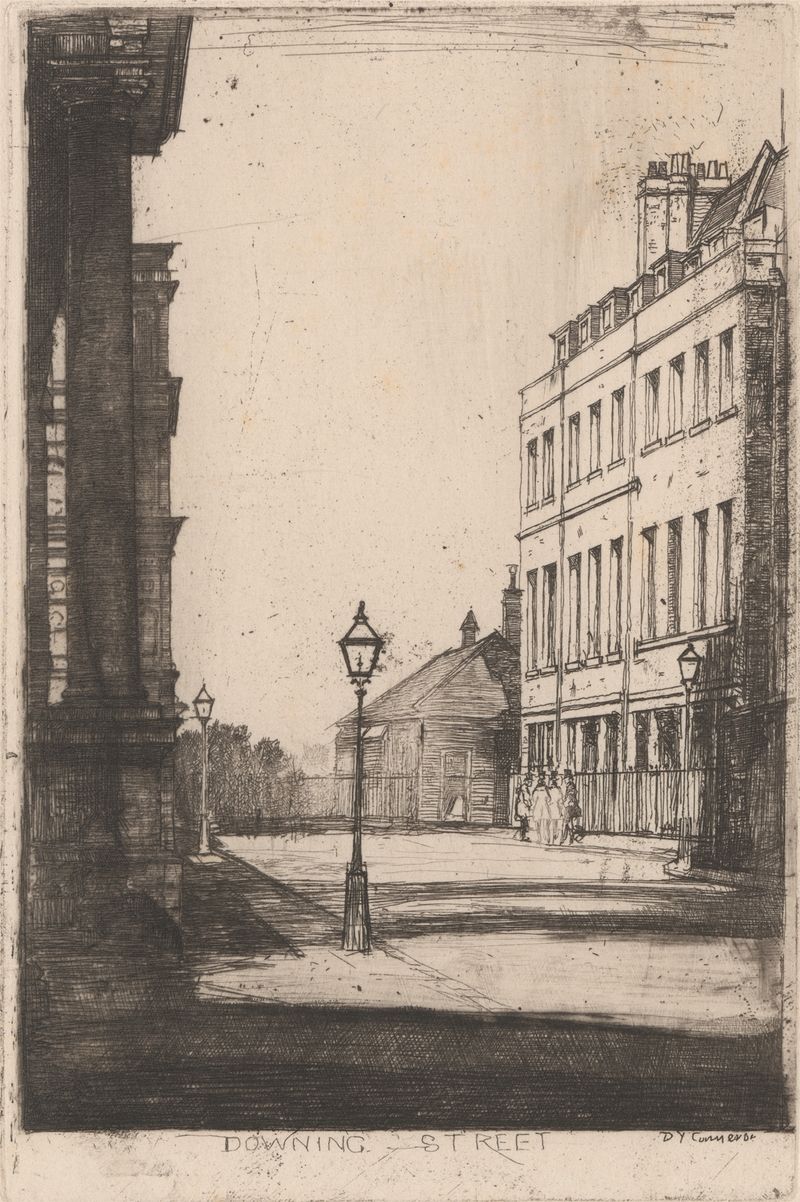
Downing Street
David Young Cameron

Glasgow Cathedral
David Young Cameron





