Venice, A View of a Winter Canal — History & Facts
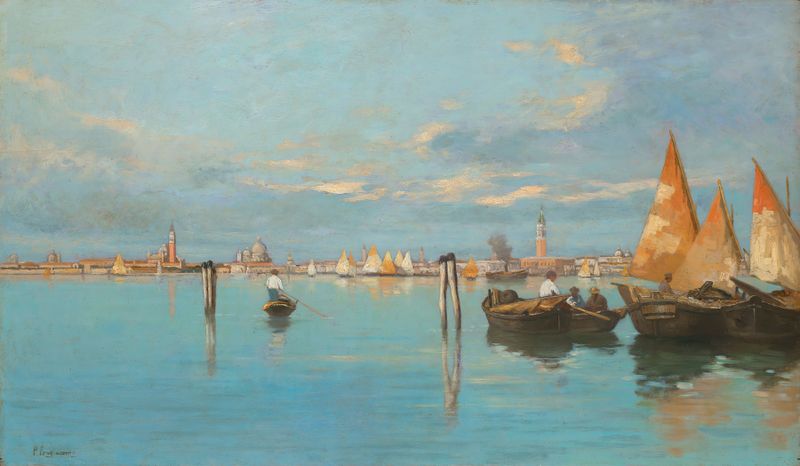
Is this a mirror — or a memory? The surface of the canal shimmers with a delicate interplay of light, beckoning the viewer to question the nature of reflection and reality. Look to the lower left, where the gentle ripple of water captures the soft, muted hues of the surrounding architecture. The cool blues and grays of the winter sky blend seamlessly with the warm ochres of the buildings, creating a harmonious balance that invites contemplation. Notice how the light dances across the surface, illuminating the intricate details of the gondola and the nuances in the water's texture, drawing the eye to every subtle interaction between element and environment. Delve deeper into the painting, and you’ll find emotional tensions arising from the contrast between stillness and movement.
The stillness of the water reflects a serene solitude, while the gondola's presence speaks of unseen journeys and whispered stories. This duality conveys a moment suspended in time, hinting at past memories and future possibilities, making the viewer ponder what lies beneath the tranquil surface. Fragiacomo created this piece during a time when the Impressionist movement was reshaping the art world, experimenting with light and color. Although the exact date of this work remains uncertain, the artist was likely influenced by his surroundings in Venice, where he painted many of his renowned canal scenes.
This period in his life was marked by a deep engagement with capturing the transient qualities of light, echoing a broader artistic pursuit of the era.