On the Beach — History & Facts
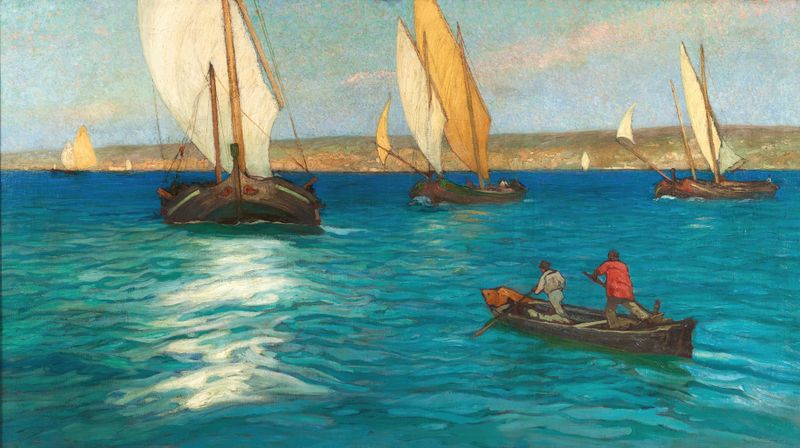
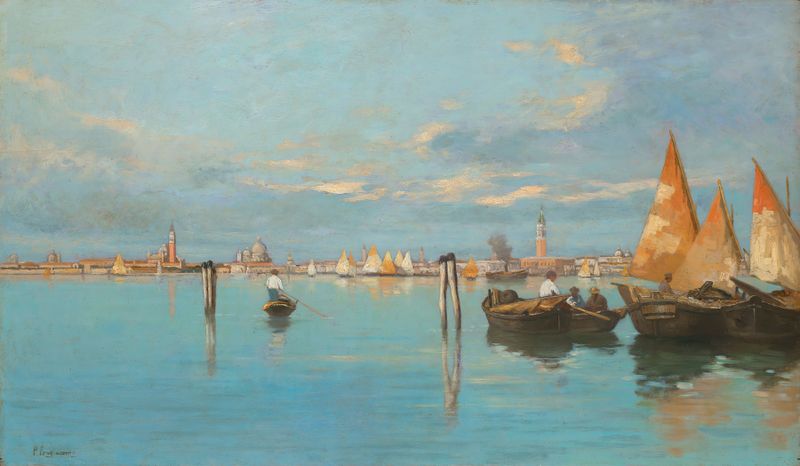
Can paint confess what words never could? On the Beach invites viewers to ponder the intricate dance of human emotion and fate as it unfolds upon the canvas. Look to the left at the gentle waves lapping against the golden shore, their frothy edges highlighted by a soft, diffused light that casts a serene glow. Notice how the figures, both distant and intimate, are depicted with delicate strokes, their postures conveying tranquility while hinting at an undercurrent of longing. The warm palette of sandy yellows and soft blues envelops the scene, drawing your eye across the horizon where sky meets sea, suggesting the infinite possibilities of life’s journey. Beneath this idyllic exterior lies a tension between solitude and connection.
Each figure seems lost in contemplation, yet their proximity implies an unspoken bond, reflecting our shared struggles with fate and desire. The contrast between the expansive ocean and the personal, intimate gestures of the subjects speaks to the unpredictability of life, suggesting that destiny, much like the tide, can shift unexpectedly. The ripples of the water mirror these emotional currents, revealing how close we often stand to the brink of self-discovery. Created during the late 19th century, this piece emerged amidst a flourishing period for Italian artists experimenting with light and color.
Fragiacomo found inspiration in the coastal landscapes of Venice and his own personal reflections on the dichotomy of existence. As the Impressionist movement gained momentum, artists like him sought to capture fleeting moments that resonate with universal truths, revealing the profound narratives that lie just beneath the surface of everyday life.