The Gulf of Trieste — History & Facts
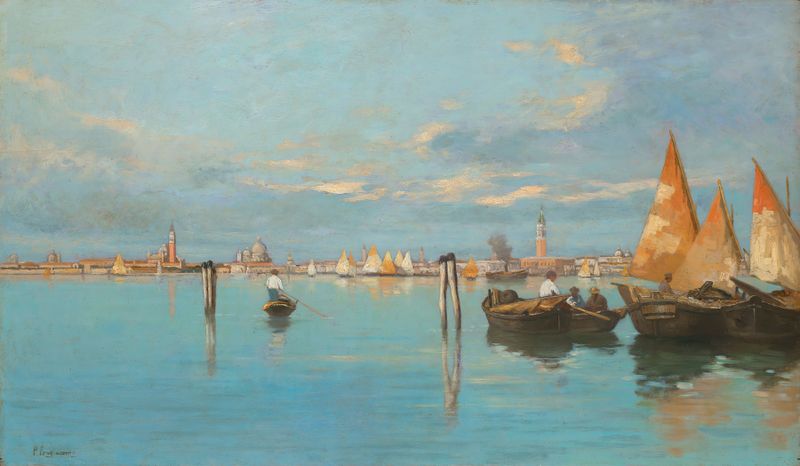
What secret hides in the quiet of the canvas? The stillness of The Gulf of Trieste invites reflection, beckoning the viewer to explore the awakening of a serene coastal landscape. Focus on the gentle undulation of the waves, shimmering under the soft light that bathes the scene. Notice how the hues of blue and green blend seamlessly, creating a tranquil atmosphere that envelops the viewer. The distant horizon is kissed by a warm golden light, while the foreground reveals delicate brush strokes that capture the texture of the water and the rocky shore.
This harmonious composition compels you to linger, absorbing the calmness and beauty that radiates from every inch of the canvas. Yet, there’s an underlying tension in the juxtaposition of the quiet waters against the turbulent history of the region. The interplay of light and shadow evokes a sense of time, as if capturing a moment just before the world awakens. The slight suggestions of coastal flora in the foreground are reminders of nature’s resilience, suggesting that even in stillness, life is ever-present beneath the surface.
This duality resonates with the viewer, offering a deeper exploration of peace amidst the chaos of existence. Pietro Fragiacomo painted this work during the late 19th century, a time marked by significant artistic movements and a burgeoning interest in landscape painting. Working in Italy, he was influenced by the plein air technique, which sought to capture the essence of nature directly from observation. This period in art history was characterized by a shift towards realism, which sought to bridge the gap between the artist and the world outside, a theme beautifully embodied in this tranquil coastal masterpiece.