Venice, Afternoon on the Grand Canal — History & Facts
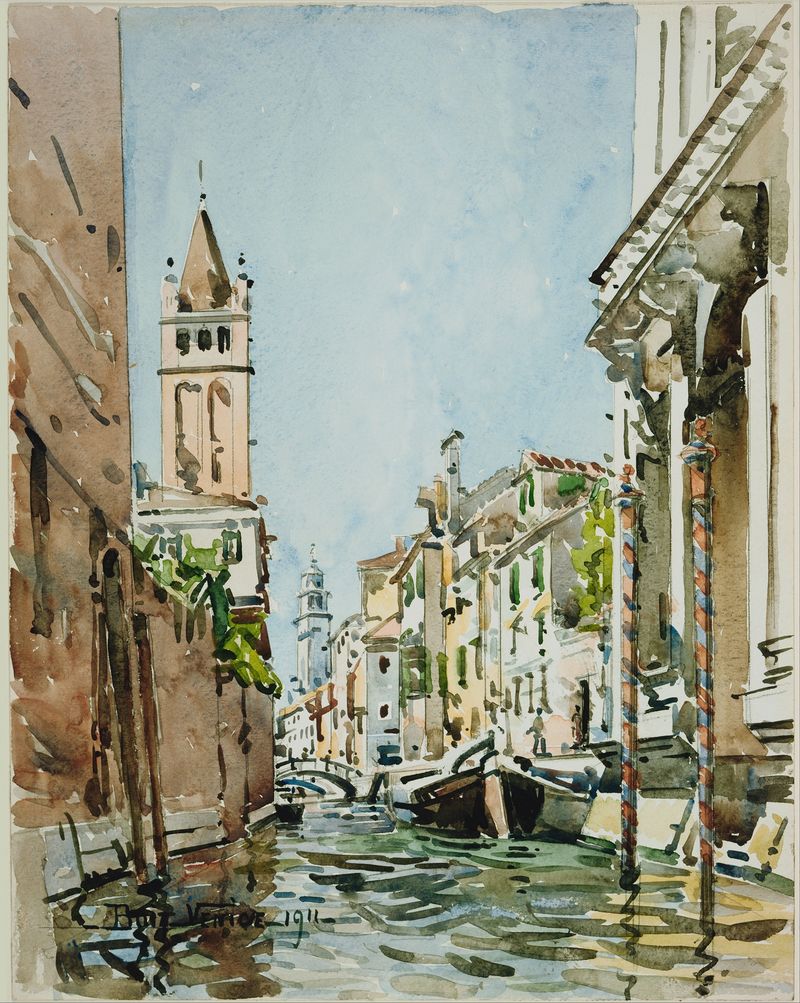
In the gentle embrace of afternoon light, the essence of Venice flows through the brushstrokes, inviting an intimacy that transcends time. Here, light serves not just as illumination but as a profound language, whispering secrets of the city to those who pause to listen. Focus first on the interplay of light and water, where the shimmering reflections of the canal dance in vibrant hues. Notice how the soft palette of blues and golds intermingles, creating a sense of tranquility while guiding your gaze down the winding waterway.
The boats, tethered yet free, convey a narrative of movement arrested in stillness, their forms gently cradled by the rippling current. Every stroke seems deliberate, a celebration of the moment that feels both fleeting and eternal. Delve deeper into the contrasts that unfold within the scene. The warm light cascading over the buildings juxtaposes the cool shadows lurking in the alleyways, suggesting the duality of Venice — a city alive with vibrancy, yet steeped in mystery.
The painting captures not just a physical space, but the emotional resonance of a place where history and modernity intertwine, each detail holding a story waiting to be unraveled. In 1911, Boit painted this piece amidst a time when the art world was rapidly evolving, with movements like Impressionism reshaping perceptions of light and color. Residing in Paris yet deeply connected to his roots, he sought to encapsulate the essence of this iconic city during a moment of personal reflection. The world was on the cusp of change, and through his brush, he immortalized the serene beauty of Venice, creating a timeless portal to a place where light reigns supreme.