View of the City Across the Water — History & Facts
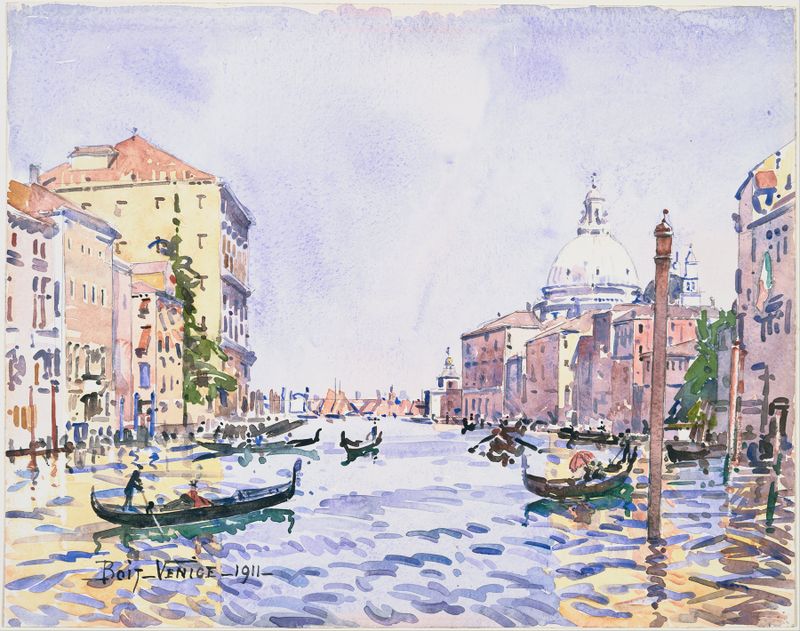
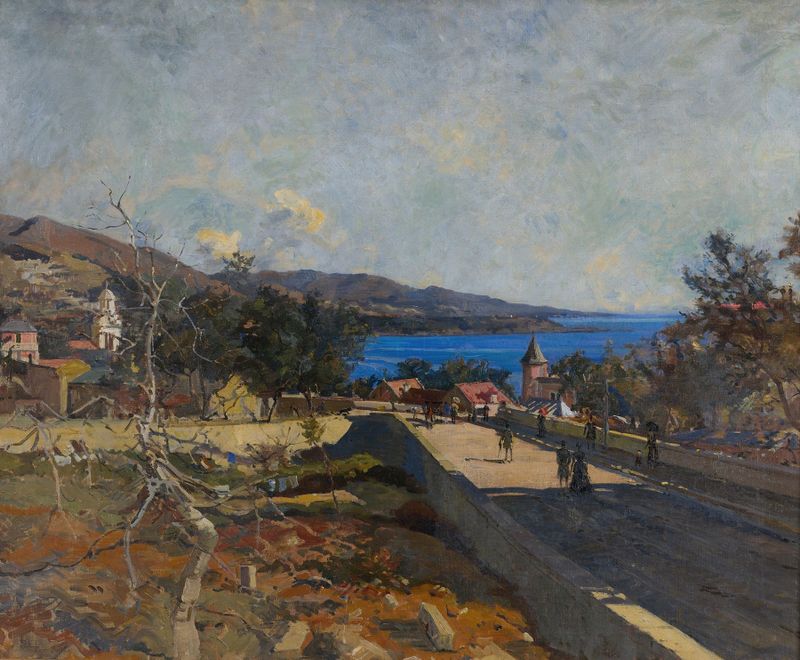
In this moment captured on canvas, the tumult of the city transforms into a serene vista, hinting at the profound hope that resides within the chaos of urban life. Look to the center of the painting where the shimmering water reflects the vibrant hues of the cityscape. Notice how the gentle ripples disrupt the stillness, offering a dance of color—blues blend seamlessly with soft oranges and warm yellows, creating a harmonious balance. The skyline, painted with delicate precision, rises majestically against the backdrop of a pastel sky, inviting the viewer to linger in its soothing embrace. As you explore further, consider the juxtaposition of the solid, bustling architecture against the fluidity of water.
This contrast speaks to the tension between permanence and transience, capturing the idea that even in the most chaotic environments, there is beauty and tranquility to be found. The hazy horizon suggests an endless possibility, evoking hope not just for the future but for those who inhabit this vibrant realm. In 1882, the artist was living in Paris, a city thriving with artistic innovation and experimentation. During this time, he was influenced by the Impressionists, who emphasized capturing light and movement.
This painting reflects a shift in his style, as he sought to express both urban life’s dynamism and its moments of quiet reflection, embodying his evolving vision as an artist.