Venice, Fishing Boats in the Bacino di San Marco — History & Facts
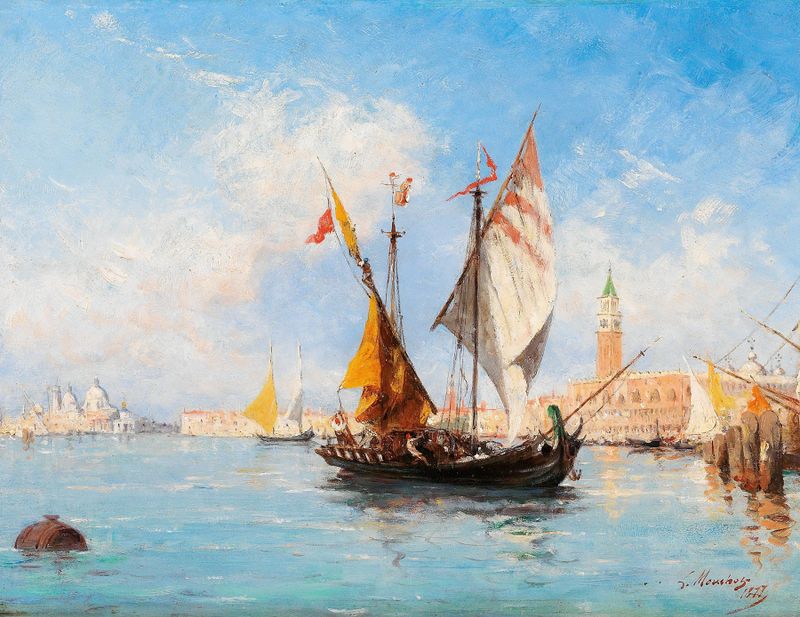
In the tranquil embrace of Venice’s waterways, a sense of emptiness lingers beneath the shimmering surface of the Bacino di San Marco. The delicate interplay between the boats and the water reflects a yearning, a silence that speaks volumes in the absence of human movement. Look to the left at the gentle sway of the fishing boats, their hulls softly painted in muted blues and earthy browns. Notice how the light dances upon the water, creating a glimmer that seems to wash over the scene, illuminating the stillness.
The composition is both balanced and serene, inviting the viewer's gaze to wander through the soft ripples that frame the boats, while the architectural silhouettes of Venice stand watch in the background. This painting captures the juxtaposition of solitude and beauty. The empty boats, devoid of fishermen or any activity, evoke a poignant sense of longing, as if they await stories and lives once filled with vibrancy. The overall color palette, with its soft pastels and gentle hues, further underscores this emotional tension, where light hints at hope, yet shadows whisper of absence. In 1874, the artist found inspiration in the picturesque canals of Venice, a place rich with history and artistic legacy.
Mouchot, who was active during a time of transition in the art world, painted this work amidst the rise of Impressionism, a movement that sought to capture moments of daily life and the effects of light. This painting reflects his engagement with the changing tides of artistic expression, simultaneously celebrating and lamenting the ephemeral nature of beauty.